Thinking About Hiring a Running Coach? Check These Things First
Not every running coach is worth $200 a month. Here are the credentials, red flags, and questions that separate a great coach from an expensive Instagram feed.

Unlock the secrets to a more efficient, injury-resistant run. Discover 9 crucial signs and actionable tips to refine your running form and boost your performance.

Whether you’re a seasoned runner or just beginning, noticing flaws in your running technique is vital for both performance and injury prevention.
Even experienced athletes can develop inefficient habits, and recognizing these early on is the first step toward improvement.
Optimal running mechanics involve aligning your body’s key segments the lower legs, thighs, hips, torso, neck, and head, so they form a straight, neutral line.
Each section should maintain its natural tilt, meaning your hips, shoulders, and head aren’t slouched or overly arched.
This balanced posture not only looks right but also paves the way for more efficient movement.
Maintaining the correct form minimizes the risk of injury and allows you to channel your energy more effectively into forward motion.
When your body moves as a unified system, less energy is wasted and you can achieve better endurance and speed.
One of the best ways to identify and fix running form issues is to consult with a coach who can provide expert guidance.
If that isn’t an option, consider recording your run. Watching the playback in slow motion can reveal subtle faults in your stride, helping you pinpoint specific areas for improvement.
Keep an eye out for these indicators:
If any of these symptoms occur, it’s a good idea to reexamine your running mechanics.
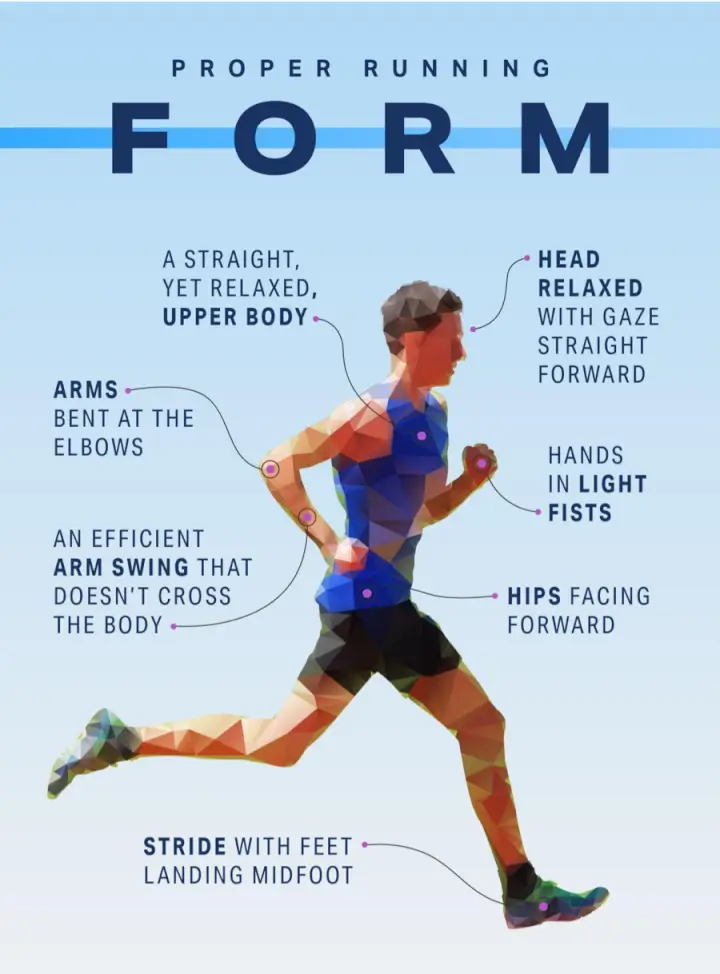
1. Dropping Your Head Forward
Tilting your head downward can strain your neck. Instead, imagine a gentle pull from the crown of your head to keep it aligned with your spine.
2. Constantly Gazing Upward
Looking too far up shifts your balance and may lead to overreaching strides. Keep your eyes forward to help maintain a neutral center of gravity.
3. Slouching Shoulders
Hunched shoulders not only affect your breathing but also compromise hip movement. Aim to keep your shoulders relaxed and pulled slightly back.
4. Excessive Side-to-Side Arm Movement
If your arms swing laterally instead of in a straight, forward-backward motion, your torso will overcompensate for balance, using extra energy that could be better spent on propulsion.
5. Overstriding
Taking strides that are too long forces your body to work harder on landing and can result in heel striking. Increasing your step rate—ideally between 160 and 190 steps per minute—can help reduce this risk.
6. Failing to Engage the Glutes
When your glute muscles aren’t actively contributing, other muscles must pick up the slack, potentially leading to issues like hip flexor tightness. Incorporate specific exercises to “wake up” your glutes.
7. Knees Caving Inward
Allowing your knees to collapse inward disrupts the alignment of your entire leg and can create a chain reaction of misalignments, leading to conditions like shin splints and knee pain. Focus on driving your knees straight forward.
8. Over-reliance on Tiptoe Running
While landing on your toes might be useful for short bursts or sprints, it isn’t ideal for longer distances and can strain your lower legs. A midfoot strike is generally a more balanced approach.
9. Heavy Footfalls
Striking the ground too forcefully increases impact on your joints. Try to adopt a lighter, more controlled foot strike to conserve energy and lessen the strain on your body.
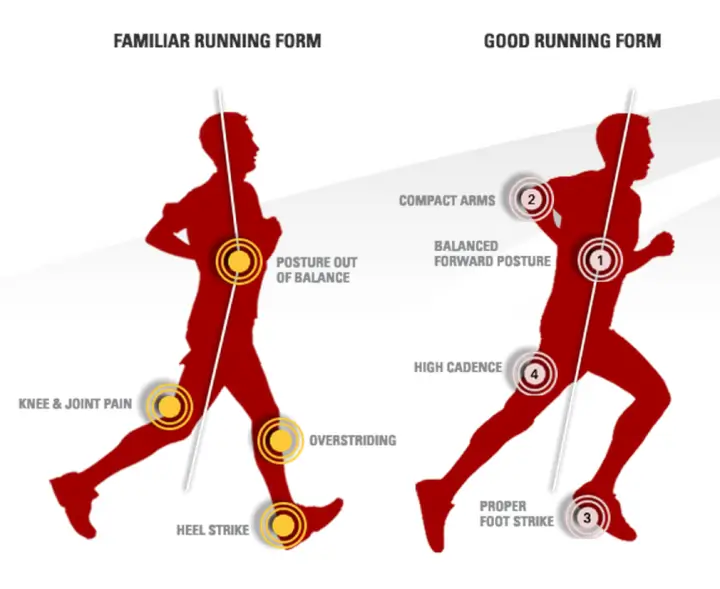
Small adjustments can lead to significant improvements:

Discover the authentic training methods of Kenyan runners and start improving your running faster than you ever thought possible.
Learn More About The Method →Limited-time reader discount available
By focusing on these strategies, you can shift from inefficient running habits to a smoother, more injury-resistant stride!
Start your running journey today!
No spam. Cancel anytime.