Boost performance, protect your knees, and engage your brain with backwards running. Learn its benefits and how to get started safely!
Have you ever seen someone running backwards and wondered, “What on earth are they doing?” Backwards running, or retro running, may look unconventional, but it actually offers unique benefits backed by research.
The Benefits of Running Backwards
1. Boosts Muscle Activation
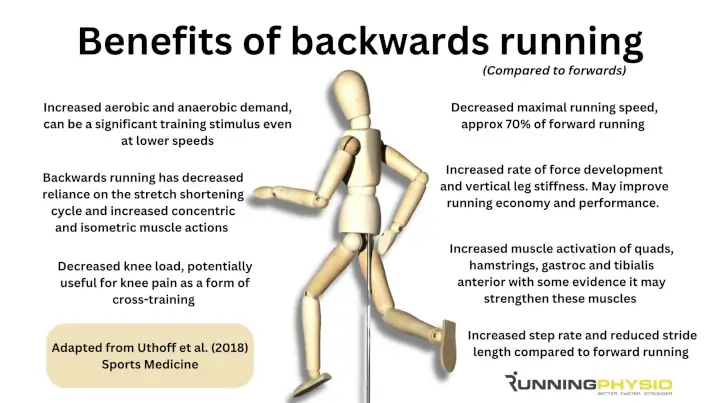
Backwards running increases muscle activity in the lower limbs and emphasizes isometric and concentric contractions.
This can enhance lower body strength and power when strategically incorporated into training.
2. Improves Forward Running Efficiency
A 2016 study in the Journal of Strength and Conditioning Research examined the effects of a backward running program (5-week familiarization, then 5 weeks of more intense training) in highly trained male runners. They found the program increased forward running economy (aka how efficiently the body runs) by 2.54%.
3. Supports Sports Performance
Research shows backward running can boost sprint speed, jumping ability, and agility:
A 2022 study revealed improved performance in youth soccer players after adding backward running to training.
A 2020 study found it led to greater gains in sprint performance and jump height for adolescent athletes compared to forward running.
4. Knee-Friendly Alternative
For those with knee issues, backwards running reduces compression forces on the joint.
Physical therapists often recommend it to help retain fitness while reducing strain on the knees.
5. Engages Your Brain
While not conclusively proven, some experts believe activities like backwards running—which require mental focus—might boost brain-derived neurotrophic factor (BDNF), supporting mental health and brain function.
Image via Running Physio
How to Start Backwards Running
If backwards running intrigues you, here’s how to safely get started:
Warm Up First: Try a few minutes of backwards running during your warm-up, especially before track workouts.
Choose a Flat Surface: Start on an even path, track, or treadmill (use the safety clip!).
Watch Your Surroundings: Periodically peek over your shoulder, alternating sides to avoid neck strain.
Focus on Form: Engage your core, maintain balance, and keep a natural arm swing, it can helps do strength training regularly.
Start Slow: Walk or jog before attempting sprints.
Integrate Gradually: Add 10–15 minutes of backwards running to your workouts a couple of times a week, but don’t skip essential forward-running sessions.
Conclusion
So, should you start running backwards? It depends! If you see it aligning with your training goals, like boosting strength, reducing knee strain, or improving agility, it’s worth experimenting.
Just remember to keep it as a supplement, not a replacement, for your main workouts.
Ready to give it a try? Lace up and start stepping… backwards!