Download our Free 8-Week Plan here →

How to Use the Rate of Perceived Exertion (RPE) Scale for Running

February 1, 2025
By

This guide explains what the RPE scale is, how to use it, and why it’s a valuable tool for runners of all levels.

If you want to improve as a runner, you need a balanced mix of easy runs and hard workouts in your training.

To execute these effectively, it’s crucial to gauge your intensity accurately.

While pace and heart rate are common methods for measuring effort, factors like weather, terrain, stress, and fatigue can make these metrics unreliable.

That’s where the Rate of Perceived Exertion (RPE) scale comes in, a simple yet effective way to measure effort and keep your training on track.

What is the Rate of Perceived Exertion (RPE) Scale?

The Rate of Perceived Exertion (RPE) scale is a subjective 1-10 scale that helps runners measure the intensity of their effort. Unlike pace or heart rate, RPE is based solely on how hard you feel you’re working at any given moment.

It’s adaptable to all conditions—hills, heat, fatigue—and doesn’t require any additional equipment.

Why RPE Works:

  • Dynamic Adjustments: Automatically adjusts for weather, terrain, and training fatigue.
  • No Tech Required: Requires only your awareness of effort—no Smartwatch or heart rate monitor needed.
  • Simple to Learn: With practice, you can intuitively gauge the right effort for different runs.

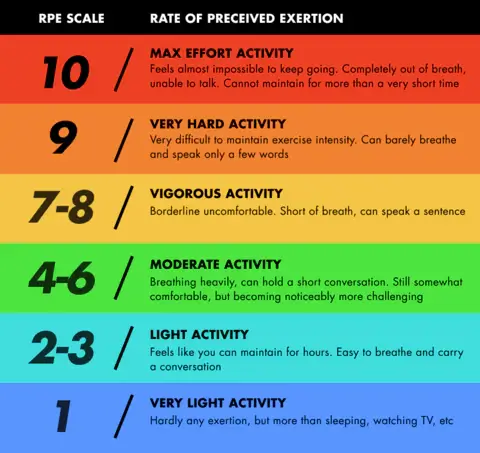
The RPE Scale Explained

RPE measures effort on a scale of 1-10, where 1 is the easiest effort (walking) and 10 is a flat-out sprint.

Most distance training falls between 3 and 8.5 on this scale.

Example RPE Levels for Running:

  • 1-2: Walking or light jogging (recovery effort).
  • 3-4: Comfortable, controlled easy pace.
  • 5: Moderate effort, sustainable for a marathon.
  • 6-7: Threshold effort—sustainable for an hour or so (10K pace).
  • 8-8.5: Hard intervals or tempo efforts (5K pace or faster).
  • 9-10: All-out sprinting or maximal effort.

How to Use the RPE Scale

Using the RPE scale effectively requires practice and mindfulness.

Here’s how to get started:

1. Understand the Endpoints

Define what 1 (easy) and 10 (maximal) effort feel like for you. Use these as benchmarks to place your current effort on the scale.

2. Calibrate with Experience

Run a variety of workouts, easy runs, intervals, tempos, fartleks, and pay attention to how they feel at different intensities. Over time, you’ll develop a better sense of what each RPE level feels like.

3. Focus on Perceived Effort, Not Feelings

Effort and feeling aren’t always the same. For example, a hard interval may feel smooth and controlled, but it’s still a high-effort workout. Conversely, an easy run might feel sluggish but should still remain at a low perceived effort.

4. Adjust for Conditions

RPE adapts to factors like heat, hills, and fatigue. For example, an easy pace on a hot day might feel like a 5 RPE instead of a 3. Stick with the effort rather than trying to match your usual pace.

When to Use the RPE Scale

1. Trail Running

Pace fluctuates on trails due to uneven terrain and elevation changes. RPE lets you maintain the right effort regardless of pace.

2. Hot or Humid Conditions

In summer, heat and humidity slow you down. Training by RPE helps you avoid overexertion when hitting pace targets isn’t realistic.

3. Intense Training Blocks

During high-mileage weeks, fatigue can make your usual easy pace feel harder. Using RPE ensures you keep easy runs easy, even if they’re slower than normal.
RPE and Common Training Paces

RPE aligns well with the most common training intensities:

Pace/Training Type RPE

  • Recovery jog 2
  • Easy run3-4
  • Marathon pace5
  • Half-marathon pace 6
  • Threshold (10K pace) 6-7
  • Cruise intervals (8K pace) 7-7.5
  • Hard intervals (5K pace) 8-8.5
  • Sprinting (max effort) 9-10

The Advantages of Training with RPE

  1. Adaptable to All Conditions: Adjusts for variables like heat, hills, and fatigue.
  2. Injury Prevention: Helps keep easy runs truly easy, reducing the risk of overtraining.
  3. Simple and Cost-Effective: No extra tech or testing required—just your awareness.
  4. Focuses on Effort: Encourages intuitive pacing, which is useful in both training and racing scenarios.

RPE in Action: Sample Workouts

Easy Run

  • Goal: Maintain a controlled, low-effort pace.
  • RPE: 3-4
  • Focus: Relaxed breathing, conversational pace.

Threshold Intervals

  • Goal: Improve lactate threshold.
  • RPE: 6-7
  • Example: 4 x 10 minutes at threshold effort with 2 minutes recovery jogs.

VO2max Intervals

  • Goal: Develop aerobic capacity.
  • RPE: 8-8.5
  • Example: 5 x 3 minutes hard with 2 minutes recovery jogs.

Tips for Mastering RPE

  1. Practice Regularly: Incorporate RPE into all types of workouts to build awareness.
  2. Listen to Your Body: Pay attention to how your breathing, effort, and form change at different intensities.
  3. Be Patient: Like any skill, using RPE effectively takes time and experience.

Final Thoughts

The Rate of Perceived Exertion scale is a valuable tool for runners who want to train smarter and adapt to any conditions.

By focusing on effort rather than pace or heart rate, you can ensure your workouts align with your goals while avoiding overtraining.

Whether you’re running trails, training through summer heat, or tackling an intense marathon cycle, the RPE scale is a simple yet powerful way to gauge your intensity and run your best.

You Might Also Like

6 Common Beginner Runner Mistakes and How to Avoid Them

Avoid the biggest beginner running mistakes—like progressing too fast, skipping warmups, neglecting recovery, and training without a plan. Learn simple, sustainable fixes that make running feel easier, safer, and far more consistent.

Exhaustion After a Long Run Means You Need to Change These Habits

Long runs should leave you tired, not wrecked. Learn the difference between productive fatigue and overreaching, and fix the biggest culprits fast pace, rapid mileage jumps, missed rest, poor fueling, and heat.

How to Start Running: Maintain Motivation

Build a running habit that survives low-motivation days: define a personal why, use simple mental cues, reduce friction with routines, add enjoyment and small rewards, and accept motivation will naturally rise and fall.

Here’s What Actually Happens to Your Body When You Run a Marathon

Spring makes 42.2 kilometers feel tempting, but your body tells a deeper story. From cardiac drift and muscle micro-tears to overheating, fuel shifts, and the dreaded wall, this is what a marathon really does to you.

Proper Running Form: 4 Essential Tips and Techniques

Improve your running form without copying anyone: use the simple STAR cues (shoulders, tall posture, arms, relax) to run smoother, waste less energy, and cut injury risk.

How Much Does It Really Cost to Run a Marathon?

Planning a marathon? The “cheap hobby” quickly adds up. Get a clear, realistic cost breakdown entry fees, travel, shoes, nutrition, tech, and recovery plus practical ways to keep your total closer to $1,000 than $2,000.