9 Rookie Mistakes That Ruin First Marathons (And How to Avoid Them)
Nine first-marathon mistakes coaches see every single year, from training and nutrition to race-day pacing. Learn each one before your start line.

Paavo Nurmi’s simple walk-and-sprint routine blends low-impact endurance with short, controlled speed bursts. Learn how this early form of polarized training can help you run a faster 10K, recover better, and reduce injury risk.

In the early twentieth century, Finland produced exceptional distance runners, and Paavo Nurmi, known as “The Flying Finn,” stood above them all. He was not just successful. He transformed how endurance athletes train.
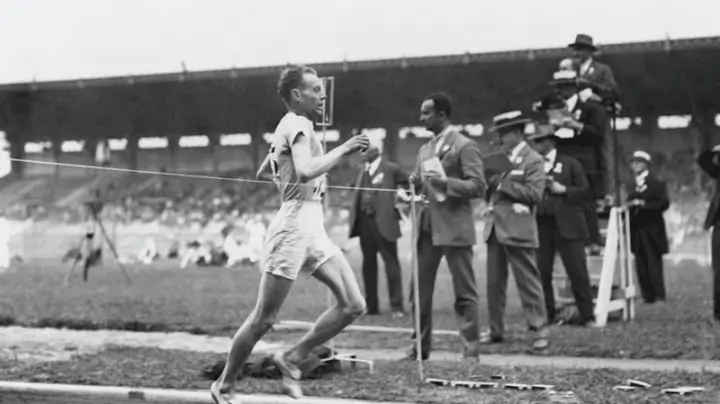
Across the 1920, 1924, and 1928 Olympic Games, Nurmi won nine gold medals. His success came from disciplined, innovative training methods, many of which still influence modern running.
One of his most practical and effective approaches was a daily combination of walking and sprinting. It may sound simple, but it reflects a powerful training philosophy that can help modern runners improve performance while reducing injury risk.
If your goal is to run a faster 10K without burning out, this method is worth considering.
Many runners see walking as something separate from training. Nurmi treated it as an essential component.
Walking builds aerobic endurance in a low-impact way. It supports heart health, improves circulation, and increases your body’s ability to use oxygen efficiently. Unlike harder sessions, it does this without placing significant stress on joints and muscles.
It also improves metabolic efficiency. Long periods of low-intensity movement help your body use fat as fuel more effectively. This is valuable in a 10K, where energy management plays a key role in maintaining pace.
Another major advantage is injury prevention. Walking produces much lower impact forces than running, which allows you to increase total training volume without increasing risk. For runners who struggle with consistency due to minor injuries, this can be especially helpful.
Walking builds endurance, but sprinting develops speed and power.
Nurmi included short bursts of fast running within his walks. These sprints activated fast-twitch muscle fibers, improved coordination, and trained his body to produce force quickly.
This is important for 10K performance. Even though the race is primarily aerobic, speed still matters. Being able to respond to pace changes and finish strongly can make a significant difference.
Short sprints also improve running economy. They help your body move more efficiently at faster speeds, which makes your race pace feel more sustainable over time.
In addition, sprinting stimulates the nervous system. It prevents training from becoming too repetitive and helps maintain sharpness.
Nurmi’s method closely aligns with what is now known as polarized training. This approach emphasizes doing most training at low intensity, with a smaller amount at high intensity.
The walk-and-sprint session fits this model perfectly. Walking provides the easy volume, while sprints deliver short, intense efforts. There is very little time spent at moderate intensity, which is often where fatigue builds without delivering strong results.
Many runners struggle with this balance. Easy runs become too hard, and hard sessions become too frequent. This can lead to stagnation or injury.
Nurmi’s method naturally avoids this problem by clearly separating easy and hard efforts.
The session is simple and flexible.
Start with a steady walk. Nurmi often walked five miles or more, but this is not required. The key is consistent, relaxed movement.
During the walk, include five to six short sprints.
Each sprint should last about 10 to 20 seconds. Gradually accelerate until you reach a pace close to your mile pace, then return to walking.
These efforts should feel controlled, not all-out. Focus on good form and smooth movement.
Allow full recovery between sprints. Walk until your breathing returns to normal and your legs feel ready.
This structure creates a session that alternates between calm, steady movement and brief periods of intensity.
Traditional speed workouts often involve repeated hard efforts on tired legs, which can increase the risk of injury.
Nurmi’s method reduces that risk.
Walking lowers overall impact and fatigue. The sprints are short and controlled, which limits strain. Recovery is built into the session through walking.
This makes it possible to include speed work more frequently without overloading the body.
For runners who tend to push too hard, this method helps regulate intensity. Instead of sustained hard efforts, intensity is delivered in small, manageable doses.
You do not need to copy Nurmi’s exact routine to benefit from this approach.
If time is limited, shorten the walk to 20 or 30 minutes and still include a few sprints. You can also integrate it into daily activities such as commuting or walking errands.
Another option is to add these sprints at the end of an easy run. After your run, walk for a few minutes and then complete your sprint efforts.
The most important factor is consistency. A shorter session done regularly is more effective than a longer session done occasionally.
Discover the authentic training methods of Kenyan runners and start improving your running faster than you ever thought possible.
Learn More About The Method →*Limited-time reader offer available
The 10K requires both endurance and speed. This method supports both.
Walking strengthens your aerobic system, while sprinting maintains speed and coordination. Together, they create a balanced training effect.
Over time, you may notice improvements such as:
There is also a mental benefit. Because the sessions are not overly demanding, they are easier to maintain. This helps build long-term consistency.
Nurmi’s walk-and-sprint approach is straightforward, but highly effective.
It emphasizes consistency, balance, and smart use of intensity. Instead of pushing hard all the time, it focuses on building a strong foundation and adding speed in controlled amounts.
For runners aiming to improve their 10K performance, this method offers a practical way to train more effectively while reducing the risk of injury.
Over time, the combination of steady movement and short bursts of speed can lead to noticeable improvements in both fitness and confidence.
if(window.strchfSettings === undefined) window.strchfSettings = {};
window.strchfSettings.stats = {url: "https://therunningweek.storychief.io/run-faster-10k-times-with-paavo-nurmis-walk-and-sprint-method?id=1209267743&type=26",title: "Run Faster 10K Times With Paavo Nurmi’s Walk-And-Sprint Method",siteId: "23843",id: ""};
(function(d, s, id) {
var js, sjs = d.getElementsByTagName(s)[0];
if (d.getElementById(id)) {window.strchf.update(); return;}
js = d.createElement(s); js.id = id;
js.src = "https://d37oebn0w9ir6a.cloudfront.net/scripts/v0/strchf.js";
js.async = true;
sjs.parentNode.insertBefore(js, sjs);
}(document, 'script', 'storychief-jssdk'))
Start your running journey today!
No spam. Cancel anytime.