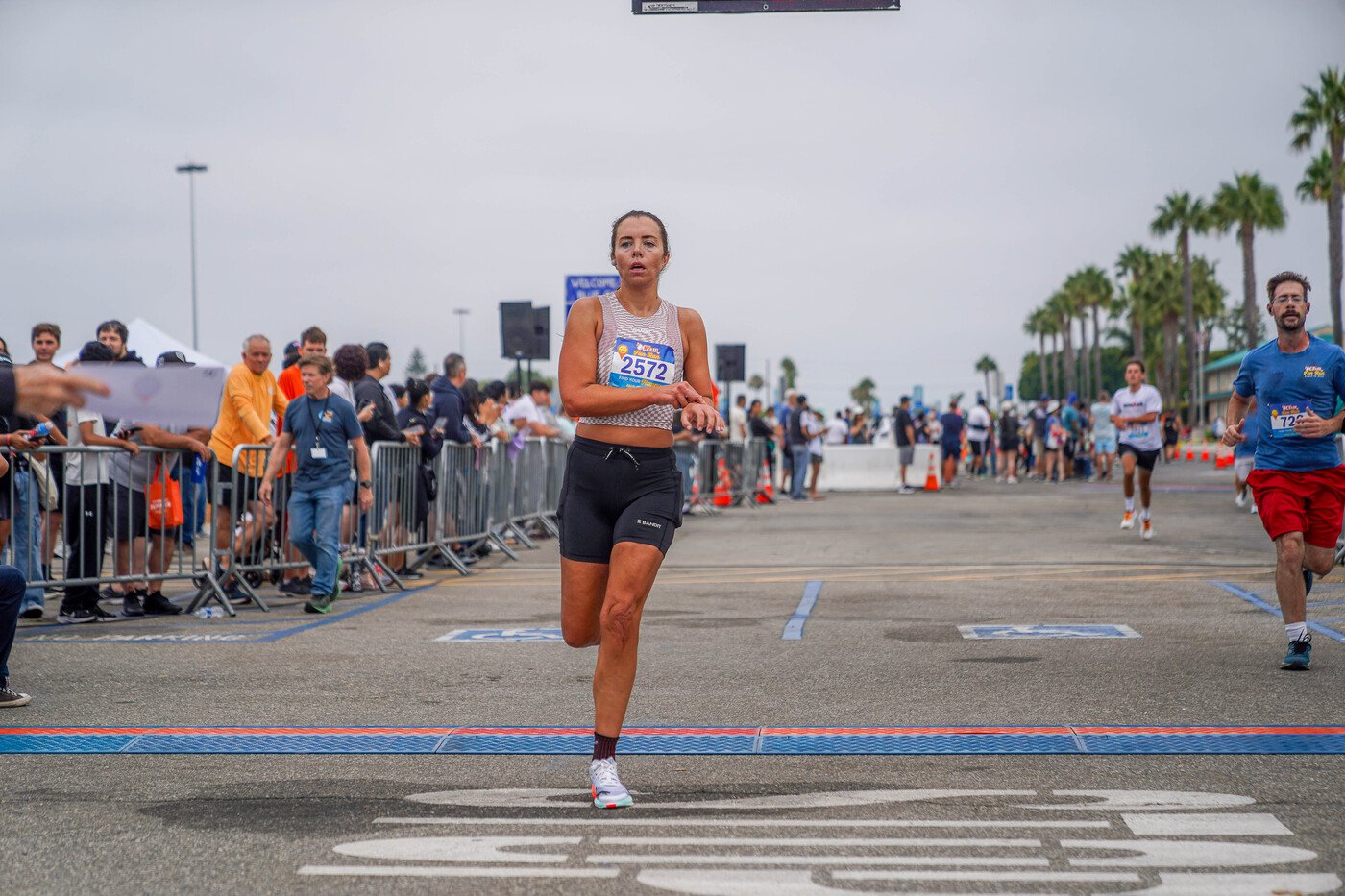
The 5K isn’t the easy race people think it is. When you race it hard, there’s no time to settle in, no real breaks, and zero room for error from the gun to the finish.
The 5K Doesn’t Give You Time to Settle In..
Every so often the same idea pops up again...Someone will say the 5K is the easy distance or the fun one or the race people choose when they don’t really want to train much. Or even the race for newer runners.
Whenever I hear that, I assume the person saying it probably hasn’t actually raced a 5K hard. The 5k is one of my favorite distances and with little room for error.
Jogging one is different but if you actually race a 5K all the way through, the experience is not relaxed and it definitely isn’t easy. With the 5k, there’s not much of a settling in period. Within a minute or two you’re already breathing harder than you’d like.
Probably within 5 minutes you are questioning how you are going to keep up this effort for another couple of miles. By 4k, you are just hoping you will make it to the finish line.
Over the years I’ve run a lot of 5Ks. Road races, track races, cross country courses that were technically listed as 5K but probably were anywhere from 4 to 7k.
The thing that always stands out about the race is how hard they are. I can’t think of a single 5k I’ve raced hard that I thought: wow that felt easy and comfortable.
The gun goes off and everyone immediately accelerates to a pace that feels uncomfortable. You tell yourself things will settle down once the pack spreads out, but the pace usually just keeps pressing a little more each minute.
By the time you hit the first mile you’re already working harder than you probably planned.
Why People Underestimate the 5K Distance
People underestimate the distance because they’re looking at the clock. 3.1 miles seems like small potatoes compared to 13.1 or 26.2 but I encourage you to reframe how you're thinking about the race.
The 5k has all of the effort of a longer race compressed into a much shorter duration.
In longer races the early miles are usually controlled. You have time to relax, settle in, and get into a groove. The 5K works differently...If you approach the race too cautiously you can set yourself back.
In longer races you sometimes get little resets. There might be a section where the pace feels manageable again or your breathing settles down for a few minutes.
Even in a half marathon there are stretches where the effort briefly feels smooth before the next rough patch shows up.
A hard 5K rarely gives you that kind of break. Once the pace starts to feel uncomfortable it usually stays that way until the finish.
Training for a Fast 5K Is Harder Than People Expect
Training for the distance reflects that reality more than people realize.
From the outside the 5K looks like a short race that must rely mostly on speed work, but most of the training ends up looking a lot like what people do for longer races.
Plenty of threshold work, solid mileage, and a lot of efforts that sit at race pace. Sure, you might not have the easy long run, but you're going to have a higher concentration of hard efforts.
Some of the workouts I remember most clearly from 5K training are things like kilometer or 400 m repeats with short recovery.
Those sessions are not especially long in terms of total time, but you must stay engaged all of the time.
If you lose focus for even a lap or two the pace starts drifting and the workout falls apart.
Another reason the distance gets underestimated is that many people experience it casually. Local 5Ks and Parkruns often function as community events.
Some runners treat them as workouts, some run with friends, and plenty of people are just out there to finish. 5ks are the most common distance because they are the most accessible.
There’s nothing wrong with that approach and in fact it's great for the sport, but it can make the distance itself seem easier than it really is.
Racing a 5K Leaves Very Little Room for Error
If you watch the finish line of a competitive 5K for a few minutes, the reactions tell you everything you need to know. People crossing the line and immediately bending over trying to catch their breath, runners walking in slow circles to keep their legs from locking up, someone eventually sitting down in the grass because the effort caught up with them. It doesn’t look like the end of an easy or casual race.
What’s interesting is that the 5K sits in a strange place in running culture. For newer runners it can feel intimidating because it’s often the first distance they run.
For experienced runners it sometimes gets dismissed because it is not as glamorous as a marathon or ultramarathon. Go to a packet pickup with a 5k and half marathon and listen to how many runners say: I’m doing “JUST” the 5k.
To run a 5k well, the pace has to be aggressive enough that you’re actually racing, but controlled enough that the last mile doesn’t completely collapse.
If you take the first mile out too fast, you could be looking at a 1+ of time added during the last mile and believe me, there is nothing that hurts more than taking out a 5k to fast. Most of the race is spent right on the edge of what feels sustainable.
Of course the distance itself is short.
No one is going to argue that three miles takes the same level of endurance as a marathon. But if you’re really racing it, those three miles have a way of feeling much longer than they look on paper.
If someone thinks the 5k is easy, there’s usually a simple explanation. They probably haven’t tried racing one all the way through in a while.