You cross the line. You get the medal. You eat something greasy. You sleep for ten hours. And by Wednesday, you feel like the floor dropped out.
You have probably heard a friend say she stopped getting her period a few months into marathon training. She probably called it normal for runners. It is not normal, and it has a name.
Heart Rate Variability (HRV) is the earliest warning sign of overtraining. Here is what the number on your watch is actually telling you, and how to act on it before it wrecks a training block.
A 2026 Harvard T.H. Chan School of Public Health study in BMJ Medicine found exercise variety was linked to lower premature mortality, even at the same total activity volume.
108-year-old Susan Young Browne still drives, exercises daily, and lives alone. Nothing in her routine is extreme. That is exactly why masters runners should be paying attention.
A 2025 study of 60 professional runners found endurance athletes carry a fundamentally different gut microbiome from sprinters. Here is what the research means for recreational runners.
Female runners are injured at roughly twice the rate of male runners. The two numbers that predict most of that gap are ferritin and cycle-phase estrogen, not training volume.
Runners get higher cumulative UV exposure than the general population. Here is when sunscreen matters, what SPF actually works when you sweat, and what to do about it.
A 2025 clinical study of women in perimenopause and postmenopause found a training change that outperformed extra mileage. Most running plans still miss it.
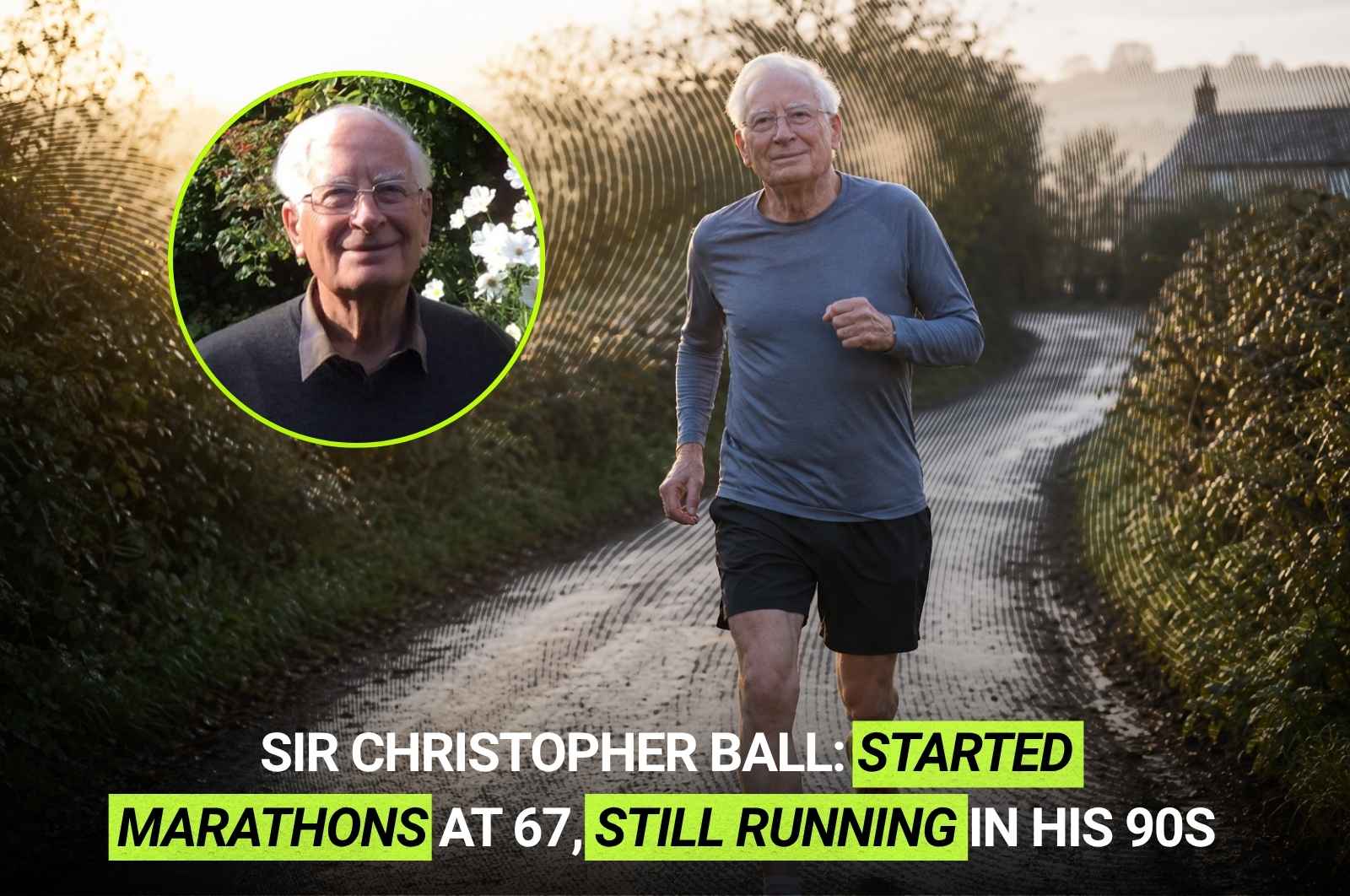
A doctor told Sir Christopher Ball to lose weight before his 70th birthday. He picked up running instead. He is now in his 90s and still going.