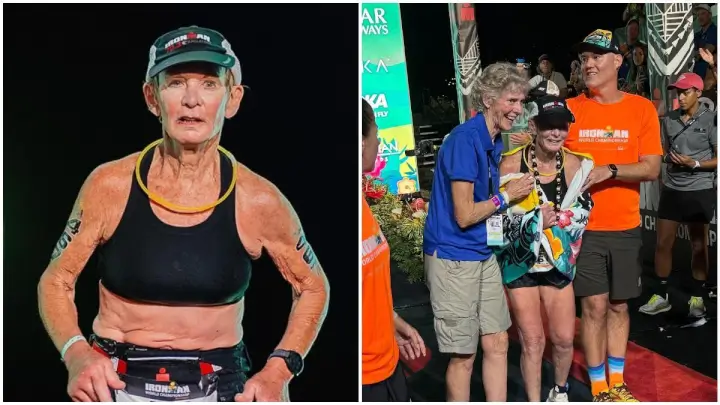
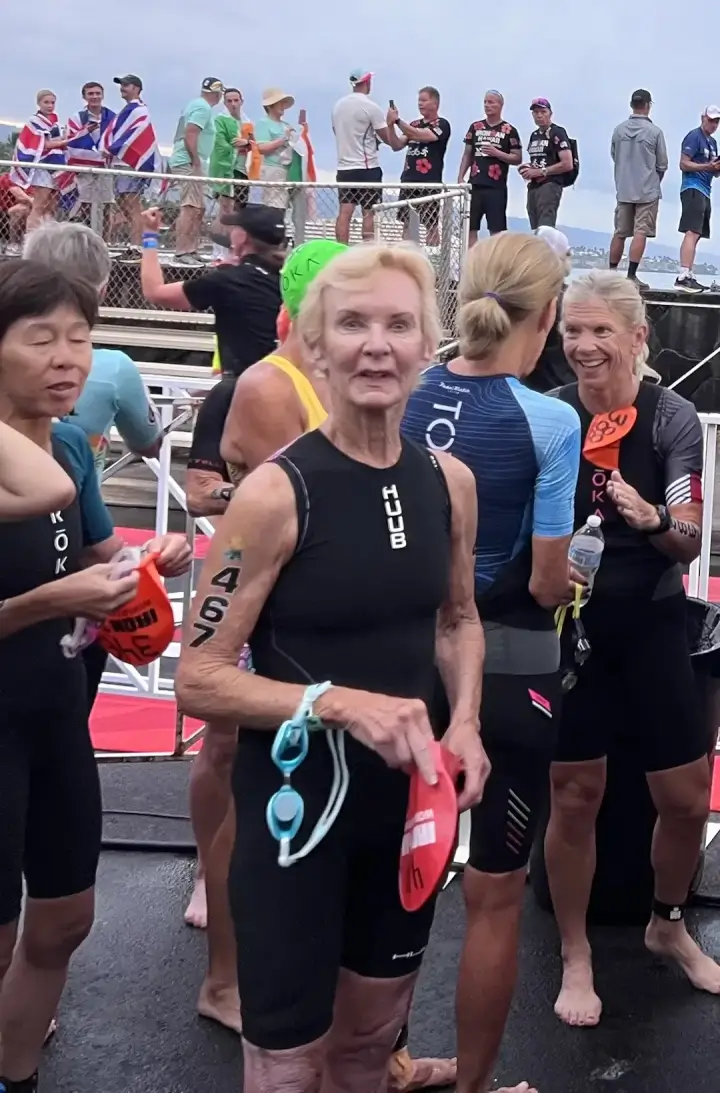
Natalie Grabow became the oldest woman to complete the Ironman World Championship at 80. Discover the five habits that keep her fit, motivated, and breaking records at any age.
Natalie Grabow, who only learned to swim at 59, has recently become the oldest woman to finish the Ironman World Championship.
She shares how she discovered triathlon later in life and why age is never a barrier to finding a sport you love.
Despite the massive attention following her astonishing achievement, Natalie remains happy to share her story if it inspires others to stay active at any age.
Her finish at last month’s Ironman World Championship in Kona, Hawaii, has been viewed nearly 12 million times online.
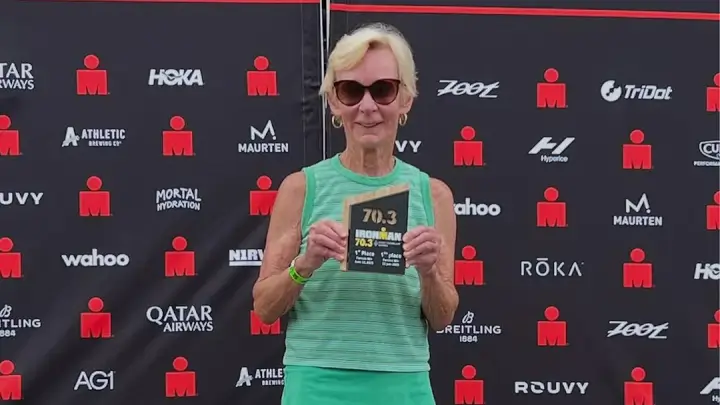
Though celebrated for her world record, Natalie’s journey in triathlon began in her sixties. Since then, she has completed 16 full Ironman races 11 of them in Kona and about 50 half-Ironmans, her favorite distance.
Finding Her Competitive Spirit
Born in 1945, Natalie grew up playing outside with little formal training. “We were just sent out to run, bike, and explore the woods,” she recalls.
In high school, cheerleading was her only option for sports, which she enjoyed for the acrobatics and teamwork it offered.
Later, Natalie turned her competitive drive to academics and eventually discovered skiing while working as a software engineer.
When her daughters were in nursery, she taught herself tennis and competed in local doubles matches.
By 43, she had taken up running, starting with lunchtime jogs and gym classes, eventually racing local 5Ks and 10Ks.
Reflecting on her youth, Natalie notes how opportunities for girls were limited.
“Even gym class basketball for girls was half-court. We weren’t allowed to run the full court. Strength was undervalued for girls, but feeling strong physically is so important for confidence.”
Learning to Swim at 59
Natalie’s journey into triathlon began with spin classes, where she was invited to join a sprint triathlon.
Initially embarrassed because she couldn’t swim, she later participated in a relay, which inspired her to finally learn.
“At 59, I started swimming seriously,” she says. Nine months later, she completed her first sprint triathlon.
By the end of the year, she had completed sprints, an Olympic triathlon, and a half Ironman – winning her age group in all. “I knew I had found my sport.”
1. Find a Balance
Natalie emphasizes the importance of structure and guidance.
With a naturally competitive streak, she relies on her coach, Michelle Lake, to keep training safe and effective.
Even during 18-hour weeks leading up to Ironman, Natalie now focuses on shorter, easier sessions for recovery.
Michelle highlights frequent communication and tailored recovery strategies, including personal training and chiropractic care.
Her advice for older women starting a sport? “Never give up. There are always opportunities. 80 is the new 60.”
2. Accept Your Limits
As we age, Natalie stresses knowing when to step back. “You can’t push through everything.
Sometimes you need therapy, foam rolling, or rest to get back to 100%.”
She also prefers low-tech training, using a simple bike trainer and focusing on power targets rather than screens or apps.
3. Love What You Do
Enjoyment is her biggest motivator. “I just love my workouts. I don’t need all the bells and whistles.”
Cycling is her favorite discipline, and even if competition is sparse in her age group, she measures her progress against herself and other athletes.
4. Stay Strong
Maintaining strength is key to longevity in sport.
Natalie’s long runs are always run-walk, limiting impact, and she recently added upper-body strength training, which has improved her performance and reduced soreness.
5. Enjoyment and Consistency Are Key
For those starting later in life, Natalie advises finding a sport you genuinely enjoy.
If you don’t like running, swimming, or biking, try something else. Pickleball, golf, spin classes there are so many options. Start small, increase gradually, and stay consistent.”
With patience and consistency, fitness improves, and everyday activities become easier.
Natalie’s message is clear: enjoyment and regularity are the foundation of a lifelong, active lifestyle.