
The Post-Marathon Crash Nobody Warns You About
You cross the line. You get the medal. You eat something greasy. You sleep for ten hours. And by Wednesday, you feel like the floor dropped out.

Running shoes and strength shoes are built for opposite jobs. Podiatrists explain why lifting in cushioned trainers can quietly work against you.
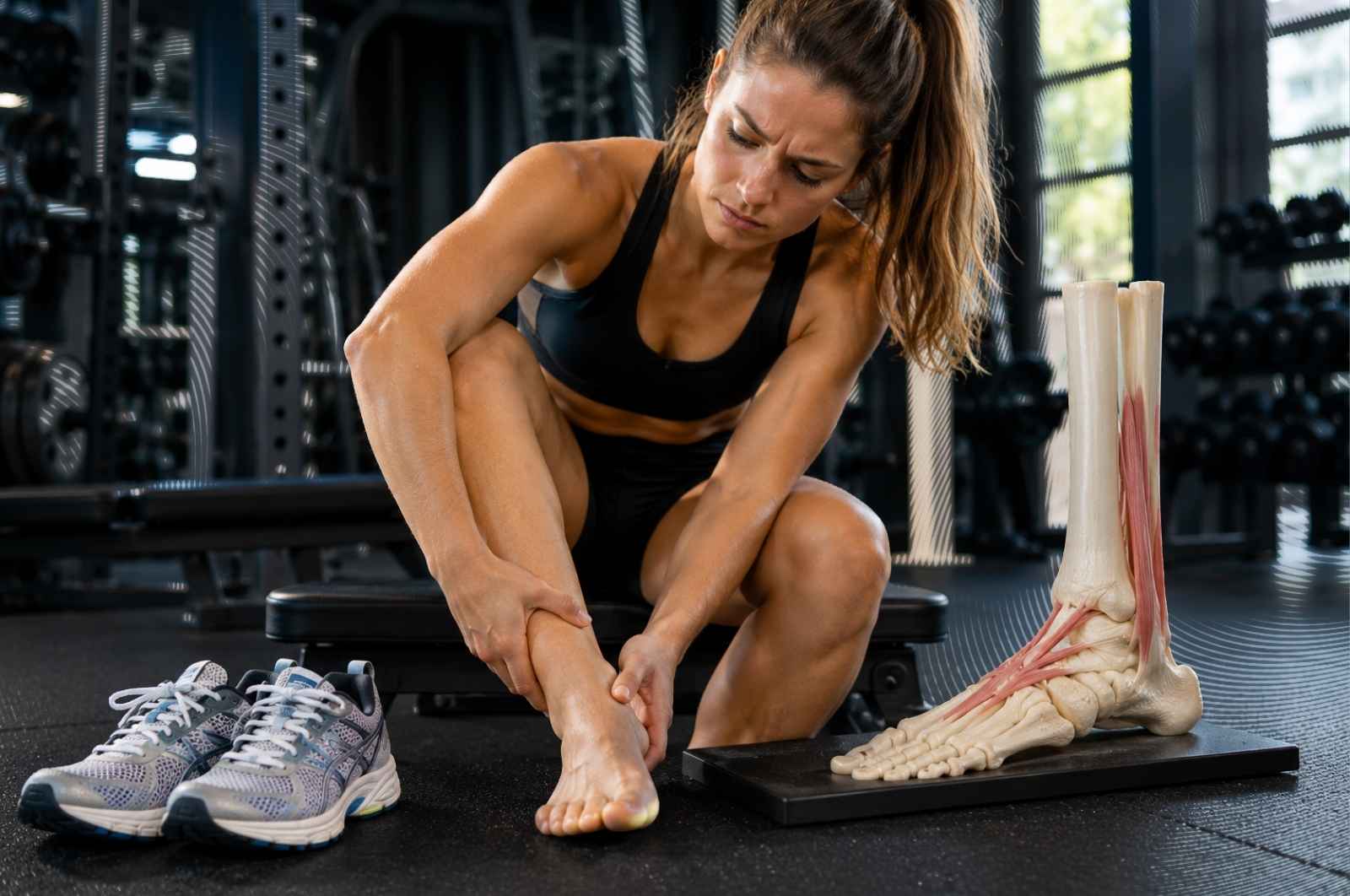
Podiatrists are seeing the same thing again and again with runner patients: shoulder-pressing, squatting, and deadlifting in the same cushioned trainers used for easy miles.
That is quietly costing you strength.
Modern running shoes are engineered to compress under load and rebound forward.
Strength shoes are engineered to do the opposite: stay flat, stay stiff, and give you a stable base to push into.
The two goals fight each other. Wearing the wrong pair in the wrong room does not always cause an injury, but it does chip away at how much force you actually put through the bar.
A modern trainer is a controlled instability device. That is not a criticism, it is the design brief.
Deep foam absorbs impact and springs back to protect the joints across thousands of ground strikes.
A slight rocker rolls the foot forward, saving energy on repetitive gait cycles.
Some models add a carbon plate for even more forward propulsion. All of it is optimized for moving in a straight line at running speeds.
If you are still figuring out which trainer fits your gait, our guide on finding your perfect running shoes walks through the fit basics without the jargon.
Squatting, deadlifting, and pressing depend on one thing above all: a solid connection between your foot and the floor.
A thick, soft midsole introduces a springy layer between your foot and the ground. Under 60 or 80 kilos, that layer compresses unevenly and shifts your weight around.
Podiatrists point to three problems this creates.
First, force leaks sideways instead of driving straight up.
Second, the ankle joint has to work overtime to stabilise.
Third, the neurological cue your brain uses to gauge ground contact goes fuzzy.
On a heavy squat, that fuzziness is the difference between locking out with confidence and grinding a rep. On a lunge or split squat, it is the difference between feeling planted and rolling an ankle.
Newer trainers add an aggressive rocker so the foot rolls forward as you run. In the squat rack, that same rocker tips you forward at the bottom of a rep.
That is not just uncomfortable, it moves the load away from your posterior chain and into your knees.
Multiply that across 30 or 40 sets a week, and small angle changes add up.
A carbon-plated racer is even worse for strength work. The plate is engineered to store and release energy in one direction only: forward.
Under a static hold like a deadlift setup, the plate flexes unpredictably. For a deeper look at how those plates work, see our piece on carbon-plated running shoes and whether they really make you faster.
The recommendations are simple. A flat, firm sole with a wide base beats a cushioned trainer for almost everything that is not running.
For most runners doing accessory strength work in a home gym, a decent pair of cross-trainers or minimalist shoes covers it. Some lifters go barefoot for squats and deadlifts, which is fine if the floor is clean.
For heavier lifting, a proper weightlifting shoe with a hard heel raises the ankle mobility ceiling and locks the foot in place. Overkill for most runners, but worth knowing exists.
Not everything at the gym is a heavy lift.
Box jumps, treadmill running, jump rope, and quick footwork drills belong to the shoe you actually run in.
Podiatrists suggest keeping a second pair in the gym bag: trainers for the treadmill and plyometrics, a flatter shoe for the racks.
It sounds fussy, but it takes 30 seconds to swap. Your knees, ankles, and one-rep max will notice.

You do not need a podiatrist appointment to figure this out.
A few honest checks will tell you.
Your feet slide inside the shoe during heavy sets, and your knees cave inward under the bar.
You feel unstable at the bottom of a squat despite adequate mobility, and your calves cramp during Bulgarian split squats.
Another quiet tell: heel pain the day after leg day, or a nagging arch ache that only shows up on gym days and disappears on running days.
Any of those, and the shoe is doing you a favour on the road and a disservice at the rack. For a broader look at wear signals that your running shoes are past their prime, we cover it separately.
Discover the authentic training methods of Kenyan runners and start improving your running faster than you ever thought possible.
Learn More About The Method →*Limited-time reader offer available
Runners already accept that road shoes, trail shoes, and racing shoes are different tools. Strength shoes are the same idea.
The point is not brand loyalty or spending more money.
A cheap pair of flat canvas trainers costs less than a single 40-dollar physio visit.
Research collected by the American Podiatric Medical Association consistently flags footwear-activity mismatch as an underrated driver of foot and ankle problems.
The fix is not exotic. Slip a cheap pair of flat trainers into your gym bag, and wear those for lifting.
Do it for a month and pay attention to the small things.
Squats feel more planted, lunges feel steadier, and the day-after ankle stiffness fades.
Save the plush trainers for what they were engineered to do: move you forward, mile after mile.
Start your running journey today!
No spam. Cancel anytime.


