The Chicago Course Secret: Why Mile 18 Breaks More Runners Than the Final 10K
Chicago is flat, fast, and brutal in Pilsen. Here is why Mile 18 ends more PR attempts than the final 10K, and how to pace around it.

Humanoid robots will compete in the Beijing Half-Marathon for the first time. Is this the future of racing?
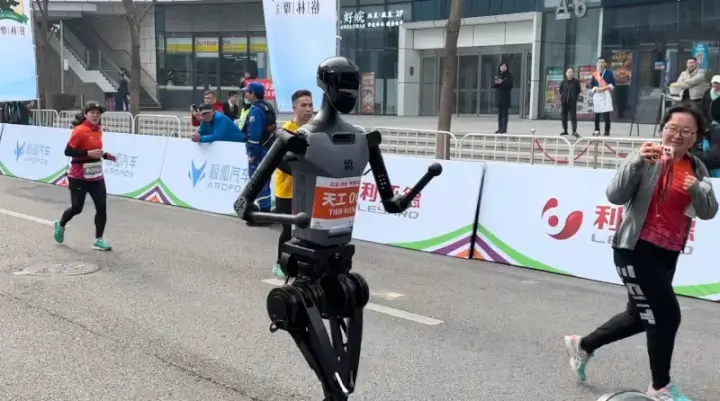
In an unprecedented twist on competitive racing, the upcoming Beijing Half-Marathon will see a mix of human runners and robotic challengers toeing the start line.
Scheduled for April, the race will feature humanoid robots from over 20 companies, each attempting to complete the full 21.1-kilometer course for the first time.
The event, organized by the Beijing Economic-Technological Development Area (E-Town), has set strict criteria for participating machines.
Robots must have a humanoid form and be capable of bipedal movement, wheels and other non-human mobility aids are strictly prohibited.
They can be either autonomous or remote-controlled, with heights ranging from 0.5 to 2 meters. Recognizing the limits of current battery technology, mid-race battery replacements will be allowed to ensure the machines can go the full distance.
A half-marathon for humanoid robots is scheduled for April in Beijing, presenting an intriguing test of the swiftly advancing robotic technologies https://t.co/tBewmW6TCi pic.twitter.com/jchVrLD0r5
— China Xinhua Sci-Tech (@XHscitech) January 16, 2025
This isn’t China’s first foray into robotic running. Last October, a humanoid robot named Tiangong made headlines by completing the final 100 meters of the Yizhuang Half Marathon in Beijing, even receiving a medal for its effort.
Just a week later, quadruped robots made an appearance at the Hangzhou Marathon, acting as pace-setters and interactive cheerleaders, shaking hands with runners, offering words of encouragement, playing music, and even performing backflips.
Now, some of the biggest names in robotics, including Tesla, Boston Dynamics, and 1X, will join the lineup in April’s half-marathon, going the full distance for the first time.
Current estimates suggest these robotic runners will maintain speeds between 8 and 12 km/h, meaning they’ll be well behind elite human runners but might still challenge amateur participants. For comparison, a sub-1:30 half-marathon requires an average pace of 14.07 km/h.
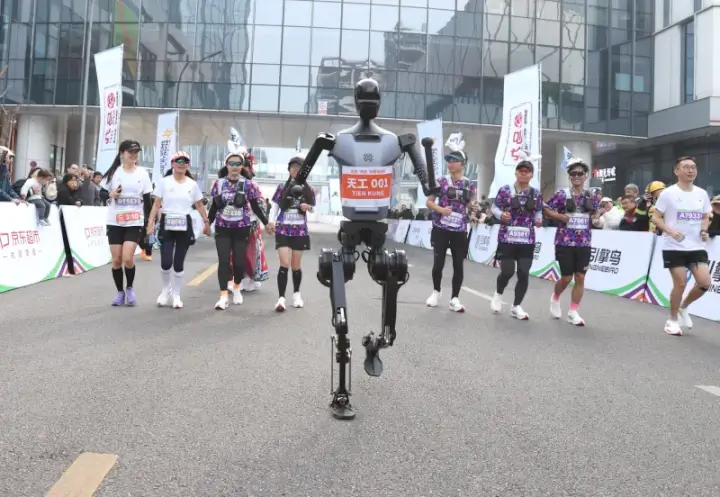
The increasing presence of humanoid robots in China’s public sphere isn’t just about spectacle, it reflects the country’s evolving demographic and economic needs.
With an aging population and a shrinking workforce, there is growing demand for robots that can assist in both everyday life and specialized tasks.
The robotics industry in China is projected to reach a staggering $54.6 billion by 2030, fueled by the need for automation in various sectors.
While these robotic runners may not be breaking any world records soon, their presence in endurance races highlights how far AI and automation have come. As technology advances, it raises an intriguing question: will there come a day when a robot outruns the fastest human?
For now, Beijing’s half-marathon in April will provide a glimpse into the future of racing, where man and machine share the road, step by step.
Start your running journey today!
No spam. Cancel anytime.