The Chicago Course Secret: Why Mile 18 Breaks More Runners Than the Final 10K
Chicago is flat, fast, and brutal in Pilsen. Here is why Mile 18 ends more PR attempts than the final 10K, and how to pace around it.

On a recent Thursday evening at the Bislett Games in Oslo, Hagos Gebrhiwet delivered such a moment, running an astounding 12:36.72 to win the 5000m race and secure the second-fastest time in history...
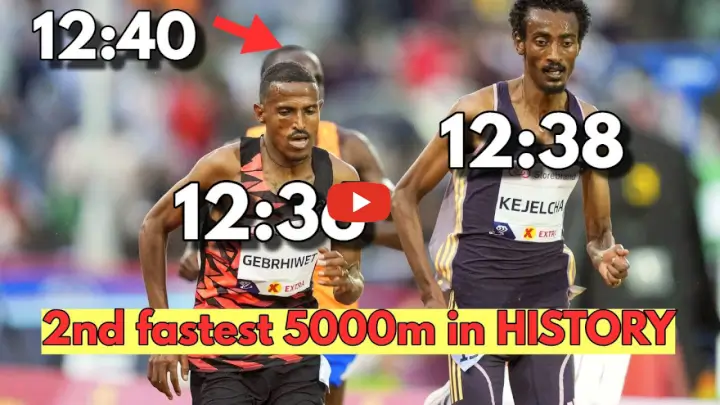
On a recent Thursday evening at the Bislett Games in Oslo, Hagos Gebrhiwet delivered such a moment, running an astounding 12:36.72 to win the 5000m race and secure the second-fastest time in history.
Gebrhiwet’s run was nothing short of spectacular. His time of 12:36.72 not only threatened Joshua Cheptegei’s world record of 12:35.36 but also shattered Kenenisa Bekele’s long-standing Ethiopian record of 12:37.35. Bekele’s mark had held as the world record for 16 years until Cheptegei surpassed it in 2020.
Gebrhiwet's final 1600m, clocked at 3:55, and his blistering last lap of 54.99 seconds, demonstrated his extraordinary finishing speed and endurance.
The race itself was a showcase of incredible performances. Yomif Kejelcha, who played a key role in setting the fast pace, finished second with a time of 12:38.95. This effort moved him to fourth on the all-time list and marked the first occasion where two men ran under 12:40 in the same race.
World Cross Country champion Jacob Kiplimo of Uganda finished third, setting a personal best of 12:40.96.
These top three performances created an unforgettable race, with Gebrhiwet’s victory standing out as a highlight in the annals of distance running.
The depth of talent in the race was extraordinary, with 12 of the top 13 finishers setting personal bests. National records were smashed by athletes from multiple countries.
Notable among these were Luis Grijalva of Guatemala (12:50.58), Dominic Lobalu of Switzerland (12:50.90), Andreas Almgren of Sweden (12:50.94), Jimmy Gressier of France (12:54.97), and Adriaan Wildschutt of South Africa (12:56.67).
The sheer number of personal bests and national records is a testament to the high level of competition and the exceptional conditions at the Bislett Games.
One of the few athletes who did not achieve a personal best was world record holder Joshua Cheptegei. Despite a strong start, Cheptegei faded in the final laps, finishing ninth with a time of 12:51.94.
This result underscores the unpredictable nature of racing, even for the best in the world.
This remarkable night in Oslo is a vivid reminder of the relentless pursuit of excellence that defines track and field.
Gebrhiwet’s achievement not only sets a new benchmark for his career but also ignites anticipation for future races and potential record-breaking performances.
Stay tuned to our blog for more updates on incredible races, training tips, and everything you need to fuel your passion for running!
Start your running journey today!
No spam. Cancel anytime.