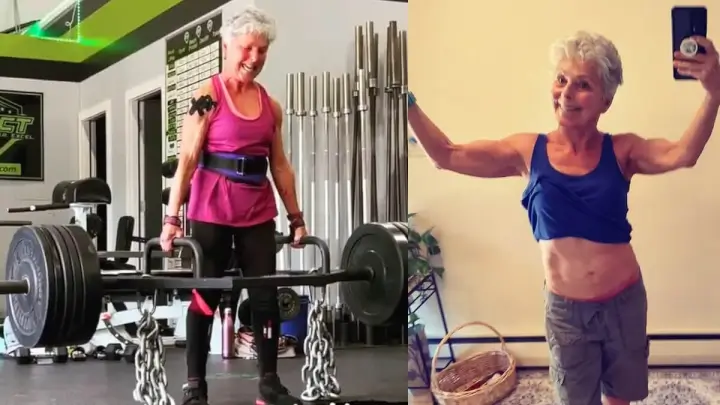
At 73, Mary Duffy is deadlifting 2.4 times her body weight and smashing records left and right. Her journey proves it's never too late to get strong.
We’ve all heard it before: as we age, we get weaker especially women. What felt easy in our 20s is often seen as impossible in our 60s or beyond.
But Mary Duffy is living proof that this mindset is outdated.
At 73, Duffy is turning heads in the powerlifting world with lifts that defy expectations.
She posted a video of herself deadlifting 300 pounds yes, 300 using a trap bar loaded with 250 pounds plus an additional 50 pounds in chain resistance.
And here’s the kicker: she competes in the 56-kilogram weight class. That means her deadlift was 2.4 times her own body weight. Talk about strength!
A Late Start with Massive Results
Duffy didn’t grow up lifting weights. She began her powerlifting journey in April 2015, entering her first official meet the International Powerlifting Association (IPA) Connecticut Ironman Push/Pull Showdown where she walked away with a first-place win.
Since then, she’s competed in 11 sanctioned competitions, consistently dominating her age categories.
The only time she didn’t take first was in the 2016 IPA Connecticut State Championships, where she placed second in the Amateur Open Division. Even more impressive? She often enters multiple age divisions per event.
Currently, she’s a standout in the Masters 70–74 raw category, according to Open Powerlifting.
Record-Breaking Numbers
Duffy’s accomplishments go far beyond just one impressive deadlift. She holds a raw bench press world record at 57.5 kilograms (126.8 pounds) in her weight class.
She’s also notched up the third-heaviest total lifts in both the raw (235 kilograms) and raw with wraps (249.5 kilograms) categories.
Even after a setback in June 2022, when she caught COVID-19, Duffy bounced back fast.
She returned to the gym pulling a 250-pound deadlift off weight plates, followed by a 225-pound raw back squat with an additional 15 pounds in band resistance later that same month.
While she hasn’t announced plans for another official competition just yet, she keeps sharing powerful and inspiring lifts with her growing online audience.
Mary Duffy reminds us all that it’s never too late to start, and certainly never too late to get strong. Age might be a number but strength is a mindset.
Keep showing us how it’s done, Mary!