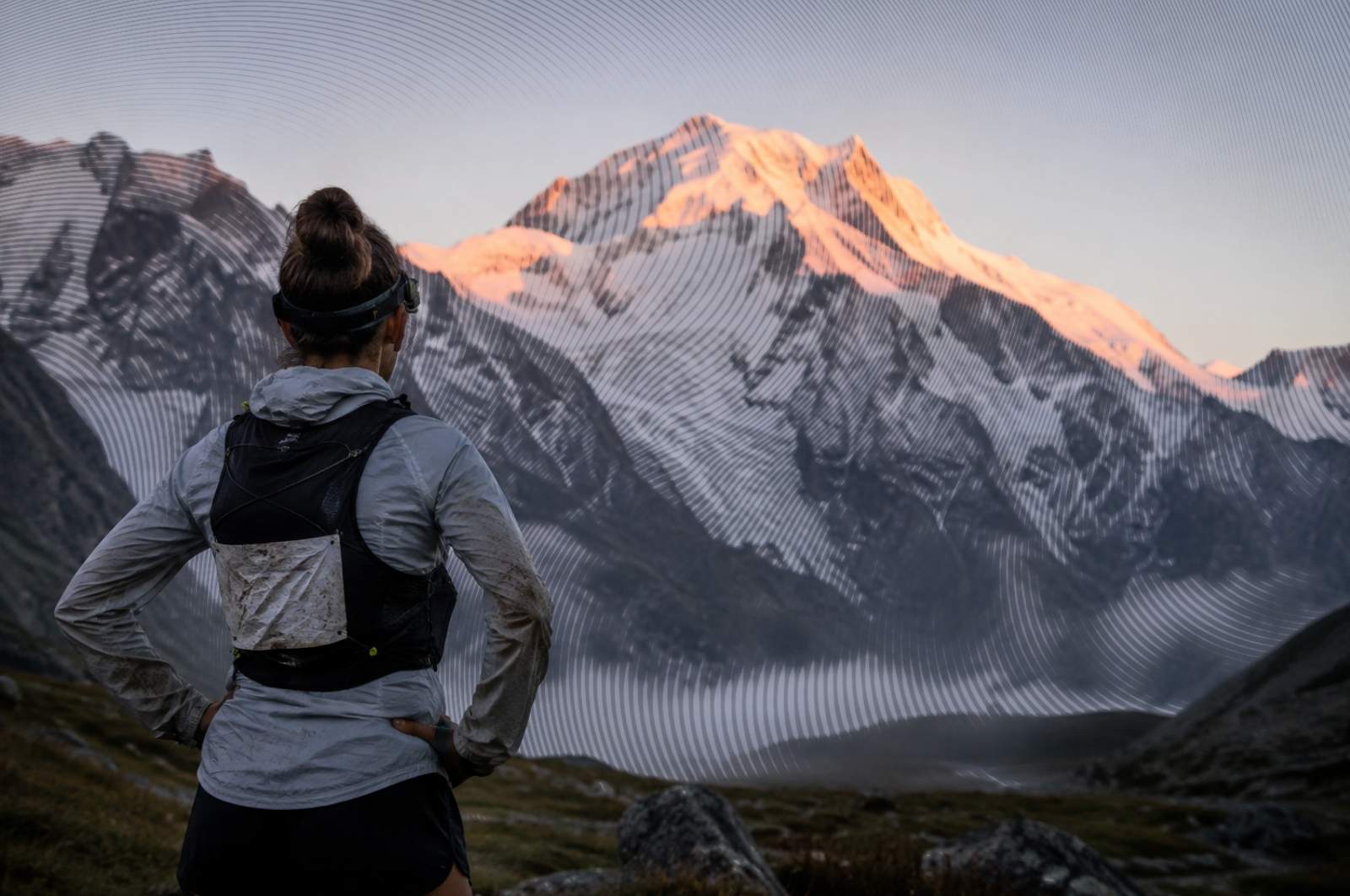
Kilian Jornet, Jim Walmsley, Tom Evans and Katie Schide are all out of UTMB 2026. Here is what happened and how it reshapes the race.
Pictures From Ian Corless, The Denver Post, Jeff Pachoud, Getty Images
The 2026 HOKA UTMB Mont-Blanc start list is one of the deepest in the race’s history, with 846 elite entrants across the week from 54 nationalities.
It is also one of the most conspicuous, because of who is not on it.
Four of the sport’s biggest names are out. Kilian Jornet, Jim Walmsley, defending men’s champion Tom Evans and course-record holder Katie Schide will all miss the 174-kilometre loop around Mont-Blanc on Friday 28 August.
Four different reasons, four different stories, and one race that suddenly looks very different from the one everyone was expecting a month ago.
Here is what happened.
Kilian Jornet: the fifth title that will have to wait
For most of the year, Kilian Jornet’s return was the headline story of the whole race.
The Spanish legend announced his comeback to Chamonix in February, four years after his last UTMB victory in 2022.
He is a four-time winner (2008, 2009, 2011 and 2022), tied with France’s François D’Haene for the outright record. A fifth title would have made him the winningest man in UTMB history.
It is not happening this year. A lingering knee issue that had already forced him out of the Western States 100 earlier this summer never fully healed, and he confirmed the withdrawal in August. His absence lands harder because the pre-race narrative was built around him. The site had already run a full preview of his return targeting a record fifth title, a chase that now shifts to 2027 at the earliest. What this changes at the front of the men’s race
Without Jornet, the men’s field loses its emotional centre of gravity and its most experienced pacing brain.
Every other favourite now has to build a race plan without the runner most of them would have used as a benchmark for the first 100 kilometres.
Jim Walmsley: the American who cracked UTMB, and then went quiet
Jim Walmsley is the only American man to have won UTMB, and he did it in 2023, becoming the first US winner in the race’s history.
He was expected in Chamonix, and UTMB had been briefing his return for weeks.
Like Jornet, Walmsley was forced out of Western States earlier in the summer with injury, and he never recovered enough race sharpness to justify the start line.
His absence quietly reshapes the American men’s challenge, because Walmsley was the one US name inside the top three of any credible prediction.
Without him, the highest-rated American on the 100-mile UTMB Index column is Caleb Olson at 945, followed by Ben Dhiman who leads the general Index at 946 but is only fifth on the 100-mile column.
Why this matters for the shape of the race
Walmsley’s racing style pulls the front pack forward, because he goes out fast and forces everyone else to decide whether to chase or hold back.
Without him, the opening 60 kilometres are much more likely to go conservatively.
That change of tempo helps the durability specialists, the runners who thrive when a 100-mile mountain race is settled on how well you climb at 3am rather than how fast you can run in daylight.
Tom Evans: the defending champion who never explained
Tom Evans won UTMB in 2025 and was the reigning champion.
On 13 August, two weeks before this year’s race, he announced he would not start.
He gave no reason.
That silence is unusual, because defending champions typically explain a withdrawal when the story writes itself either way, injury or otherwise.
Evans did not, and the trail running press has largely respected the choice.
The consequence is that the men’s race lines up without the runner who most recently proved he could win it.
UTMB has not seen a defending champion successfully return since Xavier Thévenard’s repeat in 2013 and 2015, so recent history was against Evans anyway, but the absence still leaves a gap at the front.
Katie Schide: the course record, the foot injury, and a race that lost its ceiling
Katie Schide’s absence is the one that reshapes the women’s race most.
Schide holds the women’s UTMB course record at 22 hours 09 minutes 31 seconds, set in 2024, a run that took more than 20 minutes off the previous mark held by Courtney Dauwalter.
Nobody else in the 2026 women’s field has run within reach of it.
She is out with a foot injury. The absence changes the maths of the race entirely, because it removes the only runner who was going to force a sub-22 hour pace on Croft and Dauwalter.
What Schide’s absence unlocks
Without the course-record holder pulling the front group along, the women’s race becomes a tactical duel between Ruth Croft and Courtney Dauwalter rather than a chase behind a runaway leader.
It also opens the podium. Names like Riley Brady (who sits second on the entry list by UTMB Index at 826), China’s Fuzhao Xiang, Nepal’s Sunmaya Budha and France’s Blandine L’Hirondel all move up a step in the projections.
The race that is left
What remains is still one of the deepest UTMB fields ever assembled, 846 elite entrants across the week, 34 more than 2025 and 46 per cent of them women.
It has a men’s Index leader (Ben Dhiman) and a women’s Index leader (Dauwalter at 859) who have never both won a UTMB before.
The betting favourites now look very different. On the men’s side, the race opens up to Vincent Bouillard (the 2024 champion who broke the 14-hour barrier at Western States this year in 13:46), Ben Dhiman, Caleb Olson and France’s Baptiste Chassagne (second in 2024 and Diagonale des Fous winner in 2025).
On the women’s side, it becomes the Ruth Croft versus Courtney Dauwalter rematch that would have been a subplot if Schide had started.
Croft is defending, and is the only woman to have won all three World Series Finals races (OCC, CCC and UTMB). Dauwalter is chasing a fourth title, having won in 2019, 2021 and 2023.
And behind them, an unknown that nobody has calibrated: Cocodona 250 champion Rachel Entrekin, racing her first UTMB.
One more thing: what the withdrawals say about ultra-running in 2026
Three of the four withdrawals (Jornet, Walmsley, Schide) are injury-related, and Evans has stayed silent. That is a signal, not a coincidence.
The world’s best trail runners are now racing more, at higher intensities, on more technical terrain than ever before. The result is a season calendar that repeatedly shows the same names appearing on withdrawal lists in August because they raced Western States or Hardrock in June or July.
The runners who make it to Chamonix healthy are, increasingly, the ones who selected carefully. That is one of the quieter storylines of UTMB 2026, and it may end up being the loudest by Sunday morning.
The 100-mile UTMB starts on Friday 28 August at 17:45 CEST from Chamonix, and the official race page has the current start list, mandatory kit and cut-off times. It will be missing four of the names most people expected to see, and it will still be one of the most important races of the year.
The 2026 HOKA UTMB Mont-Blanc start list is one of the deepest in the race’s history, with 846 elite entrants across the week from 54 nationalities. It is also one of the most conspicuous, because of who is not on it.
Four of the sport’s biggest names are out. Kilian Jornet, Jim Walmsley, defending men’s champion Tom Evans and course-record holder Katie Schide will all miss the 174-kilometre loop around Mont-Blanc on Friday 28 August.
Four different reasons, four different stories, and one race that suddenly looks very different from the one everyone was expecting a month ago. Here is what happened.
Kilian Jornet: the fifth title that will have to wait
For most of the year, Kilian Jornet’s return was the headline story of the whole race.
The Spanish legend announced his comeback to Chamonix in February, four years after his last UTMB victory in 2022.
He is a four-time winner (2008, 2009, 2011 and 2022), tied with France’s François D’Haene for the outright record. A fifth title would have made him the winningest man in UTMB history.
It is not happening this year. A lingering knee issue that had already forced him out of the Western States 100 earlier this summer never fully healed, and he confirmed the withdrawal in August. His absence lands harder because the pre-race narrative was built around him. The site had already run a full preview of his return targeting a record fifth title, a chase that now shifts to 2027 at the earliest. What this changes at the front of the men’s race
Without Jornet, the men’s field loses its emotional centre of gravity and its most experienced pacing brain.
Every other favourite now has to build a race plan without the runner most of them would have used as a benchmark for the first 100 kilometres.
Jim Walmsley: the American who cracked UTMB, and then went quiet
Jim Walmsley is the only American man to have won UTMB, and he did it in 2023, becoming the first US winner in the race’s history.
He was expected in Chamonix, and UTMB had been briefing his return for weeks.
Like Jornet, Walmsley was forced out of Western States earlier in the summer with injury, and he never recovered enough race sharpness to justify the start line.
His absence quietly reshapes the American men’s challenge, because Walmsley was the one US name inside the top three of any credible prediction.
Without him, the highest-rated American on the 100-mile UTMB Index column is Caleb Olson at 945, followed by Ben Dhiman who leads the general Index at 946 but is only fifth on the 100-mile column.
Why this matters for the shape of the race
Walmsley’s racing style pulls the front pack forward, because he goes out fast and forces everyone else to decide whether to chase or hold back.
Without him, the opening 60 kilometres are much more likely to go conservatively.
That change of tempo helps the durability specialists, the runners who thrive when a 100-mile mountain race is settled on how well you climb at 3am rather than how fast you can run in daylight.
Tom Evans: the defending champion who never explained
Tom Evans won UTMB in 2025 and was the reigning champion.
On 13 August, two weeks before this year’s race, he announced he would not start.
He gave no reason.
That silence is unusual, because defending champions typically explain a withdrawal when the story writes itself either way, injury or otherwise.
Evans did not, and the trail running press has largely respected the choice.
The consequence is that the men’s race lines up without the runner who most recently proved he could win it.
UTMB has not seen a defending champion successfully return since Xavier Thévenard’s repeat in 2013 and 2015, so recent history was against Evans anyway, but the absence still leaves a gap at the front.
Katie Schide: the course record, the foot injury, and a race that lost its ceiling
Katie Schide’s absence is the one that reshapes the women’s race most.
Schide holds the women’s UTMB course record at 22 hours 09 minutes 31 seconds, set in 2024, a run that took more than 20 minutes off the previous mark held by Courtney Dauwalter.
Nobody else in the 2026 women’s field has run within reach of it.
She is out with a foot injury. The absence changes the maths of the race entirely, because it removes the only runner who was going to force a sub-22 hour pace on Croft and Dauwalter.
What Schide’s absence unlocks
Without the course-record holder pulling the front group along, the women’s race becomes a tactical duel between Ruth Croft and Courtney Dauwalter rather than a chase behind a runaway leader.
It also opens the podium. Names like Riley Brady (who sits second on the entry list by UTMB Index at 826), China’s Fuzhao Xiang, Nepal’s Sunmaya Budha and France’s Blandine L’Hirondel all move up a step in the projections.
The race that is left
What remains is still one of the deepest UTMB fields ever assembled, 846 elite entrants across the week, 34 more than 2025 and 46 per cent of them women.
It has a men’s Index leader (Ben Dhiman) and a women’s Index leader (Dauwalter at 859) who have never both won a UTMB before.
The betting favourites now look very different. On the men’s side, the race opens up to Vincent Bouillard (the 2024 champion who broke the 14-hour barrier at Western States this year in 13:46), Ben Dhiman, Caleb Olson and France’s Baptiste Chassagne (second in 2024 and Diagonale des Fous winner in 2025).
On the women’s side, it becomes the Ruth Croft versus Courtney Dauwalter rematch that would have been a subplot if Schide had started.
Croft is defending, and is the only woman to have won all three World Series Finals races (OCC, CCC and UTMB). Dauwalter is chasing a fourth title, having won in 2019, 2021 and 2023.
And behind them, an unknown that nobody has calibrated: Cocodona 250 champion Rachel Entrekin, racing her first UTMB.
One more thing: what the withdrawals say about ultra-running in 2026
Three of the four withdrawals (Jornet, Walmsley, Schide) are injury-related, and Evans has stayed silent. That is a signal, not a coincidence.
The world’s best trail runners are now racing more, at higher intensities, on more technical terrain than ever before. The result is a season calendar that repeatedly shows the same names appearing on withdrawal lists in August because they raced Western States or Hardrock in June or July.
The runners who make it to Chamonix healthy are, increasingly, the ones who selected carefully. That is one of the quieter storylines of UTMB 2026, and it may end up being the loudest by Sunday morning.
The 100-mile UTMB starts on Friday 28 August at 17:45 CEST from Chamonix, and the official race page has the current start list, mandatory kit and cut-off times. It will be missing four of the names most people expected to see, and it will still be one of the most important races of the year.