The Training Change Every Woman Runner Over 45 Is Getting Wrong
A 2025 clinical study of women in perimenopause and postmenopause found a training change that outperformed extra mileage. Most running plans still miss it.

A doctor told Sir Christopher Ball to lose weight before his 70th birthday. He picked up running instead. He is now in his 90s and still going.
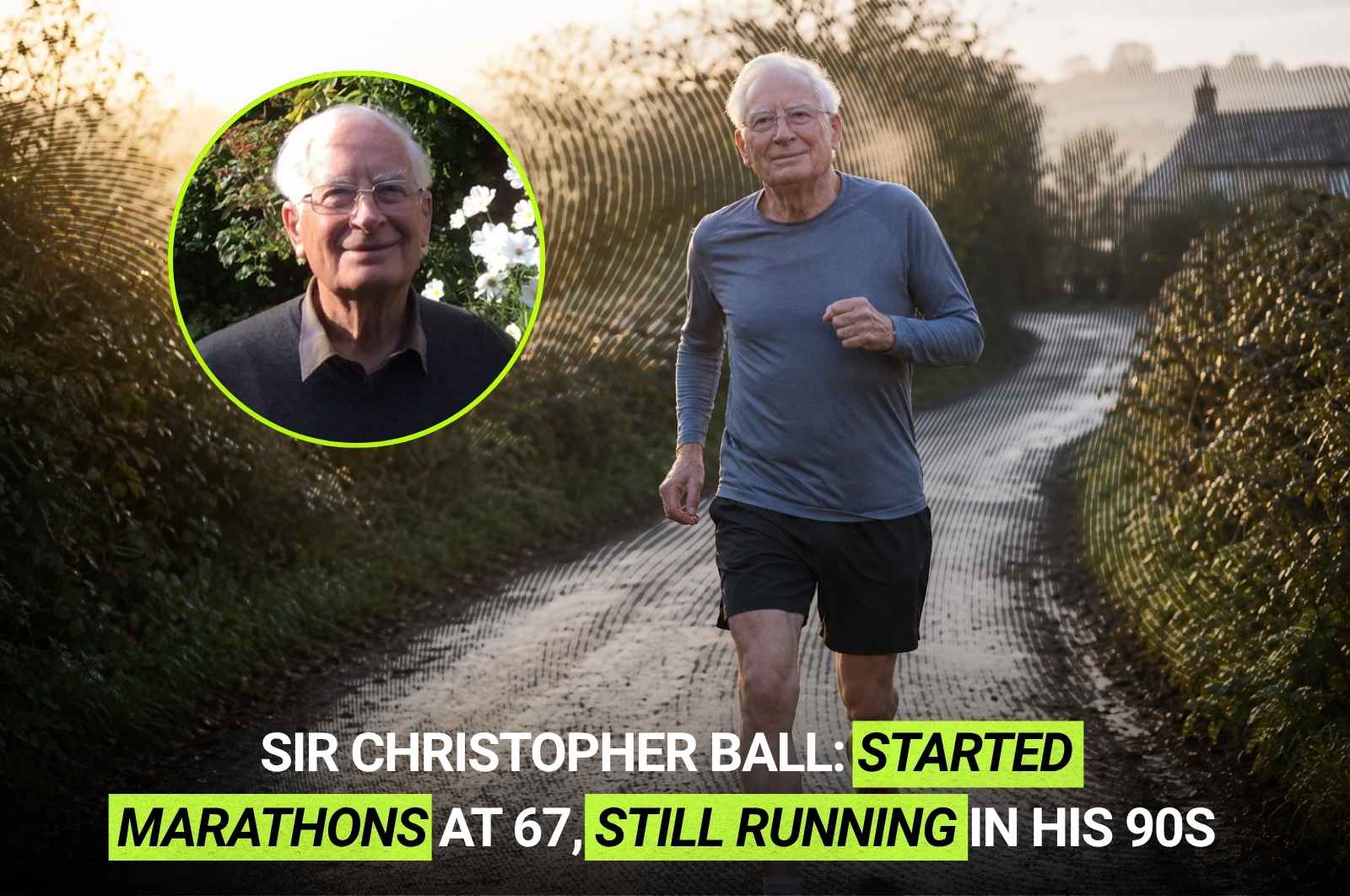
The consultation that changed the life of Sir Christopher Ball took under 10 minutes.
He was almost 70. His doctor told him he had become overweight and his blood pressure was too high.
He is now in his 90s. He has just finished planning 10 kilometres a day for 10 successive days.
The gap between those two facts is the entire story. It is also a manual, once someone looks at what he actually did.
Ball did not spend two years easing into it.
According to his as-told-to essay for Business Insider, he ran his first marathon at 67, the same year he was told to lose weight.
The runway to that first marathon was short and steep. His first outdoor run was, in his own recollection, difficult.
Inside a few weeks he was running 10 miles at a time. That is a compression very few new runners in their late 60s attempt.
Ball had two things in his favour that pure beginners do not.
He had served in the Army and remained physically active into retirement.
The aerobic base was ancient but present.
That mirrors what a lot of masters-running science shows.
The Spanish mechanic profiled with the VO2 max of a 20-year-old at 82 also came from a background of manual, always-moving work.
Never-active bodies do not respond the way his body responded. That is worth being honest about.
Ball attributes his longevity to four things, in the order he lists them: mindset, exercise, diet, and stress reduction.
None of that is exotic.
None of it requires supplements, biohacking, or a wearable.
Ball explicitly frames optimism as work, not a personality trait.
He has said several members of his family suffered from depression, and that he actively works against that inheritance every day.
When he had a heart attack and triple bypass in his late 70s, he called it a fascinating setback rather than an ending. He resumed running slowly afterwards.
The training arc that followed scales in a way most runners find alarming.
First marathon at 67, and then back-to-back marathons on a Monday and Tuesday.
Then seven marathons in one week.
Then 10 marathons in 10 days.
That is not a Couch-to-5K graph. That is a person who decided the ceiling was arbitrary and started testing it.
The research on masters distance runners keeps landing in a similar place.
As Jeannie Rice keeps proving at 77, consistent stimulus preserves cardiovascular capacity far past the point most runners assume.
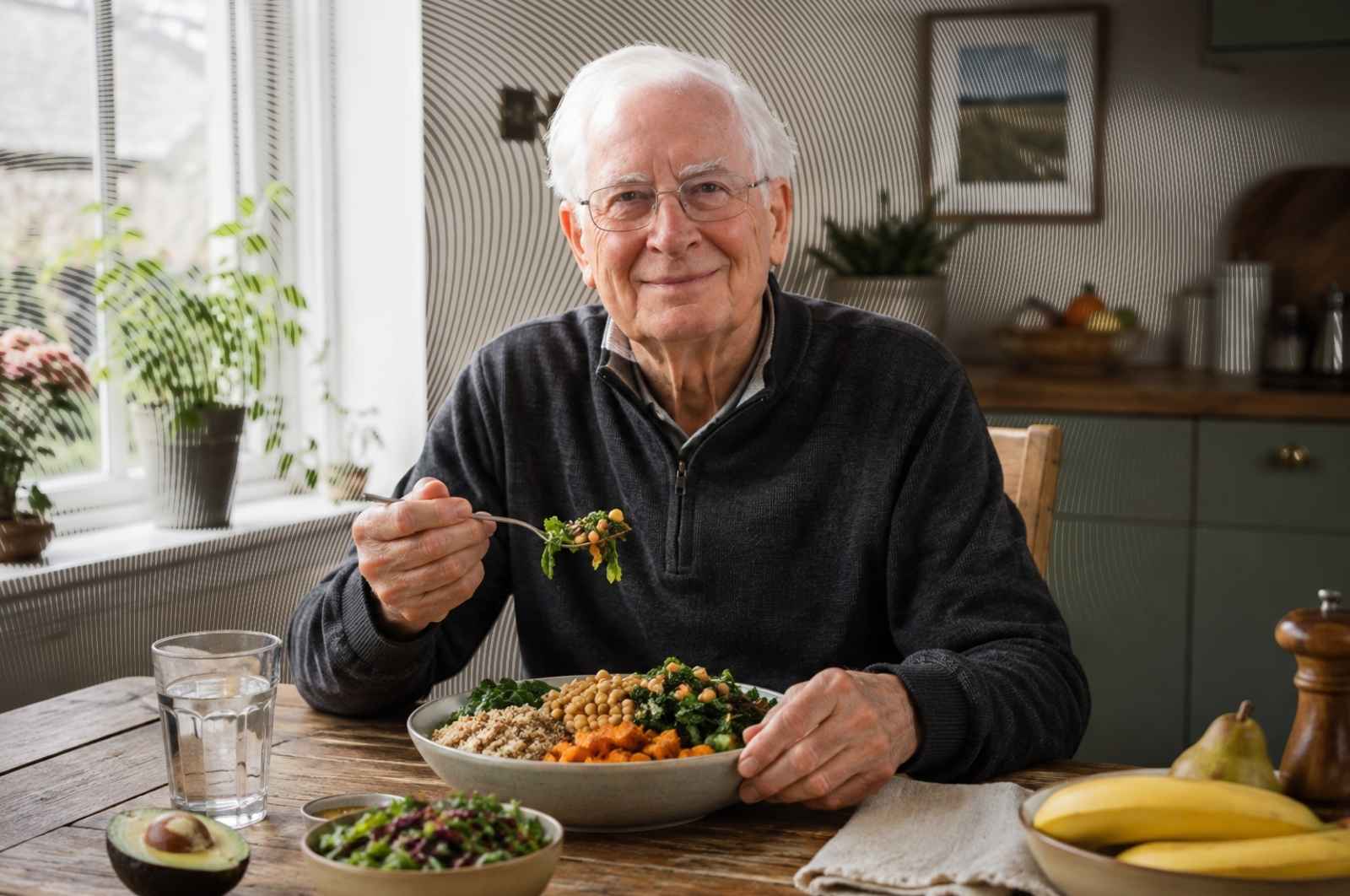
Ball switched to a vegan diet in his later years after his granddaughters asked him why he was eating animals.
That is not an argument for veganism.
That is an argument about who has permission to ask the question.
Ball has said the health benefits surprised him.
Combined with the running, it kept his weight where the original doctor had wanted it, decades earlier.
The lesson to extract is not the diet. It is the willingness to change a 60-year eating pattern on the strength of a conversation with a grandchild.
Ball plans projects and connects with people regularly, including his wife.
He also takes a cold shower every day, a small daily hormetic stress that turns up in longevity research constantly.
The list reads like a modern longevity-podcast summary, but Ball has been living it for about 20 years.
The order matters as much as the items. Purpose first, connection second, daily practice third.
Purpose plus connection plus a small daily hormetic stress is the same trio that keeps showing up in the Blue Zones data.
The short version: it works, and the window is wider than most people think.
Aerobic capacity in a trained older body declines much more slowly than in a sedentary one.
Muscle mass is the harder problem, which is why strength work matters.
For a beginner in their 60s, the correct question is not is it too late, it is what is the safest ramp-up.
The full protocol on that lives in this practical guide to starting to run at 50 and beyond, including the walk-run structure that most masters runners get wrong.
Ball had a heart attack in his late 70s, after years of high-mileage running.
That will alarm any older runner reading this.
It should not. His subsequent triple bypass revealed pre-existing coronary disease that could easily have killed him earlier, without the running.
The running did not cause the event. It very likely postponed it.
That is the same lesson runners took from another 70-year-old who ran his first marathon and kept going. Cardiovascular events happen in trained and untrained bodies, but trained bodies recover from them.
Skip the inspirational veneer. There are five specific, transferable lessons.
Ball is planning 10 kilometres a day for 10 days as this piece was written. He is in his 90s.
That is not the sensational headline. The sensational headline is that it is not sensational to him.
The doctor was right at 67. Ball made her right for the next 25 years.
Start your running journey today!
No spam. Cancel anytime.