The Sudden Grab in Your Calf Mid-Run Is a Warning. Ignoring It Costs You Weeks.
The calf strain that ends a runner’s season starts as a small grab. Here are the real causes, the treatment sequence that works, and what actually prevents a repeat.

Richard Whitehead MBE ran 2:40:47 at the Wizz Air Milano Marathon to lower his own world record for athletes with bilateral knee amputations. Here is how he keeps doing it.
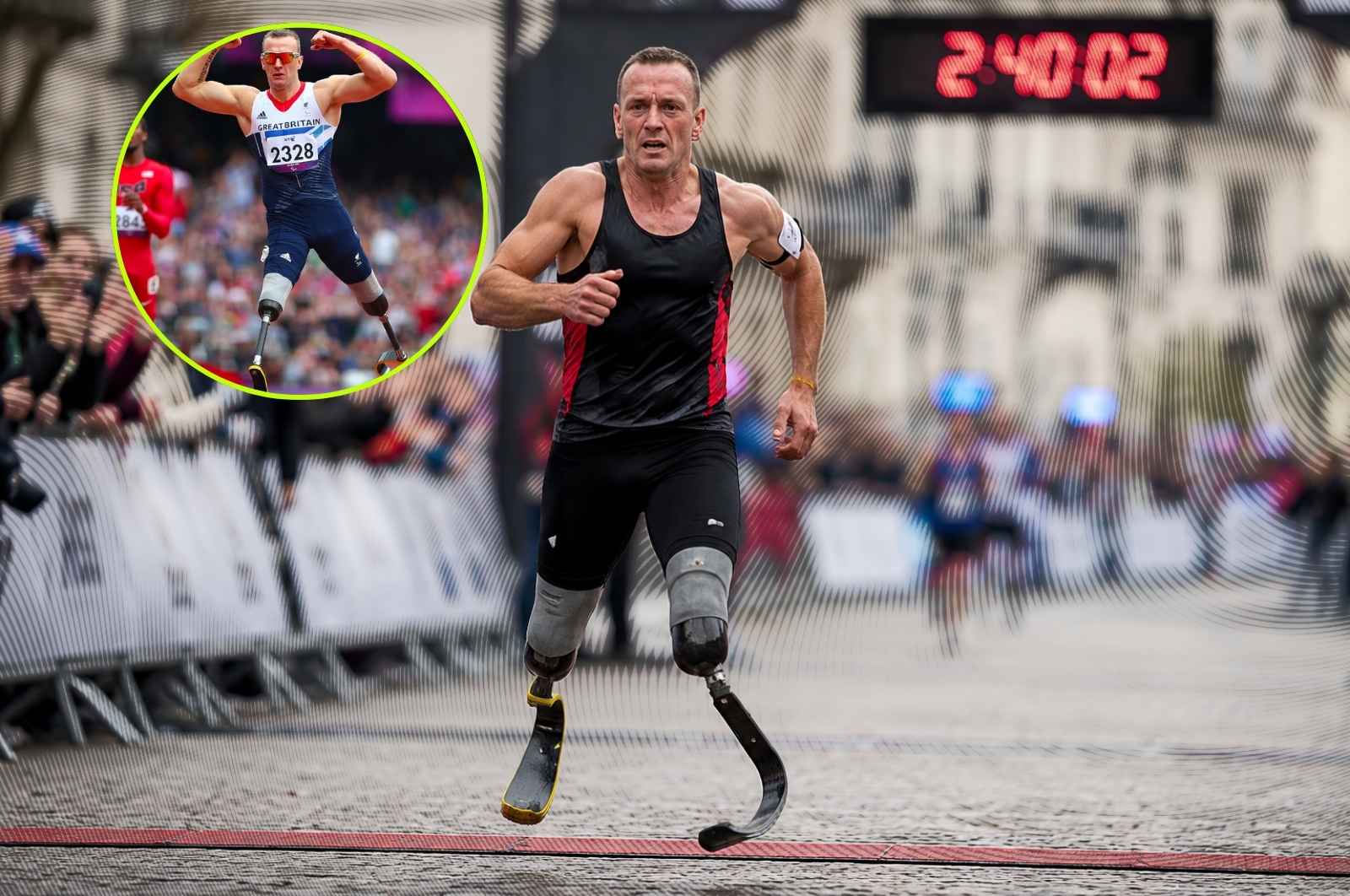
On a spring morning in Milan, a 49-year-old double-above-knee amputee ran the marathon in 2 hours, 40 minutes, 47 seconds.
That number belongs to Richard Whitehead MBE, and it is the new bilateral knee amputation marathon world record.
He set the previous one himself, at Chicago in 2024.
He came to Milan to beat it, and he did.
For context, that pace would put him in the top third of the field at most big-city marathons on legs made of bone. He is running on carbon.
Whitehead crossed the Wizz Air Milano Marathon finish line in 2:40:47, per Living with Disability magazine.
The Chicago 2024 mark he beat was already the fastest marathon ever run by an athlete with two above-knee amputations. He has held versions of this record for years.
What makes the Milan run different is what came before it.
In 2025 alone, Whitehead completed 20 marathons across the globe.
By the time he stepped to the Milan start line in early 2026, he had already ticked off four more marathons that year. That is a workload most single-legged elites never touch.
Whitehead has no biological knees. Both legs are amputated above where a knee joint would be.
That is a categorically harder body to run 26.2 miles in than a single-limb amputation. There is no sound leg to compensate on a rough camber or a sharp turn.
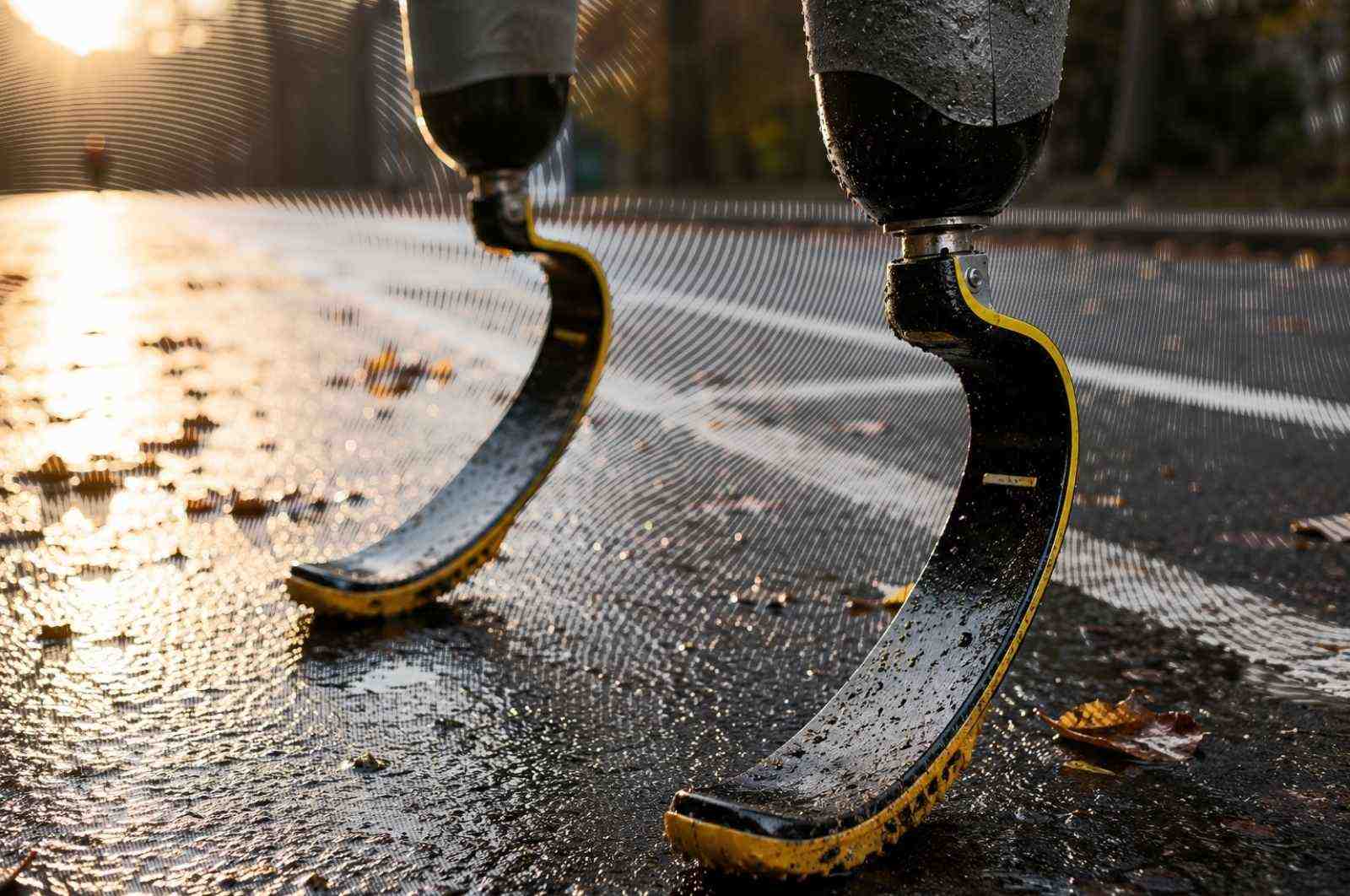
Each blade absorbs impact and returns spring energy without the biological shock absorber a knee provides. Every step is a controlled fall from two directions at once.
That is why the bilateral above-knee category exists at all. It is a physically distinct sport.
A record-breaking marathon is almost never one thing. It is a stack of small edges.
The Milano Marathon route is fast, mostly flat, and finishes on the wide avenues of the city centre. It is not a Berlin or a Chicago, but it is quick.
For a runner on blades, flat matters more than it does for able-bodied elites. Rolling terrain destroys prosthetic economy.
Twenty marathons in a calendar year builds a form of aerobic durability that specific-block training cannot replicate.
The trade-off is injury risk. Whitehead has clearly figured out a recovery routine that lets him stack races without breaking down.
After Milan, Whitehead said a milestone like this only fuels his drive and determination further. That is not a throwaway line.
The athletes who run 20 marathons a year at pace share one trait, and it is not talent. It is a private, unshared refusal to be finished.
The Milan time (2:40:47) is a Paralympic-category world best. It is also, quietly, an aging-athlete world best.
Whitehead is 49. He is running faster now than most elite marathoners run at 29.
Masters running is having a moment. When a 61-year-old Frenchman lowered the 60–64 marathon world record in Seville, it was framed as the outer limit of what an aging endurance body can do.
Whitehead is running 2:40s on blades at 49.
There is no obvious ceiling for how far he can push this.
Whitehead has said he knows the power of visibility, and that someone like him, living with a very physical disability, can inspire others to believe in their own potential.
That is his stated reason for stacking races. Every finish line is a message.
It also mirrors what other late-career record-breakers have said. When Emma Maria Mazzenga broke the 90-plus 200m world record, she framed it in identical terms.
There is a version of an adaptive-athlete story that is inspirational tofu. Feel something, move on.
That is not this. Whitehead is doing three specific things that map directly onto any training plan.
A 2:40 marathon puts a runner at roughly a 6:07 mile pace, held for 26.2 miles without stopping.
The average recreational runner logging four days a week rarely gets under 8:30 for a single mile. The gap between what most people think a body can do and what Whitehead is doing is astronomical.
That gap has almost nothing to do with legs. It has to do with training age, consistency, and how much someone is willing to hurt.
The Jeannie Rice principle applies here. Aerobic decline is real but slower than expected when training does not stop.
Off the road, Whitehead runs the foundation that carries his name. It funds sport access for disabled young people across the UK.
He has publicly framed his disability as a resource, not a hindrance.
That framing is the entire point of the story, not the 2:40:47.
The 2:40:47 is just the loudest way he keeps saying it.
There is no reason to expect Milan is the ceiling. Whitehead is racing more, not less, and has publicly said slowing down is not the plan.
The bilateral above-knee marathon world record has now dropped twice in less than 18 months, both times by the same runner.
Expect a third by year end.
When it happens, remember the pattern: volume, flat course, a mission bigger than the time.
The best runner in the category is not slowing down. He is only just warming up.
Start your running journey today!
No spam. Cancel anytime.