Puma is teaming up with China’s Shincell New Materials to co-develop the next generation of its Nitro midsole foam, launching a joint research lab in Suzhou aimed at boosting cushioning, responsiveness, and efficiency across future performance footwear.
Puma has announced a new technology partnership with Chinese materials company Shincell New Materials to develop the next generation of its Nitro midsole foam, a key component in the brand’s performance running shoes.
(Credit: Puma)
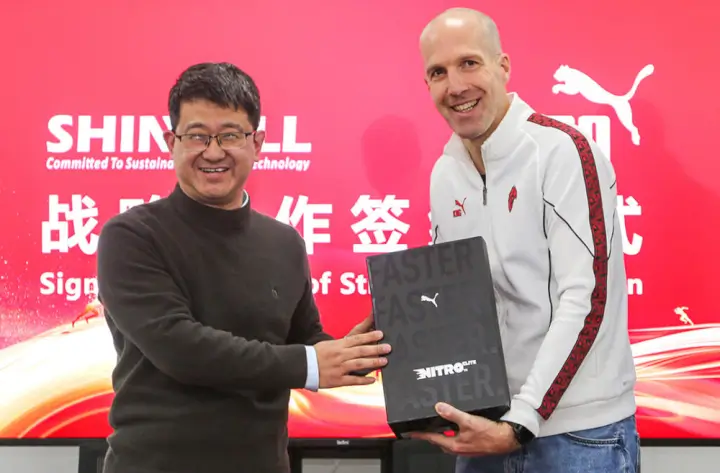
The collaboration, confirmed Wednesday by Puma vice president of innovation Romain Girard and Shincell CEO Dr. Xiulei Jiang, will center around a joint research laboratory in Suzhou, China, where Shincell is headquartered.
(Credit: Puma)
The facility will focus on testing advanced materials and high-performance midsole components aimed at improving cushioning, responsiveness, and overall efficiency in athletic footwear.
“With Nitro we have the best running technology in the industry, and the agreement with Shincell allows us to maintain that edge and make the best even better in future product generations,” Girard said.
Puma first introduced Nitro foam in 2021 as part of a broader effort to revitalize its running shoe lineup. The technology debuted in the Deviate model and later appeared in Velocity, Liberate, and Eternity running shoes.
Designed to deliver high energy return while keeping weight low, the foam has since become a core platform across Puma’s performance footwear, including training and racing models.
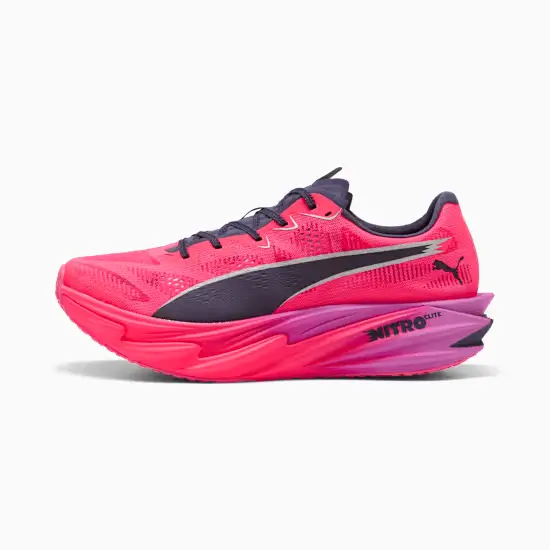
An upgraded version, NitroFoam Elite, currently powers the Fast-R3 distance racing shoe. Puma also uses variations of the material in football, golf, basketball, and other sports footwear.
Shincell, founded in 2019 by materials scientist Dr. Xiulei Jiang, specializes in physical gas-foaming technology that uses nitrogen and carbon dioxide to create micro and nano-bubble structures in foam. The process produces lightweight materials while reducing environmental impact.
The first products emerging from the Puma–Shincell collaboration are expected to appear in future product cycles.