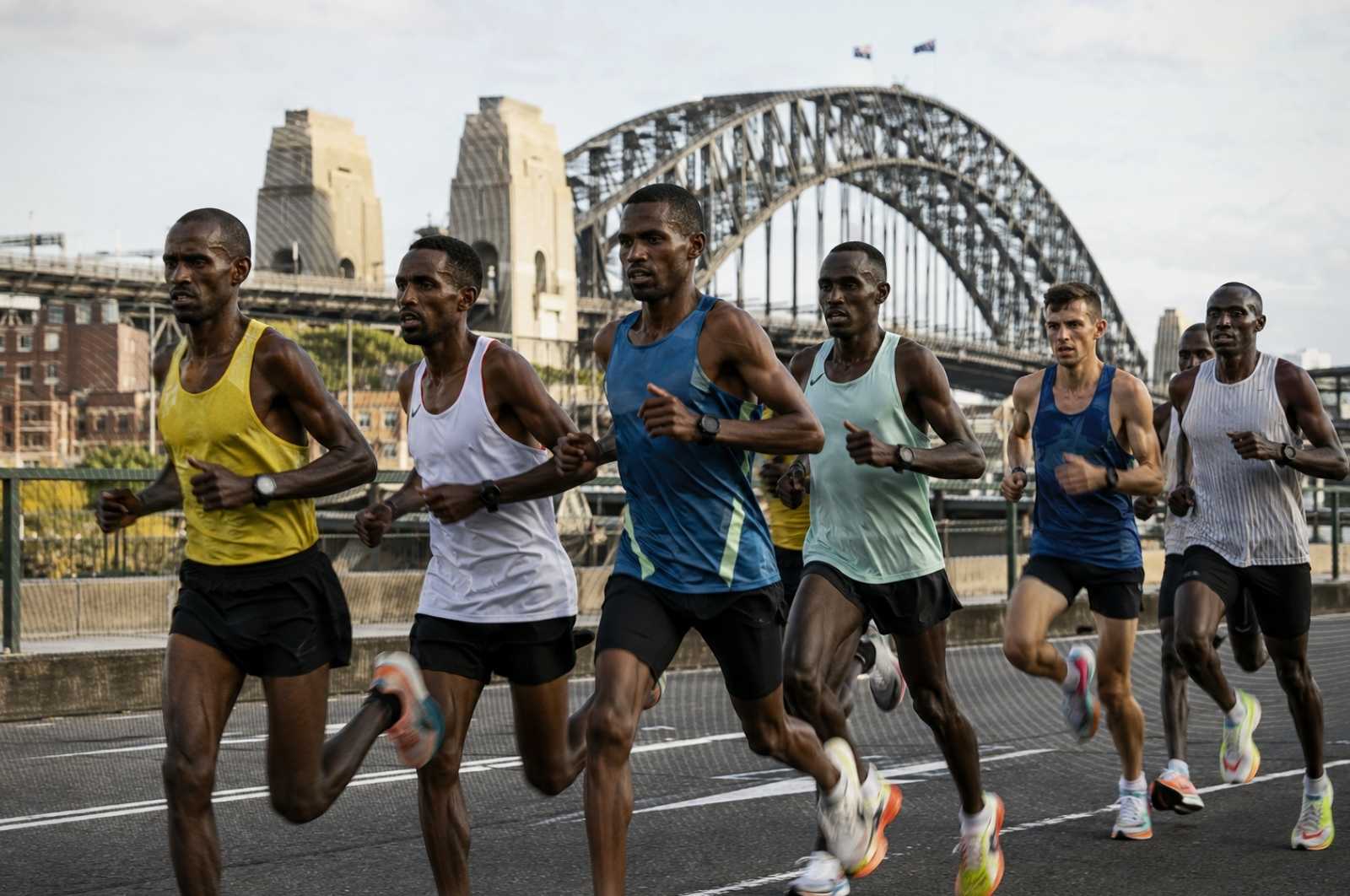
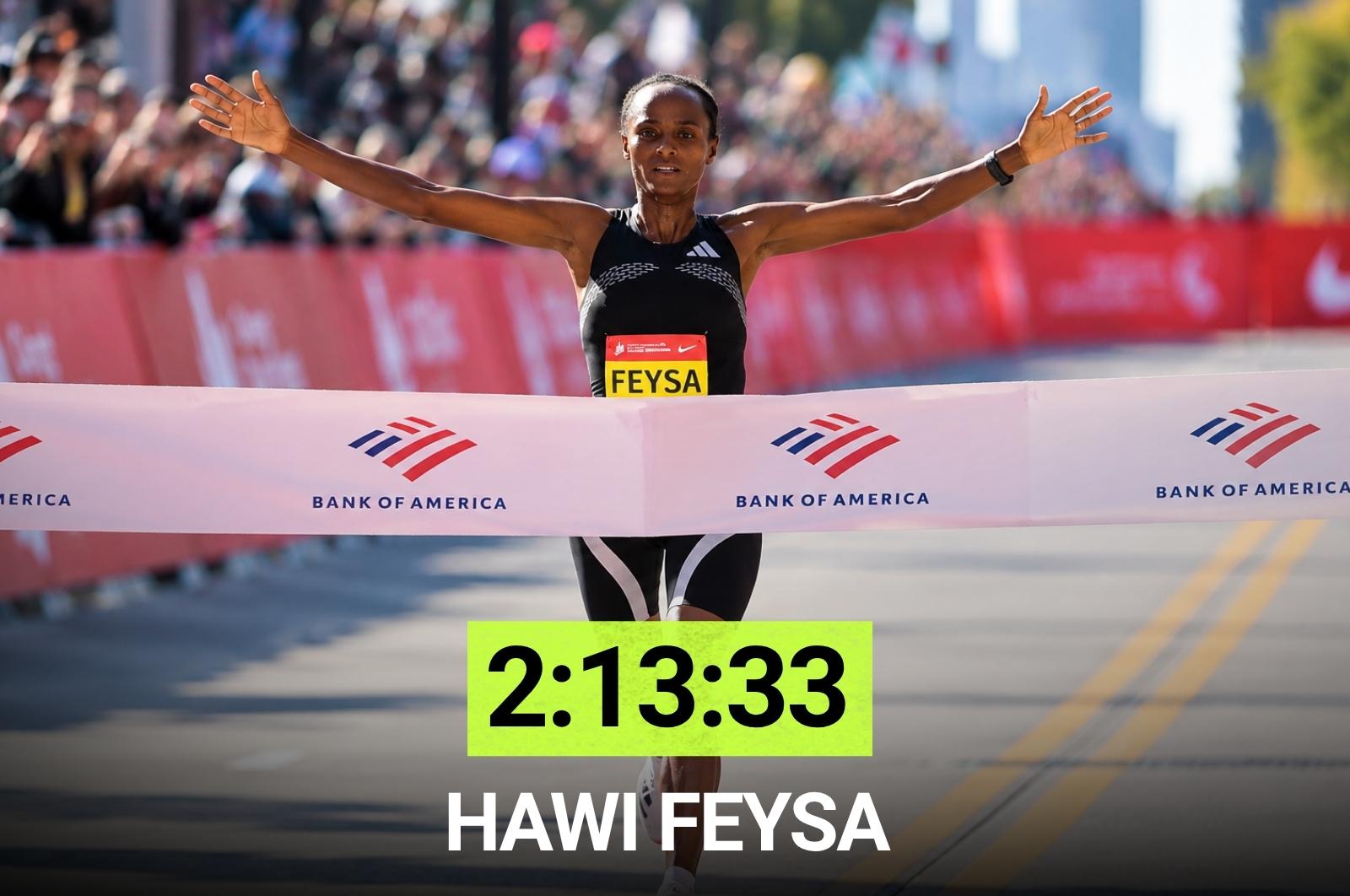
Ethiopia's Addisu Gobena won the 2026 Sydney Marathon in 2:04:42, but the real story is that seven men finished under the previous course record.
Pictures from World Athletics
Ethiopia's Addisu Gobena won the 2026 TCS Sydney Marathon in 2:04:42, a new course record.
The bigger story is not the winner's time. It is that
six other men broke the previous course record on the same day.
Hailemaryam Kiros' 2:06:06 from 2025 fell seven times inside a single race.
The Race Gobena Actually Ran
Gobena is 20 years old.
He came into Sunday with one career marathon victory to his name and finished second at Sydney last year in 2:06:16.
He ran with the lead pack through 35 kilometres, then made his move up the finishing stretch to hold off compatriot Chimdessa Debele.
Three seconds separated them at the line.
Lesotho's Tebello Ramakongoana was third in 2:04:57.
World champion Alphonce Simbu finished fourth in 2:04:57 as well, the second time he has broken 2:05 on debut at a Major.
The Sub-2:05 Depth Was A First For Australia
Prior to Sunday, no man had run under 2:05:00 on Australian soil.
On Sunday, five did inside a single race.
Race director Wayne Larden told reporters that five men under 2:05 in Sydney would have been unthinkable a few years ago.
Two things changed since then.
The first was Sydney becoming a Major, which pulled in the depth of field the sport's top athletes now demand.
The second was every runner in that lead group being in current-generation carbon-plated racing shoes.
Why Course Records Are Falling In Clusters Now
The Sydney result is not a Sydney phenomenon.
The 2026 Boston Marathon in April saw three men break the previous course record. John Korir won it in 2:01:52, followed by Simbu and Kipruto.
In London, weeks later, two men broke two hours in the same race for the first time in marathon history.
The pattern is real. It has three components.
One: The Shoes Compound With Pace
Carbon-plated racing shoes have been in circulation for eight years.
Every generation has narrowed the performance gap between best-shod runner and mid-pack elite.
Pack racing amplifies that.
Two: Pack Racing And Drafting
A tight seven-man pack at Sydney was, physiologically, running a different race than a solo athlete on the same course.
Three: The Sydney Course Is Harder Than It Looks, And They Still Ran Sub-2:05
Sydney is not Berlin.
The course has the toughest elevation profile in the Marathon Majors, including a punishing climb up Oxford Street and repeated undulation across the Harbour Bridge.
Which makes the fact that seven men still broke 2:06 on it the actual story.
What Gobena's Win Means For The Rest Of 2026
Gobena is now on the shortlist of every Berlin, Chicago and Tokyo elite director.
At 20 years old, running 2:04:42 on the hardest course of the seven original Majors, he is exactly the kind of young athlete who tends to move up the marathon lists fast.
Kiros, the defending champion, finished sixth in 2:05:16.
He ran faster than his winning time from last year. And still dropped five places.
The Uncomfortable Question For Everyone Else
A course record that falls seven times in one race stops being a course record.
It becomes a floor.
The next Sydney course record almost certainly falls in 2027, and the field is now recalibrating training paces around a sub-2:05 target that was theoretical 18 months ago.
Where To Follow The Full Results
The course record was under serious threat. It did not survive first contact.
For readers who want to sit with the depth number one more time: Kiros ran 2:05:16 on Sunday.
That was the sixth-fastest time on the day, on a course he won in 2:06:06 twelve months earlier.
Same athlete, same course, harder result, and it still moved him five places down the podium. Sydney is no longer a race the field lets happen to them.
It is a race the field now actively attacks.