Tshepiso Masalela’s 3:32.55 win at the Orlen Copernicus Cup was wiped out within minutes after a finger-gun gesture toward Azeddine Habz triggered a TR 7.1 “improper conduct” DQ raising the bigger question: was this really disqualification-worthy?
At the Orlen Copernicus Cup in Toruń on February 22, Tshepiso Masalela crossed the line first in the men’s 1500 meters in 3:32.55, which would have been a Botswanan indoor national record and one of the fastest times run in the world this year but within minutes, the result changed.
Erik van Leeuwen / Wikimedia Commons
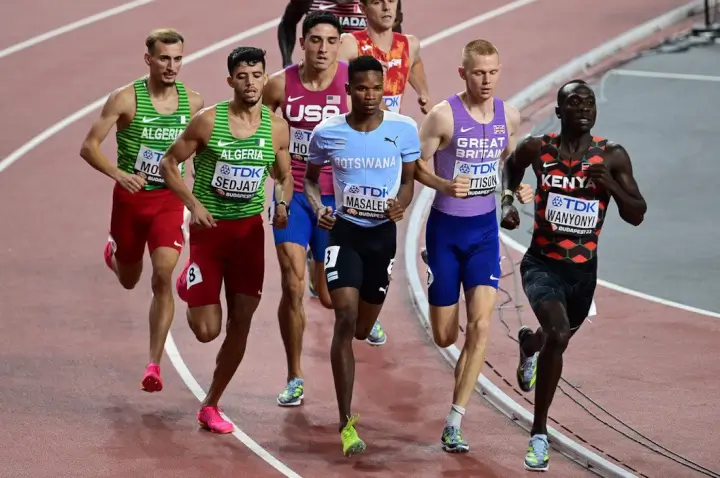
MaMasalela's Gesture at the Orlen Copernicus Cup vs Lyle's Gesture at World Championships:
Masalela was disqualified for “improper conduct” under World Athletics rule TR 7.1 after making a finger-gun gesture toward France’s Azeddine Habz in the closing meters of the race. Habz, who had finished second in 3:32.56, was elevated to the win. In his indoor debut, Masalela’s time would have been a significant mark for Botswana indoors. It would have been one of the fastest 1500 performances globally this season and it would have been a decent payday for Masalela.
What happened? Masalela surged late and as he moved past Habz, he gained separation he turned and mimed the gesture directly toward him before fully crossing the line. The gesture itself was not subtle and it wasn’t a general celebration to the crowd. The gesture happened while the race was still unfolding and it was clear the gesture was toward Habz.
Under TR 7.1, athletes can be disqualified for improper conduct or unsportsmanlike behavior. Officials applied the rule and Masalela’s protest was rejected but the result was amended.
Disqualifications in track are usually tied to competitive fairness like stepping inside the rail or obstructing another runner. These change the physical outcome of the race so it makes sense to DQ but in this case, the order across the line in the men's 1500 meters did not change because of the gesture.
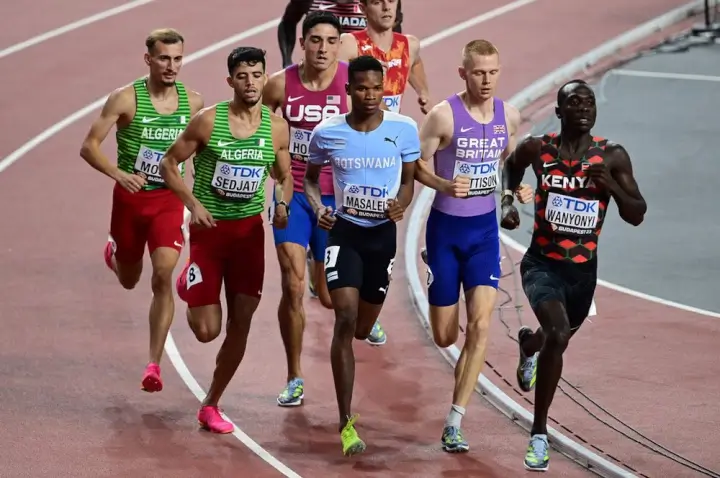
Masalela's Gesture at the Orlen Copernicus Cup vs Lyle's Gesture at World Championships:
It also doesn’t help that similar celebrations have happened before without this outcome. Noah Lyles has used the same finger-gun motion in including the World Championships in 2022 and did not face disqualification...In fact, some U.S. reporters celebrated the finger-gun motion. That comparison of Masalela and Lyles surfaced almost immediately, and whether the contexts were identical or not, it highlights the perception problem. If the rule exists, it has to be applied consistently because if it’s applied inconsistently, it starts looking arbitrary.
At the same time, directing a gesture at another athlete in the final meters of a tight race is going to draw scrutiny. There’s a difference between running through the line and celebrating to the stands, and turning toward the person you just passed while the race is still technically active.
Track has always had tension around personality and restraint. Track and field wants visibility and athletes who are recognizable, but it also holds tightly to tradition and a certain standard of decorum.
Masalela made the move crossed first and ran a 3:32.55...One of the fastest indoor 1500s run this season. Even if you disagree, he celebrated in a way that made sense for him.
Should Masalela have been fined?
A fine would have made more sense than a DQ, mostly because the gesture was dumb and directed, but it didn’t alter the competitive outcome the way interference or a lane violation does.
Masalela ran 3:32.55 and crossed first, and the penalty didn’t just ding him, it deleted the win, the prize money, and the national record, with Habz moved to first in 3:32.56. Instead of erasing 1500 meters history, a fine (or even a warning plus a fine, depending on how strict you want to be) would have said “don’t taunt like that” while keeping the result decided by who got to the line first.
You can say he shouldn’t have done it or officials were right to act. You can say similar gestures have happened before without anyone blinking. None of that changes what people saw and it asks the question of should he have been disqualified.
Do you believe the DQ was fair? Should Masalela have been fined instead?