9 Rookie Mistakes That Ruin First Marathons (And How to Avoid Them)
Nine first-marathon mistakes coaches see every single year, from training and nutrition to race-day pacing. Learn each one before your start line.

Today, we've got some incredible lessons to share with you from none other than the fastest marathon runner of all time, Eliud Kipchoge.

Now, let me give you the lowdown on this amazing guy.
Eliud was born in 1984 in Kenya and grew up on a farm. Raised by a single mom, he used to run 3 kilometers to school every morning, which really honed his talent from a young age.
At 16, he met his coach, Patrick Sang, who, by the way, still coaches him to this day.
This partnership propelled Eliud to become the greatest marathon runner ever, winning all 10 marathon races he entered between 2014 and 2019. And he shattered the 2-hour barrier for the marathon, which is absolutely mind-blowing!
So, there's definitely a lot we can learn from him.
Let me share my 4 favorite lessons from Eliud Kipchoge.
Eliud leads a simple and humble lifestyle, despite being a multimillionaire thanks to his incredible achievements.
His weekly routine is pretty monk-like. From Monday to Saturday, running is his religion.
He chooses to stay in a basic room in the dorms with other athletes at the camp.
According to Eliud, life is straightforward: wake up, run, clean or relax, lunch, massage, 4 o'clock run, evening tea, sleep, and repeat.
It's as simple as that.
So, according to him, focus on growing and developing your skills, and the money will naturally follow.
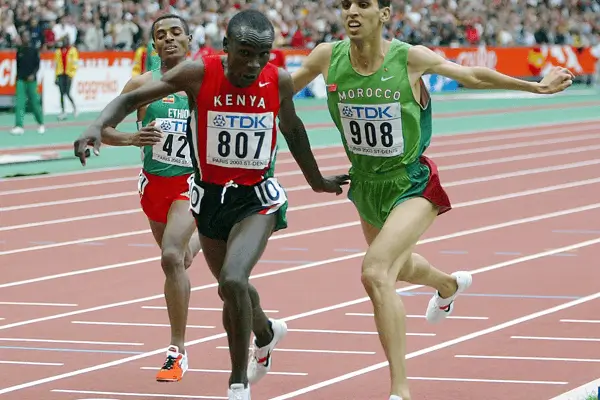
Eliud started his career as a 5000 meter runner and won a few medals.
But instead of sticking to that and limiting himself, he took a leap of faith and ventured into marathon running, which brought him even greater success.
So, in your own career, don't be afraid to take risks that could propel you further, just like Eliud did with the marathon!
Eliud believes in making decisions like a sharp knife, cutting straight and clean.
Self-discipline is a journey, my friend. Sometimes, you gotta say no to your passions and impulses.
Build a life where you live without complaints or dwelling on the past.
Eliud's lifestyle in Kenya is a testament to that. Even though he has a lovely house with his family nearby, he chooses to spend the entire week in a dormitory with other athletes, solely focused on his running!
Eliud sees running as a team sport, which was evident during his record-breaking marathon.

Here you can find the full video of the INEOS 1:59 Challenge if you haven't seen it yet.
But even in training, he always runs in a group with some friends and pacer. There's an African proverb that goes: "If you want to run fast, run alone. If you want to go far, run in a group." – African proverb
Well, Eliud takes it to the next level and goes both far and fast.
He believes training in a group nurtures healthy competition, accountability, and most importantly, friendship.
Friendship plays a significant role in the Kenyan running culture!
Eliud Kipchoge’s journey from a Kenyan farm to breaking the 2-hour marathon barrier is a testament to focus, adaptability, and community.
His humility, discipline, and commitment to growth over wealth offer valuable lessons: embrace change, practice self-discipline, and surround yourself with the right people.
Let his story and tips inspire you to chase your goals with determination and purpose!
Start your running journey today!
No spam. Cancel anytime.