Do You Need Sunscreen for Running Outside? A Runner’s Guide
Runners get higher cumulative UV exposure than the general population. Here is when sunscreen matters, what SPF actually works when you sweat, and what to do about it.

Learn how to spot and prevent the six most common running injuries from runner’s knee and shin splints to plantar fasciitis and IT band pain by managing training load, improving strength and form, and prioritizing recovery.

Running is one of the most accessible forms of exercise. It strengthens your cardiovascular system, improves mood, and builds endurance without requiring much more than time and a decent pair of shoes. But it also places repeated stress on the body. When that stress exceeds what your body can handle, injuries appear.
Most running injuries are not sudden accidents. They develop gradually, often from overtraining, poor mechanics, or small habits that compound over time. The encouraging part is that many of them are preventable. With the right approach, you can reduce your risk and build a routine that is both effective and sustainable.
Below are six of the most common running injuries, what causes them, and how to avoid them.
Runner’s knee is one of the most frequent complaints among runners. It presents as pain around or behind the kneecap and tends to worsen during activities like climbing stairs, squatting, or sitting for long periods with bent knees.
This condition often develops when the kneecap does not move properly along its natural track. Over time, this misalignment can irritate the cartilage under the kneecap, leading to discomfort and inflammation.
Several factors contribute to runner’s knee. Weak hip and core muscles can affect how your legs align when you run. Poor running form and overuse also play a role.
Prevention starts with strength and control. Building hip and core stability helps keep your knees aligned during movement. Paying attention to your running form, especially posture and stride, also reduces unnecessary stress on the joint.
If pain begins to appear, reducing mileage and intensity is important. Continuing to run through knee pain often prolongs recovery and increases the risk of further damage.
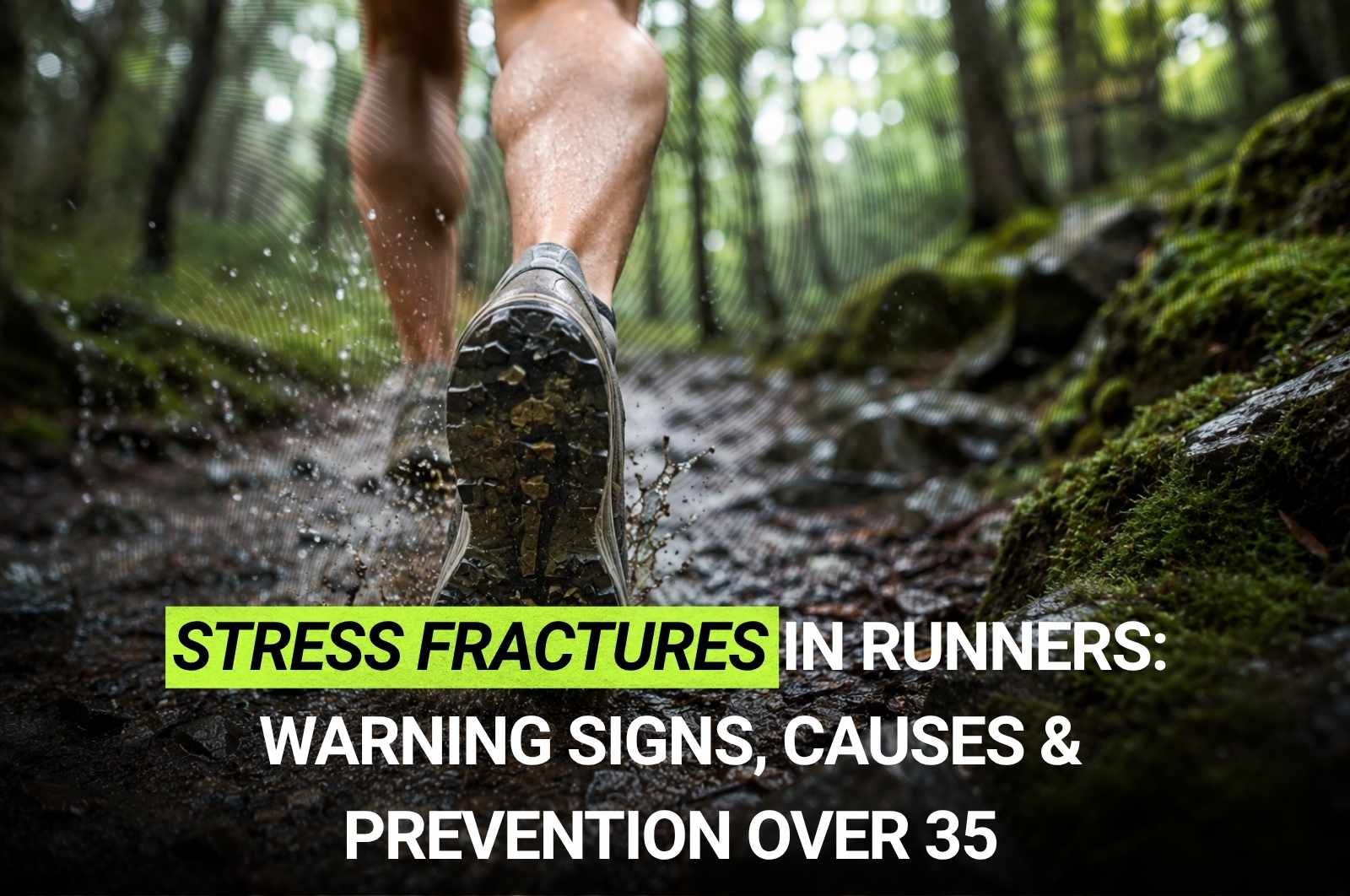
A stress fracture is a small crack in a bone, most commonly found in the shin or foot. Unlike a sudden break, this type of injury develops gradually due to repetitive force.
It often occurs when runners increase intensity or distance too quickly. The body does not have enough time to adapt, and the bone begins to weaken under repeated impact.
The key symptom is localized pain that worsens during activity and improves with rest. Ignoring this pain can turn a minor issue into a more serious injury that requires a longer recovery period.
Prevention relies on gradual progression. Increasing mileage slowly allows bones to adapt to new levels of stress. Rest days are essential, not optional. They give your body time to repair and strengthen.
Proper nutrition also matters. Adequate intake of calcium and vitamin D supports bone health, especially if you are training regularly.
Shin splints cause pain along the front or inner edge of the shinbone. This pain often appears after increasing training volume, running more frequently, or changing intensity too quickly.
Unlike stress fractures, shin splint pain is usually more diffuse and spread along the bone rather than focused in one specific spot.
People with flat feet or poor running mechanics may be more prone to this condition, as the way their foot strikes the ground increases stress on the lower leg.
Preventing shin splints comes down to managing load and supporting your movement. Gradually increasing mileage, maintaining a steady pace, and avoiding sudden spikes in training volume are essential.
Stretching the calves and improving lower-leg strength can also help reduce strain. If symptoms appear, reducing mileage and intensity is necessary. Continuing to push through shin pain often leads to more serious injuries.
The Achilles tendon connects your calf muscles to your heel and plays a critical role in running. When overloaded, it can develop small degenerative changes, leading to pain, stiffness, and a burning sensation, especially in the morning or at the start of a run.
This condition often develops when runners increase distance or intensity too quickly. Tight calf muscles also contribute by placing additional strain on the tendon.
Preventing Achilles issues involves a combination of gradual training progression and mobility work. Regular calf stretching helps maintain flexibility, while strength exercises improve the tendon’s ability to handle load.
If you feel persistent stiffness or discomfort, it is important to reduce training volume and allow the tendon time to recover. Ignoring early symptoms can turn a manageable issue into a long-term condition.
Plantar fasciitis affects the thick band of tissue along the bottom of the foot. It typically causes sharp heel pain, especially during the first steps in the morning.
This condition can develop from overuse, tight calf muscles, or improper footwear. People with high arches are particularly at risk, but it can affect any runner.
One of the challenges with plantar fasciitis is that it can appear even without a clear trigger. However, it is often linked to cumulative stress over time.
Prevention focuses on reducing strain on the foot. Wearing proper running shoes with good support is essential, even outside of training. Walking barefoot on hard surfaces for long periods can aggravate the condition.
Regular calf stretching and foot mobility exercises help reduce tension in the plantar fascia. If symptoms appear, rest and icing the affected area can help manage pain.
The iliotibial (IT) band is a thick band of tissue that runs along the outside of the thigh, from the hip to the knee. When it becomes tight or inflamed, it can cause pain on the outer side of the knee.
IT band syndrome often develops due to repetitive friction as the band moves over the knee joint. Weak hip muscles and poor movement patterns can increase this friction.
Runners who suddenly increase mileage or intensity are particularly at risk. Downhill running and uneven surfaces can also contribute.
Preventing IT band syndrome involves strengthening the hips and improving movement mechanics. Exercises that target the glutes help stabilize the pelvis and reduce strain on the IT band.
Stretching and mobility work are also important, especially before and after running. If pain develops, reducing activity and applying ice can help manage inflammation.
While each injury has its own causes, most share the same underlying pattern: too much stress without enough preparation or recovery.
Listening to your body is one of the most important habits you can build. Mild soreness is normal, especially after new or intense workouts. Persistent or sharp pain is not. If discomfort does not improve with rest, it is a signal to adjust your training or seek medical advice.
Creating a structured running plan helps you stay within safe limits. Gradual progression, balanced with rest days, allows your body to adapt without becoming overloaded.
Warming up before running prepares your muscles for activity. A short walk followed by dynamic movements is often enough. Stretching after your run helps maintain flexibility, particularly in the calves, hamstrings, quadriceps, and hips.
Strength training plays a key role in injury prevention. A stronger core and more stable hips improve alignment and reduce unnecessary stress on joints.
Cross-training adds variety and reduces repetitive strain. Activities like cycling or swimming allow you to build fitness without additional impact.
Proper gear also matters. Well-fitting shoes designed for running provide support and reduce friction. Replacing worn-out shoes is essential, even if they still look usable.
Environmental factors should not be ignored. Running in extreme heat, cold, or high humidity increases stress on the body. Staying hydrated and dressing appropriately helps maintain performance and safety.
Start your running journey today!
No spam. Cancel anytime.