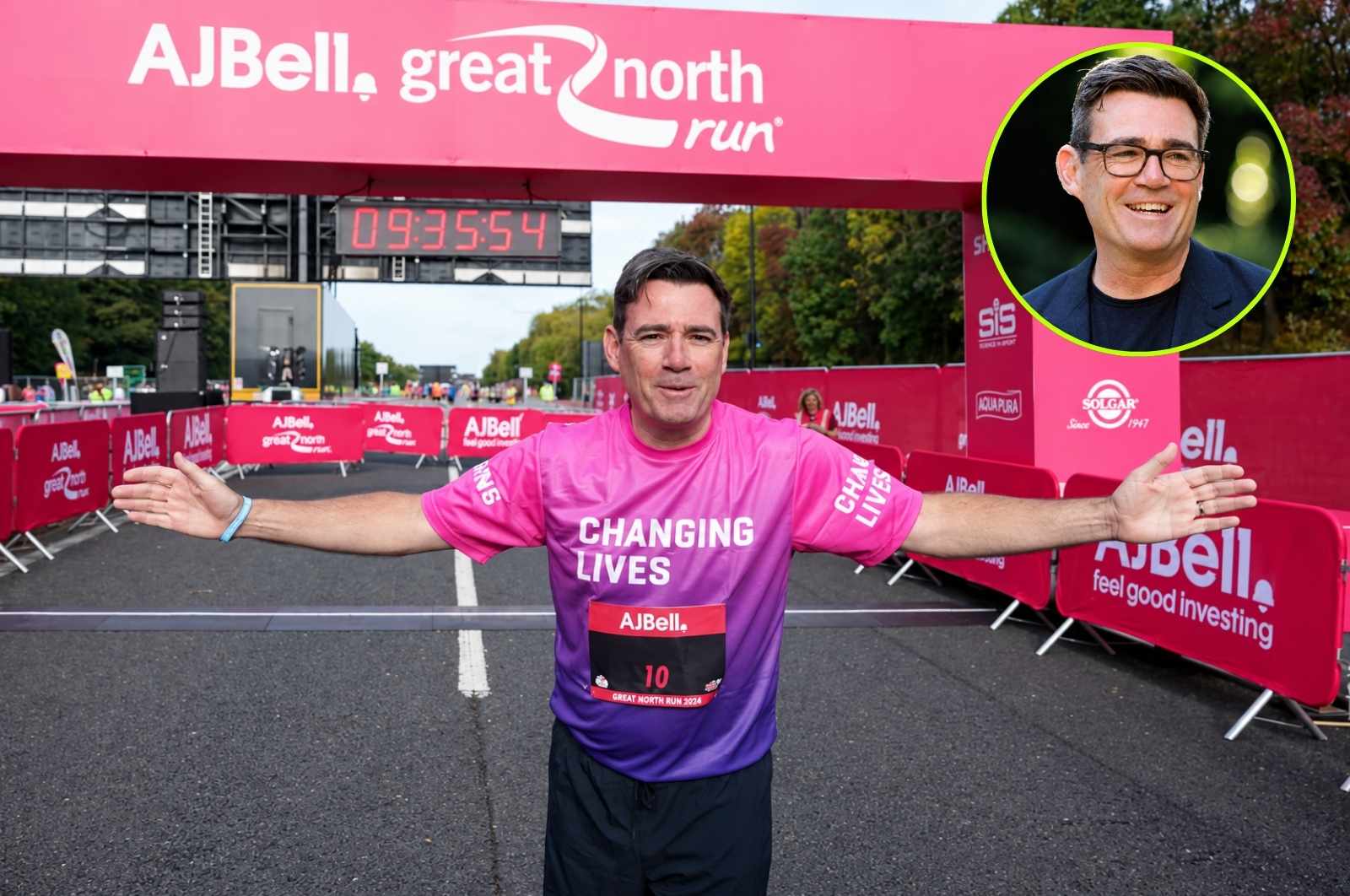
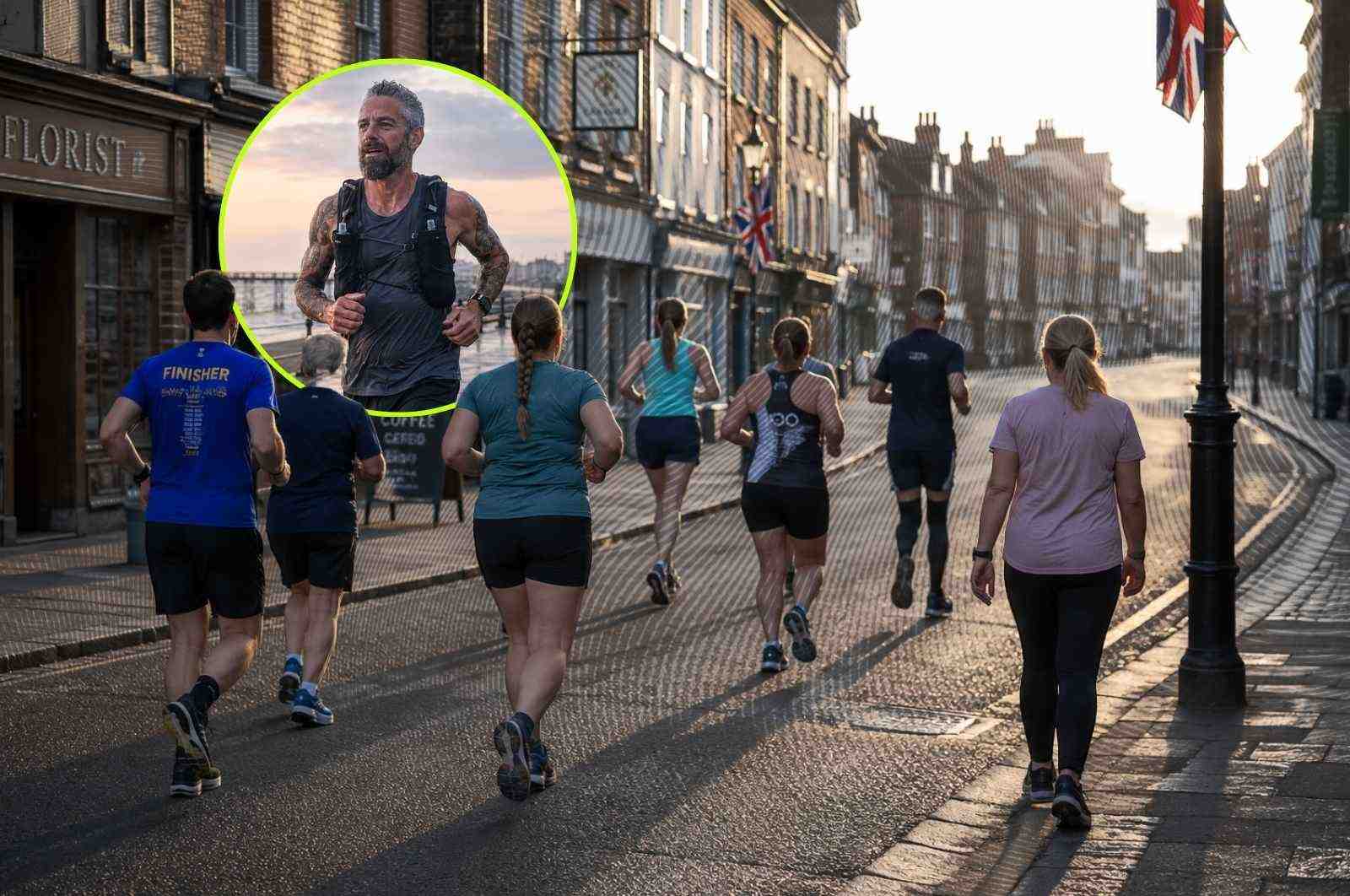
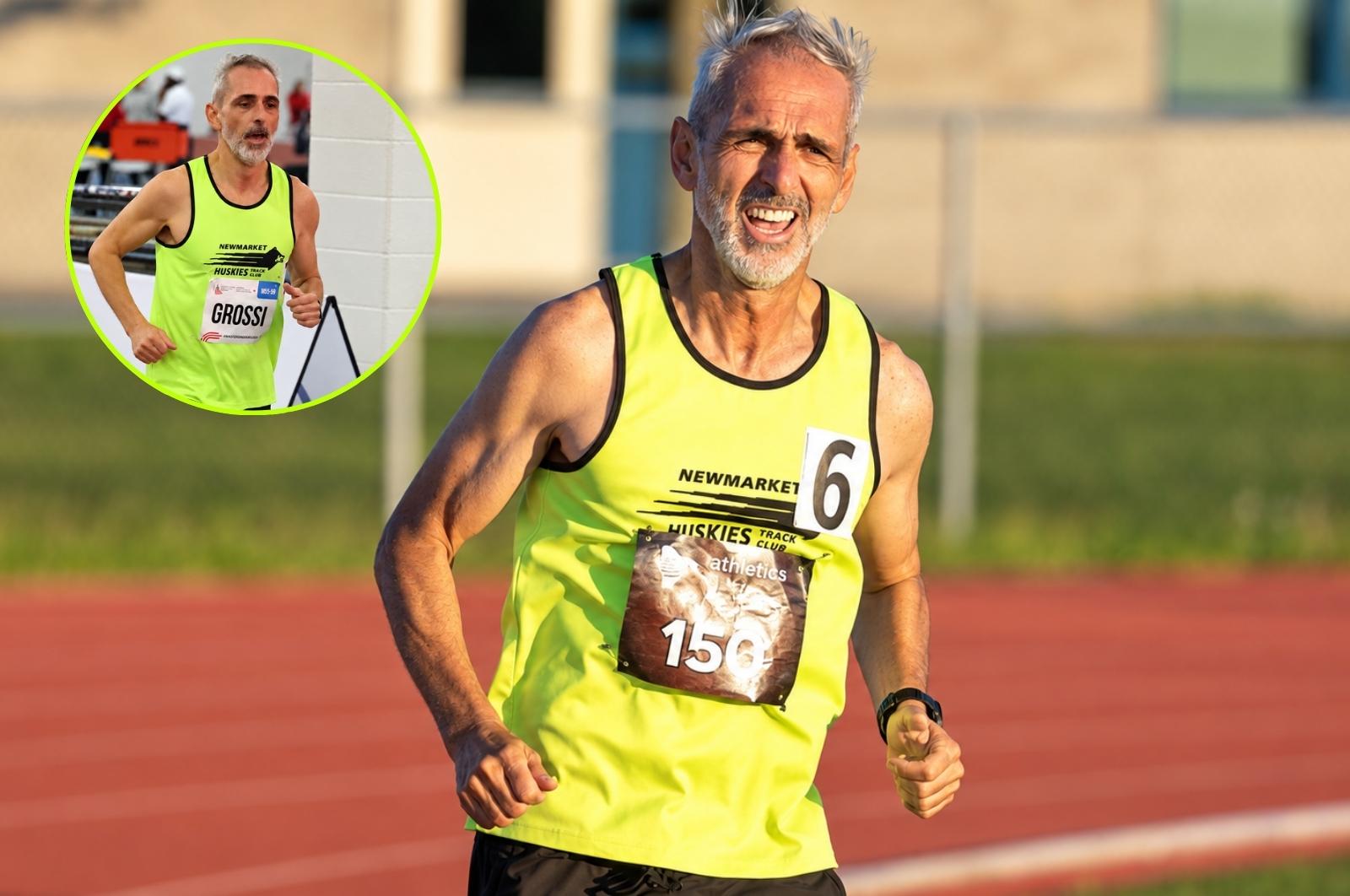
David "Jacko" Jackson, 44, a former Nottingham RFC winger whose career ended with a brain injury, is running 100 ultramarathons in 100 days. Bournemouth is his next stop.
On August 1, 2026, a 44-year-old former rugby winger will run a 50 kilometre loop through Bournemouth.
He will do it again the next day, and the day after that.
And the day after that.
The Bournemouth stop is day 65 of 100. His name is David "Jacko" Jackson.
He is attempting to run 100 ultramarathons in 100 consecutive days, and he is on track to shatter the current world record by roughly three weeks.
The challenge, in the numbers that matter
The current world record for consecutive ultramarathons run by a man sits at 80 days, per reporting by NR Times. Jackson set off on May 29, 2026, the day after his 44th birthday, from Caernarfon in North Wales.
If everything holds, he will finish on September 5, 2026.
The total distance is roughly 8,450 kilometres, which is the mileage equivalent of running from London to Los Angeles.
How the route is actually structured
Jackson is running 50 kilometres a day, on repeating 5 km and 10 km loops at 25 locations across the UK.
He spends four days at each site before moving on. Bournemouth and Swanage share the same block, running August 1 to 4.
The loop format is the key. It lets anyone, at any fitness level, run a lap alongside him without having to commit to the full distance.
That is not a logistical afterthought. It is the entire point of the project.
The career-ending moment that started all this
In 2013, Jackson had a seizure on the training field while playing for Nottingham Rugby.
It was, in medical terms, a bleed on the brain. In career terms, it was the end.
He and his wife Catherine had been married for less than two months.
In interviews, he has described the first six months as a period when he simply was not the person she had married.
It took a full year to be back on his feet at all. It took seven years before he ran his first marathon.
The rugby career the injury cut short
Jackson is not a former club player. He holds the Nottingham Rugby records for most-capped player and all-time top scorer.
Those are figures career flyhalves and centres accumulate over decades of good luck.
He was a winger, and injuries end wingers early.
That the injury that ended him was a brain haemorrhage, and not the knees or shoulders wingers usually break, is part of why he now runs for the charities he does.
What "Mission IN-possible" is actually raising
The stated fundraising target is £1 million.
Both organisations work with people affected by traumatic brain injury, including former athletes.
Jackson has said he did not know about either during his own recovery.
That gap is what he keeps naming as the reason for the run. Everyone should have the recovery support he eventually found.
The word he built the whole project around
Jackson has invented a word for this. He calls it IN-possible.
The framing is deliberately blunt. Every challenge people label impossible tends to be built out of many small challenges that clearly are not.
One 50 km loop is not impossible, and doing it twice in a row is not impossible.
Doing it 100 times in 100 days is a question of stringing together small IN-possibles until the whole thing works.
That mental structure was borrowed, in part, from the Marathon Monks of Japan. Their endurance practice takes seven years to build toward and culminates in a final year of daily ultra-distance running.
The day it nearly ended
The toughest day so far was not one of the hot ones or the wet ones.
It was day 14, when Jackson sustained a running injury and finished the 50 km by hobbling for 12 and a half hours.
In his own words, he was ready to quit. He genuinely wanted to go home.
His wife Catherine picked him up and told him that if he could still walk, he could keep going for the charities. He kept going.
That day, more than any of the record-breaking maths, is the story runners should hold onto.
Why this belongs on a running site, not a rugby one
Jackson took up running as part of his brain injury recovery. He runs a breathwork company called Pro Breathwork.
The 100 ultras project is not the second act of a rugby career. It is the first act of a running one, taken seriously enough to challenge a world record.
In that respect, he joins a small, growing category of runners who found the sport after an event that should have ended movement entirely.
What the ultra-running world knows about doing this
Running 50 km every single day for 100 days is not primarily a speed problem.
It is a durability problem, and durability is a very specific kind of trainable trait.
They are the ones whose bodies have learned to absorb load, recover partially overnight, and start again slightly below full capacity for weeks on end.
What actually holds a body together across 100 days
The mechanics of a 100-day ultra streak look different from a single-race training plan.
- Loop routes matter. Repeating a short 5 km or 10 km circuit means no fresh terrain shocks, no cumulative descent damage, and predictable footing.
- Daily distance stays a hair below breaking point. Jackson runs 50 km, not 60 or 70, precisely because tomorrow has to happen.
- Sleep and eating become almost as important as running. Multi-day ultra streaks fail more often on nutrition than on the legs.
- Support crew is a real training input, not a garnish. Catherine picking him up on day 14 is why the streak is still going.
The reason ultra streaks work at all
Ultramarathons are counterintuitively easier to accumulate than road marathons, once a runner adapts to the pace.
What Bournemouth is going to look like
For four days from August 1, Jackson will be doing 5 km and 10 km loops through the Bournemouth and Swanage area.
Anyone can join in. That is the whole point of the loop format.
For a runner training for a first 10 km or a first half marathon, doing a lap with an athlete in the middle of a world record attempt is the kind of morning that stays memorable.
For anyone who is not running, showing up and cheering the loop counts too. Big multi-day efforts are decided in the head as much as the legs, as the Sally McRae 200-mile ultra story makes brutally clear. The record he is not really chasing
If Jackson finishes, he will beat the current 80-day record by 20 days.
That is a huge margin in a discipline where records are usually broken by hours, not weeks.
He has been consistent in every interview that the record is a byproduct, not the goal. The goal is £1 million, brain injury awareness, and one very personal proof that recovery is possible.
The record is just what happens when a former winger with 316 caps decides IN-possible is a real word.