
Adidas Built a Carbon Plate You Can Adjust Mid-Run. The Super Shoe Rules Just Changed.
Adidas has revealed the Adizero Gearshift, a running shoe with a carbon plate that adjusts on the fly. Here is what it means for everyday runners.

A researcher who tracked 37,000 people found that just 15 minutes and 9 seconds of movement lifts mood. The science of why running works on the brain.
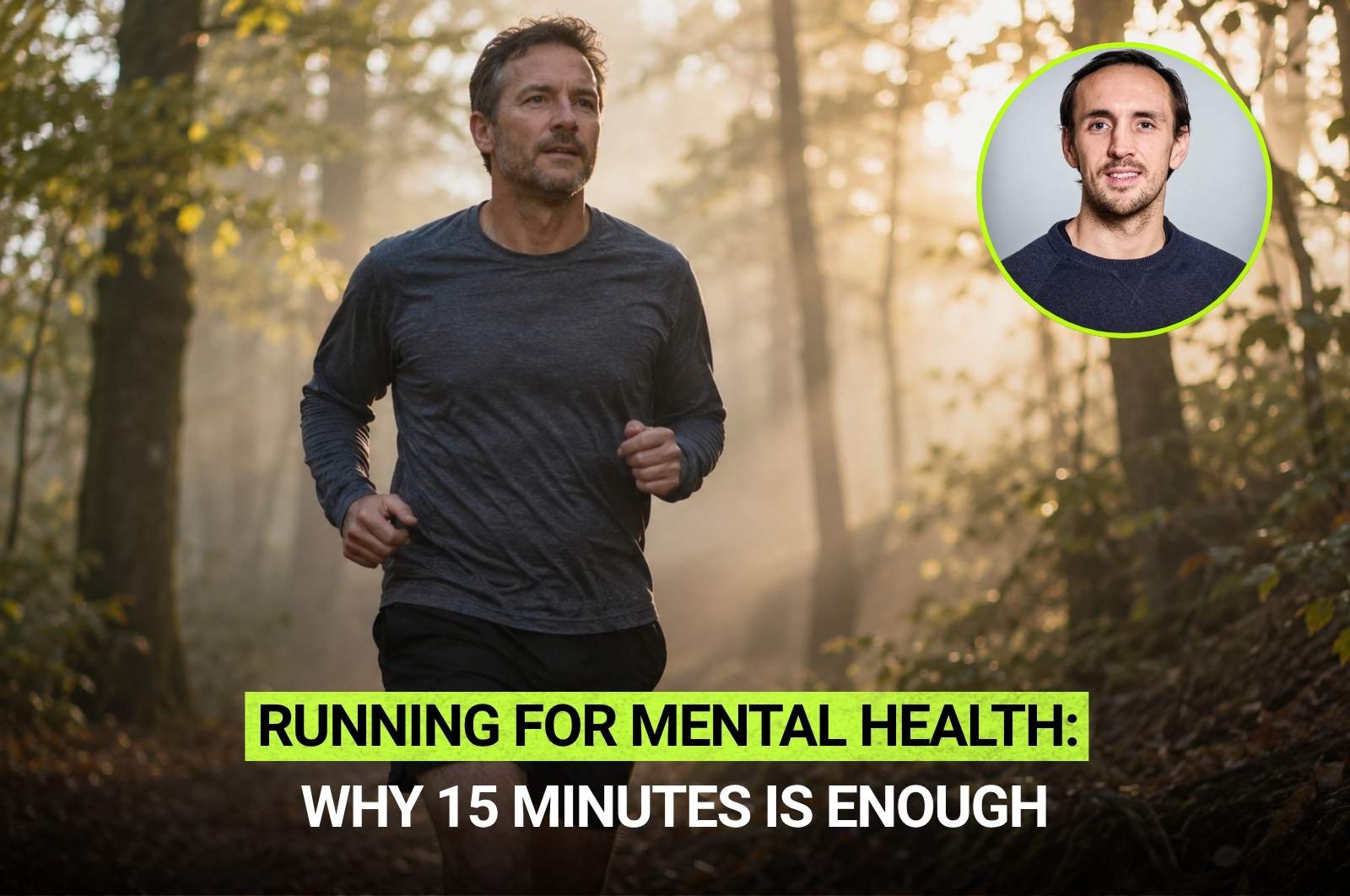
Fifteen minutes and nine seconds.
That is the exact minimum dose of movement that a researcher at King's College London says the average brain needs to start feeling better.
Brendon Stubbs, a researcher at King's College London, led a global study of 37,000 people across 16 countries, and his team's finding was blunt.
Most people believe you need at least 30 minutes of exercise for a mood lift. The data said you need half of that.
That is one of two numbers worth carrying with you. The other one changes what running can do for depression.
The mechanism is not mystical. Running releases a specific mix of neurochemicals: endorphins, endocannabinoids, dopamine, and serotonin.
These are the same neurotransmitters that most antidepressants are engineered to target.
A Cleveland Clinic overview of exercise and mental health explains that regular movement also stimulates the release of brain-derived neurotrophic factor, or BDNF, a protein that supports the growth of new brain cells in the hippocampus.
That last part matters, because the hippocampus is measurably smaller in people living with depression.
Running is one of the few interventions shown to help grow it back over time.
The old story was that endorphins alone cause the post-run euphoria known as runner's high.
Newer research points to endocannabinoids, the body's own version of the compounds found in cannabis, as the more likely driver.
Endocannabinoids are small enough to cross the blood-brain barrier. Endorphins are not.
That single physical difference is why the elevated calm during and after a run feels the way it does. It is your own chemistry, not an artificial high.
The 15:09 threshold is not arbitrary.
It is the point where endorphin release begins to noticeably alter perceived mood in the average person, based on Stubbs's global data.
Longer runs give more benefit, but the returns curve upward and then flatten, the same shape you see in mortality research.

In 2023, a research team at Amsterdam UMC led by Josine Verhoeven ran the head-to-head test everyone had been asking about.
The trial included 141 people with depression or anxiety.
Some got antidepressant medication. Some got running therapy: 45-minute supervised outdoor runs, two to three times per week, for 16 weeks.
The remission rate for the running group was 43.3 percent. The remission rate for the medication group was 44.8 percent.
The two treatments came in essentially even on mental health outcomes.
Where running pulled ahead was on physical health markers: blood pressure, cardiovascular fitness, and body composition.
The medication group did not get those. The running group did.
That trade is worth thinking about carefully.
Neither treatment is a silver bullet, and neither is a replacement for professional care. But the second one comes with side benefits instead of side effects.
If you are new to running, the target is 15 minutes of easy movement, most days of the week.
Not a workout, not a training session.
A walk that becomes a jog when it feels natural, and drops back to a walk when it does not.
The pace is the same one the longevity research points to: slow enough to hold a conversation.
Morning runs give the biggest mood lift for the rest of the day.
The reason is cortisol timing. A gentle run early in the day helps regulate the natural cortisol curve, which is what most people describe as feeling more even-keeled.
Evening runs work too. They shift the benefit toward better sleep instead of daytime mood.

Discover the authentic training methods of Kenyan runners and start improving your running faster than you ever thought possible.
Learn More About The Method →Limited-time reader discount available
The Verhoeven trial ran for 16 weeks. That timeline is important.
The mental health benefit of running does not stack up in one big session.
It builds gradually as BDNF levels rise and brain chemistry recalibrates.
For anyone struggling to make it stick, 5 easy ways to make running a habit walks through the mechanics of getting past the first three weeks.
Running is not a substitute for professional mental health care.
For anyone diagnosed with depression, anxiety, or another mental health condition, running is a powerful adjunct.
It works alongside therapy and medication, not instead of them.
A separate study of 128,000 people found that structured exercise programs outperformed medication and therapy on some measures. That is a headline finding, but the picture is more nuanced up close.
The best approach for anyone in a difficult period is to add running to whatever else is helping, not to swap it out.
Fifteen minutes of easy running is the floor for a mental health benefit.
Sixteen weeks of consistent running is the timeframe for the deeper change.
The chemistry is real. The dose is smaller than most people believe.
You do not need to run fast, and you do not need to run far. You need to run often, and you need to start today.
Start your running journey today!
No spam. Cancel anytime.