Thinking About Hiring a Running Coach? Check These Things First
Not every running coach is worth $200 a month. Here are the credentials, red flags, and questions that separate a great coach from an expensive Instagram feed.

Learn essential tips for integrating these high-performance shoes into your training safely and effectively.
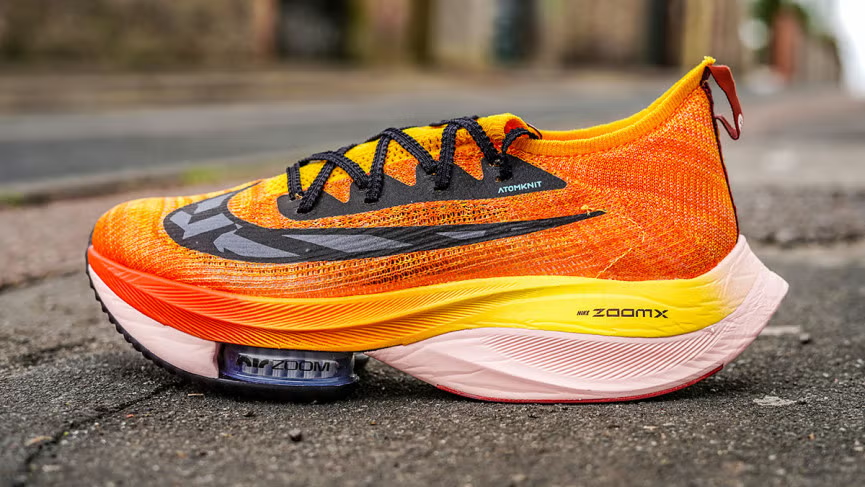
If you invest heavily in your running footwear, especially those high-tech carbon-plate models, you’re likely tempted to use them for every run.
After all, these shoes have a remarkable track record, powering world records and personal bests for both elite and everyday runners.
Carbon-plate running shoes combine a thick, responsive foam midsole with a rigid carbon-fiber plate.
This design isn’t just about cushioning your step; it actively helps propel you forward.
By improving your running economy, these shoes allow you to use less oxygen with each stride, meaning you can maintain a faster pace for longer periods.
While the extra push from the carbon plate can be a game-changer for race times, experts have noticed a worrying trend: an increase in foot and lower leg injuries among users.
Physical therapists have reported a rise in issues such as plantar pain, shin discomfort, and problems with the muscles around the ankle all linked to the altered running mechanics that these shoes can induce.
A recent opinion in Sports Medicine highlighted that, although formal studies are limited, several track athletes experienced foot injuries after switching to carbon-plate footwear.
These injuries may stem from the way the shoes modify your natural gait.
Rather than magically boosting your speed like rocket boosters, carbon-plate shoes enhance the efficiency of your run. The process starts the moment your foot makes contact with the ground.
As your weight shifts forward, you enter a phase known as midstance, where your foot is directly beneath you.
Then, during the push-off (terminal stance), the carbon plate and responsive foam work together to provide a forward thrust, conserving energy for later in your run.
However, this benefit depends on having proper running mechanics. Limited hip extension or ankle mobility may reduce the effectiveness of this energy return.
The performance gains come with trade-offs. Training extensively in these shoes can lead to muscle imbalances, as certain muscle groups may become underutilized.
When you switch back to regular footwear, or run barefoot, the sudden demand on these muscles can result in discomfort or injury.
Additionally, the design that aids speed often compromises lateral support and durability.
Most carbon-plate models are built for racing conditions and smooth surfaces, meaning they are not ideal for turning sharply or tackling uneven terrain.
To minimize injury risk while still enjoying the benefits, consider the following strategies:
Ultimately, whether your goal is to chase a personal record or simply experience the latest in running technology, it’s essential to listen to your body. A slight misstep with these shoes could mean weeks, or even months, on the sidelines.
Carbon-plate running shoes present an exciting advancement in athletic footwear, offering the potential to enhance performance and shave precious seconds off your race times.
However, their benefits come hand in hand with unique challenges and risks. By integrating these shoes thoughtfully starting with gradual adaptation, targeting high-intensity sessions, and balancing their use with more traditional training you can harness their power while protecting your body from injury.
Ultimately, the key lies in understanding your own biomechanics and listening to your body's signals, ensuring that every stride leads to improvement, not setbacks.
Start your running journey today!
No spam. Cancel anytime.