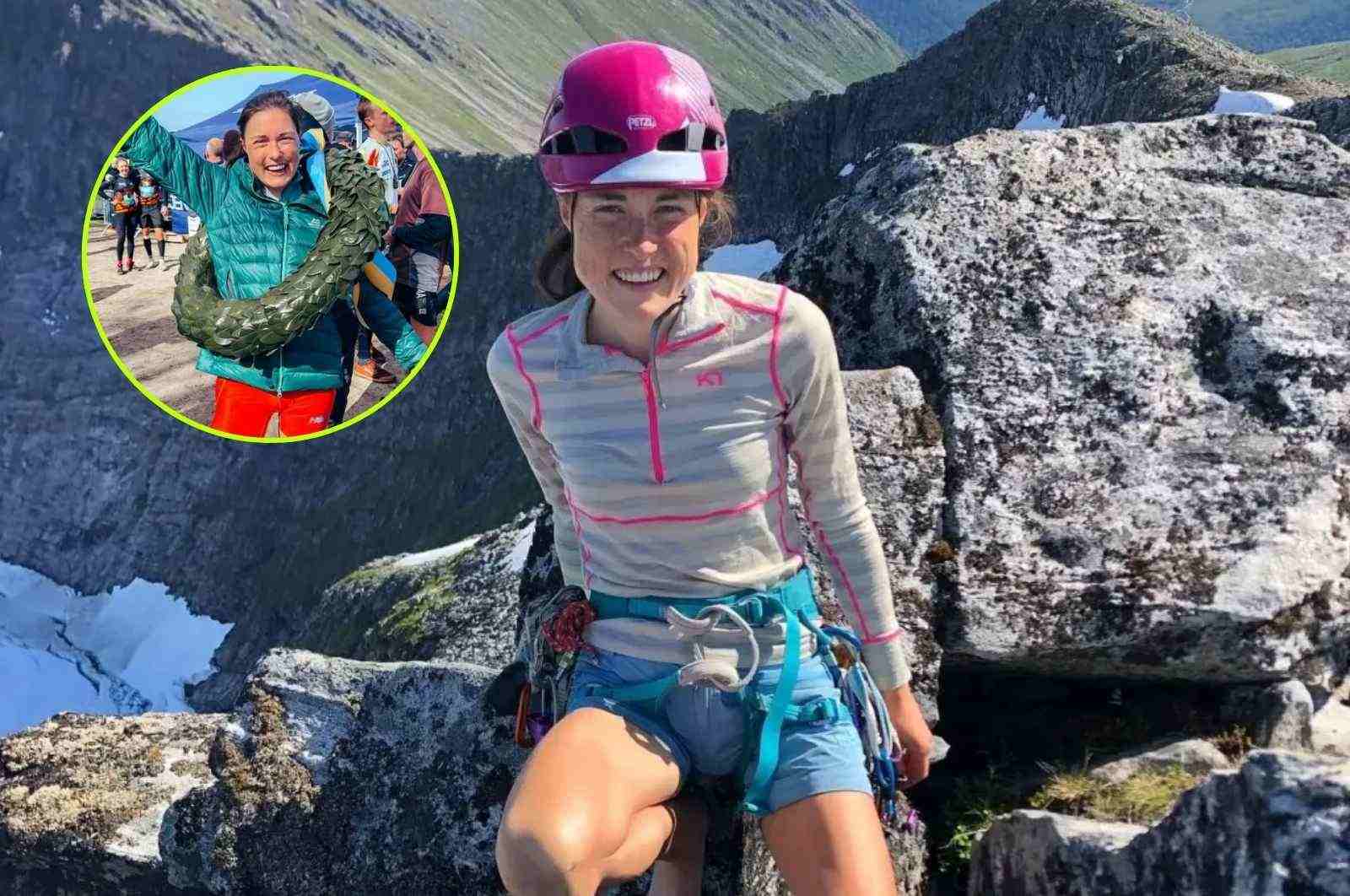
Norwegian trail runner Ida Amelie Robsahm, fifth at the OCC just weeks earlier, died after a fall on the Romsdalseggen ridge in western Norway. She was 30.
Ida Amelie Robsahm was, by every credible measure, one of the brightest young voices in European mountain running. She had just turned 30.
On Saturday, 19 September 2026, she fell several tens of metres near the top of Romsdalseggen, a jagged ridge above Åndalsnes in western Norway. She did not survive.
Norwegian police were alerted just after half past ten in the morning by the only other person on the ridge with her, according to reporting by VG and NTB.
An air ambulance and a rescue helicopter were dispatched. She was airlifted from the mountain but pronounced dead that afternoon.
Her death arrives less than a month after she finished fifth at the OCC in Chamonix, and only weeks after she signed a semi-professional contract with ASICS Trail.
She was, in the language coaches use quietly among themselves, on the ramp.
What Happened on Romsdalseggen
Romsdalseggen is not an obscure line.
It is one of the most photographed ridges in Norway, a well-marked traverse with a high point of 1,329 metres and views straight down into the Romsdalen valley on both sides.
It is also, in Norwegian grading terms, a hard route.
The guide entry on Komoot lists it plainly, saying that very good fitness is required, along with sure-footedness, sturdy shoes and alpine experience.
Police operations leader Eivind Klokkersund told VG that Robsahm had fallen on a fairly steep section and from a great height. Everything, he said, pointed to an accident.
The cause of the fall has not been established. Norwegian outlet Aftenposten reported on Monday, 21 September, that investigators were still working through the sequence of events.
The ridge she trained on
Robsahm lived and trained in western Norway, in the Rauma region that surrounds Romsdalseggen.
The ridge was, in the sense that matters most to a mountain athlete, home ground.
That is part of what has left the sport reeling. This was not an unfamiliar route attempted on a bad-weather day.
It was a training run on terrain she knew intimately.
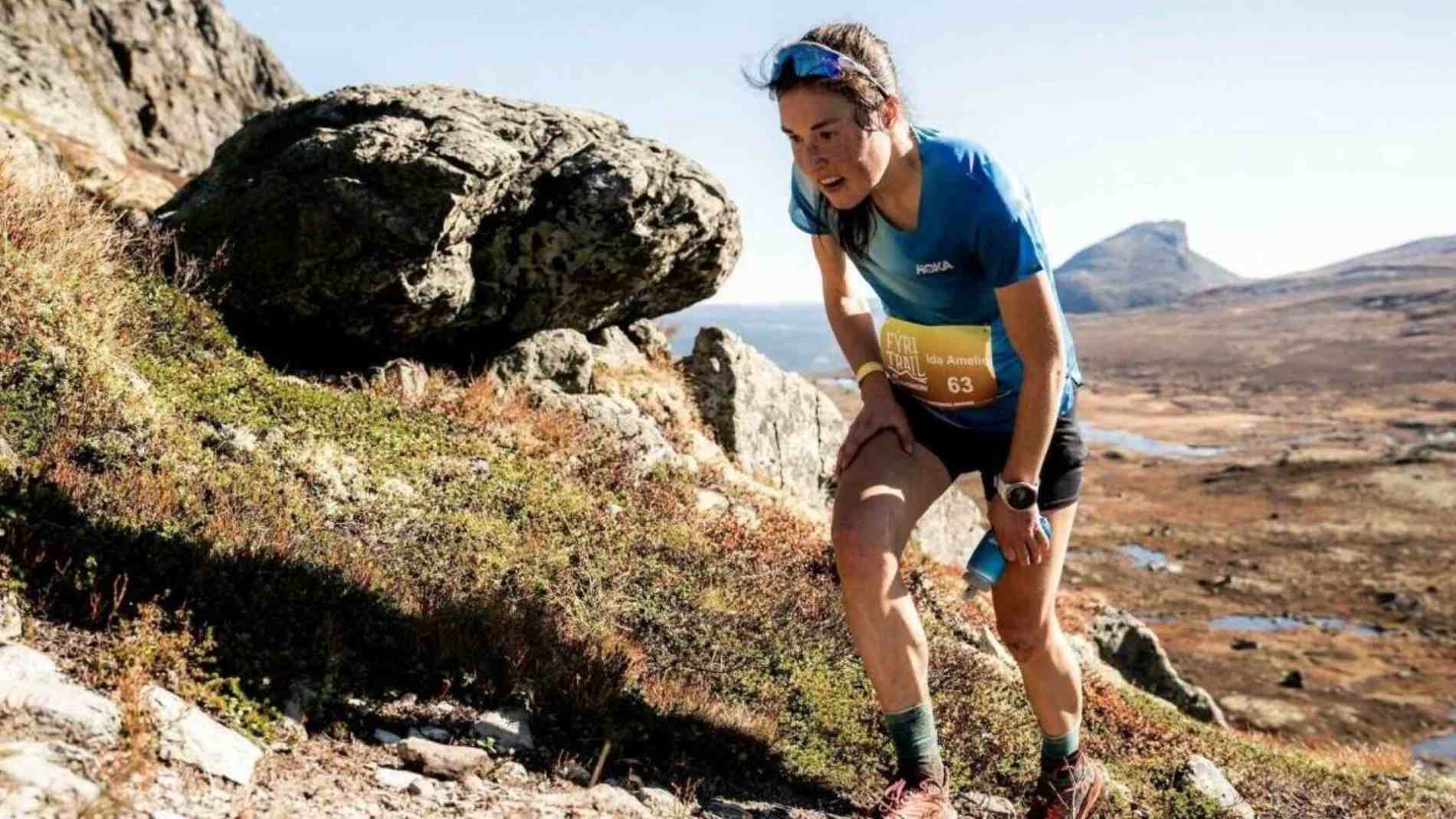
Pictures from Ida Amelie Robsahm Instagram
A Breakout Year, Then Silence
The last twelve months of Robsahm’s career were a near-perfect ascending line.
At the 2024 World Mountain and Trail Running Championships in Canfranc, Spain, she finished fourth over the 44.5 km course. That result put her on the map.
In December 2025, in her first-ever marathon, she ran 2:29:57 in Valencia. According to Norwegian running publication Kondis, that made her the fastest Norwegian woman in the entire field on her debut.
Then came 2026. Fourth at Zegama-Aizkorri in May, one of the most punishing skyraces on the calendar.
Second at the Marathon du Mont-Blanc in June.
Fifth at the OCC in Chamonix in late August.
Runners inside the sport had already begun to whisper the obvious question.
What did she look like once she had another full winter of training in her legs?
The ASICS Trail statement
The ASICS Trail team, which she had joined earlier this year, released a statement through Instagram on Sunday.
"Ida was a remarkable athlete and teammate. Her warmth and kindhearted nature touched many of us at ASICS and the running community."
The team said its thoughts were with her family, her friends and everyone who knew her.
Her coach, Sindre Buraas, received the news of her death while he was on air for NRK, providing commentary on the World Street Running Championships.
A Family Statement, and a Community in Grief
Robsahm’s family issued a short statement to NRK, thanking the running community for its response.
"In the midst of the deep sorrow over the loss of Ida, we would like to extend a warm thank you to the running community.
Ida was a big part of the community, and all the care and consideration in this cruel situation means a lot."
Swedish orienteering star Tove Alexandersson, a friend and frequent competitor, posted three characters to Instagram: no words, a white dove, a broken heart.
Aftenposten reported that the school where Robsahm had studied informed its students of her death on Monday, 21 September.
A cruel three weeks for skyrunning
Her death lands in a month the sport will not quickly forget.
On 1 September, Canadian skyrunner Kalie McCrystal, 38, disappeared during the descent from the summit of the Matterhorn on a reconnaissance outing for a planned speed-record attempt on the Italian side. Her body has not been recovered.
Her family released a statement on 15 September saying they had accepted, based on what was then known, that she had fallen.
Two elite mountain athletes, on two of the most iconic ridges in Europe, inside three weeks.
The Uncomfortable Question the Sport Is Asking
Trail and mountain running is growing faster than almost any other endurance discipline.
UTMB week in Chamonix now dwarfs the entrances at most World Marathon Majors.
That growth has pulled a generation of athletes onto ridgelines that were previously the domain of a small group of specialists. The margin for error on a route like Romsdalseggen is measured in centimetres, not seconds.
None of that is a comment on Robsahm herself. She was an experienced mountain athlete, on familiar ground, in the middle of what her coach and team described as the strongest form of her career.
According to the Norwegian Broadcasting Company, she was hiking with a group when she fell, not alone.
The point is broader. As mountain running expands, the sport is going to have to keep talking, publicly and often, about the fact that elite fitness does not remove alpine risk.
The two things are unrelated.
What we still do not know
Norwegian authorities have not released a final report on what caused the fall. Whether it involved loose rock, a slip, a gust of wind on the exposed ridge, or something else entirely, is not yet public.
What is clear is that Ida Amelie Robsahm was a top-ten mountain runner in the world, on a route she knew, four days into being 30.
How the Running World Is Responding
Within hours of the news, Norwegian and international outlets from Marathon Handbook to Runner’s World were reporting her death. Tributes poured in from athletes who had raced her at Zegama, at Mont-Blanc and at the OCC.
Trail running is a small sport at the elite end. Everybody knows everybody.
That is part of what makes losses like this land so heavily.
Robsahm was in the generation of athletes many observers expected to become the next headline names in that same conversation.
What comes next
The World Mountain and Trail Running Championships return in 2027.
Robsahm was, by every internal projection her team was willing to share, a genuine podium contender.
She will not be there. But every athlete who lines up for that race will, in some form, be running for her.
Remembering Ida Amelie Robsahm
Robsahm was born, as ASICS Trail put it in tribute, into a warmth that touched everyone she met. Teammates described her as generous with time and attention in a sport that does not always reward either.
She turned 30 on Tuesday, 15 September 2026. Four days later she was gone.
The mountains she loved are still there. So is the ridge.
Runners will keep going up, and up, and up. That is the way this sport works.
Rest in peace, Ida.