The Training Change Every Woman Runner Over 45 Is Getting Wrong
A 2025 clinical study of women in perimenopause and postmenopause found a training change that outperformed extra mileage. Most running plans still miss it.

Estrogen fluctuations during perimenopause slow recovery, weaken bones, and raise injury risk in female runners. Here is what changes, and how to train around it.

The signs tend to arrive in the same order for female runners in their early to mid-40s.
Sleep breaks up first, usually around 3am, for no obvious reason.
Easy pace starts feeling less easy. Recovery from a hard workout stretches from two days to three, then four.
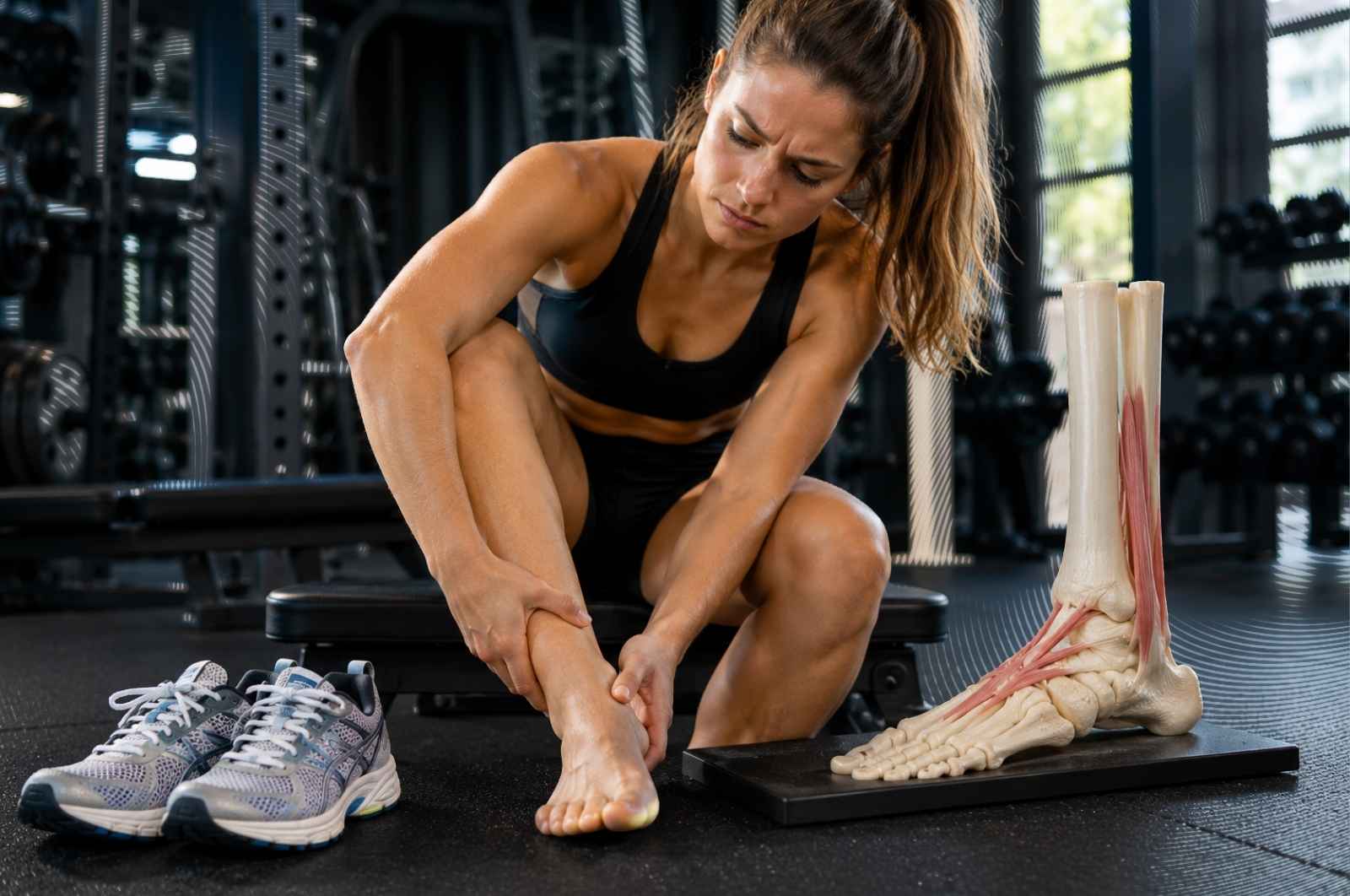
A pattern of small injuries, often in the Achilles or the plantar fascia, appears where nothing used to hurt.
And when the runner mentions it to a doctor, the answer is often the same one word: perimenopause.
According to the Cleveland Clinic’s clinical overview, perimenopause is the transitional phase leading into menopause.
It typically starts in the mid-40s, though it can begin as early as the mid-30s or as late as the mid-50s.
The defining feature is not a steady drop in estrogen.
It is dramatic hormonal variability.
Levels of estrogen and progesterone swing unpredictably for years before finally settling at much lower levels after menopause itself.
That volatility is what makes training through the perimenopausal window feel so unpredictable.
Perimenopause is not a moment. It is a window of four to ten years for most women.
Menopause is technically defined as the point 12 months after the last period, which for most women arrives around age 51.
Everything before that point, including the years of hormonal chaos, sits under the perimenopause label.
The most consistent early complaint from perimenopausal runners is that easy pace feels harder for the same effort. This is not perception.
Reduced estrogen affects cardiovascular efficiency and muscle recovery at the cellular level.
The heart works slightly harder to deliver the same oxygen, and the muscles clear waste products more slowly.
Perceived exertion at a given pace rises, sometimes by an entire heart rate zone.
Runners who ignore this and try to hold their old paces almost always end up overtrained.
The 48-hour recovery window that most runners rely on stretches significantly.
Multiple physiological reviews now put the perimenopausal recovery window at 72 hours or more for the same intensity of session.
Sleep disruption compounds the problem.
Night sweats and 3am wake-ups drive cortisol upwards, which further impairs recovery and encourages fat storage.
The runners who adapt best are the ones who add rest days rather than defend their weekly mileage.
A four-run week that goes well beats a five-run week that ends in injury.
This is the most under-discussed change. Estrogen supports collagen turnover, which is the process the body uses to repair tendons and ligaments.
As estrogen fluctuates, so does collagen quality.
Achilles tendinopathy and plantar fasciitis both become more common in perimenopausal runners, often appearing for the first time after decades of injury-free running.
Bone density also begins to decline, raising stress fracture risk.
That risk is discussed in detail in our guide to the six most common running injuries and how to avoid them.
Iron needs and sodium losses both shift during perimenopause. Iron deficiency is a particularly common trap for female runners at this life stage, driven by ongoing menstrual losses in an increasingly erratic cycle.
Our full breakdown of why female runners are at higher risk of iron deficiency covers the testing and treatment picture.
Do not skip that check if perimenopausal fatigue is a factor in the training log.

Estrogen helps maintain lean muscle. As it fluctuates, so does the runner’s ability to hold muscle mass and power output.
Two to three sessions per week of heavy compound lifting is now considered essential rather than optional.
Barbell squats, deadlifts, hip thrusts, and pull-ups deliver the bone-loading stimulus and the muscle-preserving stimulus that running alone cannot.
Perimenopausal sleep is fragile.
Every hour of good sleep now delivers less recovery than it used to, so the runner needs more hours, not fewer.
A cool, dark bedroom, a hard cap on caffeine after noon, and a consistent bedtime are worth more to a perimenopausal runner than any new pair of shoes.
Screen curfew helps too.
Under-fueling was already the single biggest quiet cause of injury in female runners.
Perimenopause makes it worse.
Cortisol is already elevated, and adding a caloric deficit on top of that is a fast track to stress fractures, hormone crashes, and full training breakdown.
Prioritise protein at every meal, and place carbohydrate strategically around hard sessions.
The perimenopausal training log needs a second column.
Alongside pace and distance, note sleep quality, mood, cycle irregularities, hot flashes, and joint niggles.
Patterns become visible over two or three months that are invisible day to day.
That pattern data is what lets a runner and a doctor make an informed call about whether hormone replacement therapy is worth exploring.

Discover the authentic training methods of Kenyan runners and start improving your running faster than you ever thought possible.
Learn More About The Method →*Limited-time reader offer available
Perimenopause is not the end of racing.
Some of the most consistent finishers in masters running are 45 to 55.
It is, however, the end of getting away with poor recovery.
Every training principle that already applied to any endurance runner, adequate sleep, adequate fuel, adequate strength work, becomes non-negotiable during this window.
Perimenopausal runners who thrive are the ones who stop fighting the changes and start training in a way that respects them.
The pace will come back, once the training around it catches up with the body underneath.
Start your running journey today!
No spam. Cancel anytime.