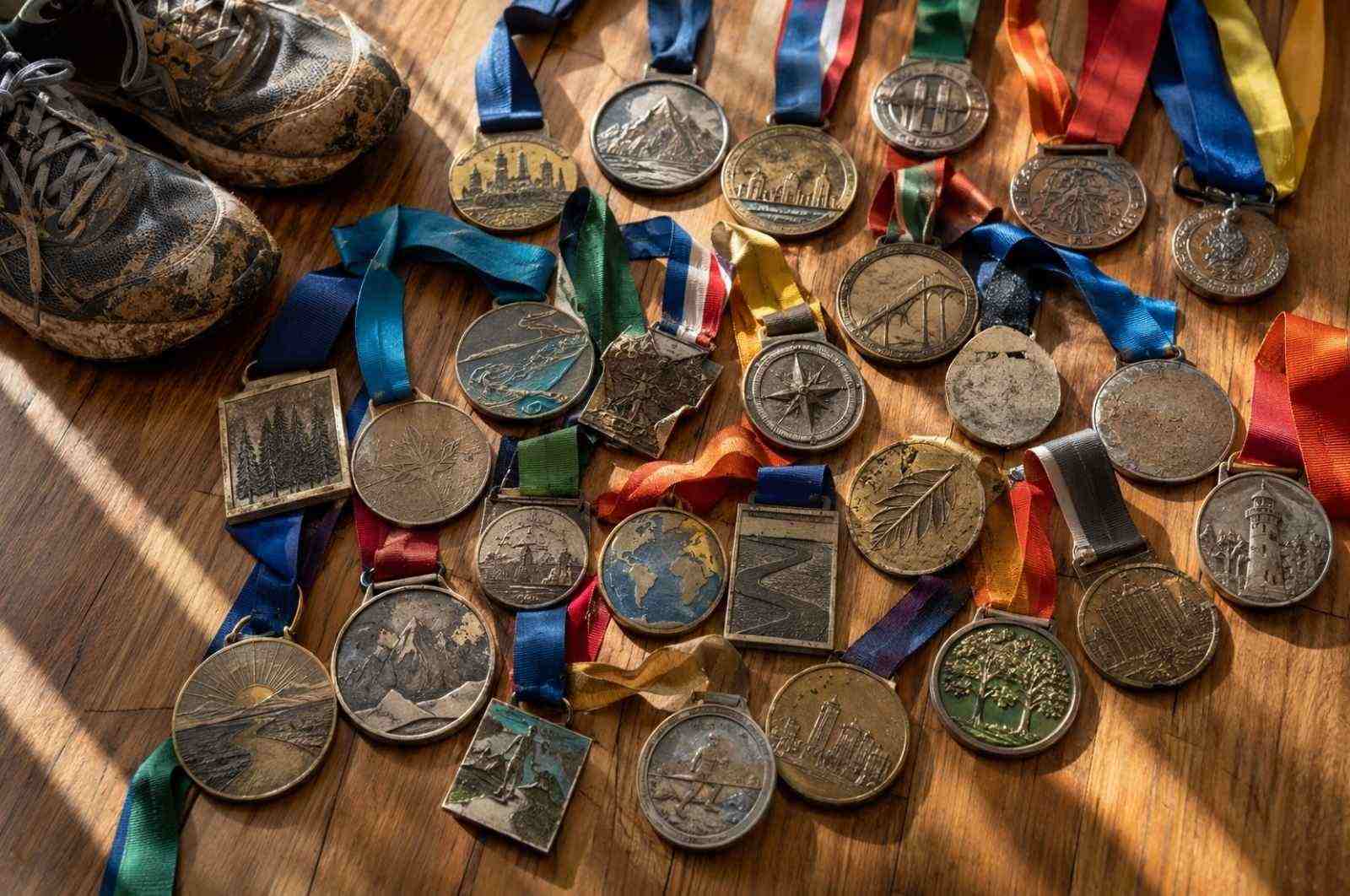
Angie Spencer started as a nurse who barely made it through her first marathon. She finished one in every state, added ultras, PRed at 50, and coaches other runners now.
Media from strengthrunning.com
Angie Spencer almost did not finish her first marathon.
She was a nurse in her thirties, training on limited hours, and the wheels came off badly enough during the race that a lot of runners would have hung up their shoes and never come back.
Fifteen years later she had finished a marathon in every US state, added multiple ultramarathons to the tally, qualified for Boston, and set a marathon personal best at age 50.
The path between those two points is arguably the most useful runner story you can read this year.
How this started
Spencer began running as a teenager, mostly to lose weight.
That is a common on-ramp, and it is often the on-ramp that stops the moment the initial goal is met.
It did not stop for Spencer. She kept going through nursing school, through her twenties, and eventually into a first marathon that she describes, honestly, as a struggle.
The first marathon story most runners can relate to
The details of that first marathon are familiar to anyone who has done one.
She had not fueled quite right, and she had not trained quite far enough on the long runs.
The 50-state challenge, with two twists
The 50 States Marathon Club requires you to complete a full marathon (or longer) in every one of the fifty US states.
To be admitted as a member you need finishes in at least ten states already on the board.
Fewer than one percent of the roughly 500,000 annual US marathon finishers have ever completed all fifty. It typically takes decades.
Twist one: not all of them were marathons
Spencer added a wrinkle that made the challenge substantially harder.
Several of her state races were ultramarathons, including the Black Hills 50K in South Dakota.
She used her state races as an excuse to go longer, not just to check a box.
That is a different kind of runner.
Twist two: her 50th race was a personal best
The 50th marathon of her state quest, run in Hawaii in January 2020, was a substantial personal best and a Boston qualifier.
Not the finish of a runner ticking off a checklist, but a fitness peak.
What actually made the long game work
There is a temptation to read Spencer's story as a story about grit.
That framing misses the interesting part.
What made this work was not that she was tougher than everyone else.
It was that she made specific structural choices that most runners never make.
One: she treated most of her state races as training runs
You cannot race hard fifty times without breaking.
Spencer paced most of her state races conservatively, treating them as endurance-building experiences rather than performance efforts.
This is the opposite of the mindset most runners bring into a marathon.
Which is why most runners cannot stack them.
Two: she got serious about coaching herself
Spencer holds an RRCA Level 2 and USATF Level 1 coaching certification.
She did not just accumulate races, she studied the sport formally.
That is what turned the miles into a system. It also turned her into a coach for other runners, which is now her full-time work.
Three: she used walk breaks when she needed them
Spencer is a public advocate for the Jeff Galloway run/walk method, especially for masters runners and multi-race stackers. Walk breaks let her recover mid-race, hit long distances more often, and stay off the injury list.
Runners often resist walk breaks on the grounds that they seem like giving up.
The 50 finishes in her drawer are a strong argument against that view.
The nurse-turned-coach arc
Spencer's day job started as nursing (she had eighteen years in the profession) and evolved into full-time running education. She co-founded the Marathon Training Academy with her husband Trevor, and the podcast they run together has become one of the longest-running shows in the sport.
The through-line is worth naming. Every phase of her running life was funded by an unrelated career until it wasn't.
What that says about running as a long-term project
The runners who last for decades are almost never the ones who chase early PRs.
They are the ones who treat running as a practice and let the results emerge over years.
The five lessons buried in her story
Spencer's arc is not just inspirational. It is also, if you pay attention, a practical case study.
Lesson one: struggling in your first race is not a verdict
The runner who barely finishes her debut and the runner who eventually wins Boston qualifying spots are, occasionally, the same person. Fifteen years apart.
Lesson two: goals bigger than a PR extend a career
A 50-state challenge is a decade-long horizon. That kind of horizon smooths out the boom-and-bust cycles that shorten most competitive careers.
Lesson three: variety keeps you healthy
Adding ultras, trail races, and different terrain into her state quest kept the training stimulus fresh. It also gave her legs different types of hard days instead of the same hard day fifty times.
Lesson four: education compounds
Learning to coach herself, and then coaching others, made her a much better runner than she would have been on volume alone.
Lesson five: the run/walk method is not just for beginners
It let her keep stacking marathons long past the age when many runners have to walk away from the distance entirely.
There is no trick in Spencer's story. There is a nurse, a first marathon that hurt, a decision to keep going anyway, and fifty finishes worth of patient work behind her name now.
That is the version of the sport that lasts.