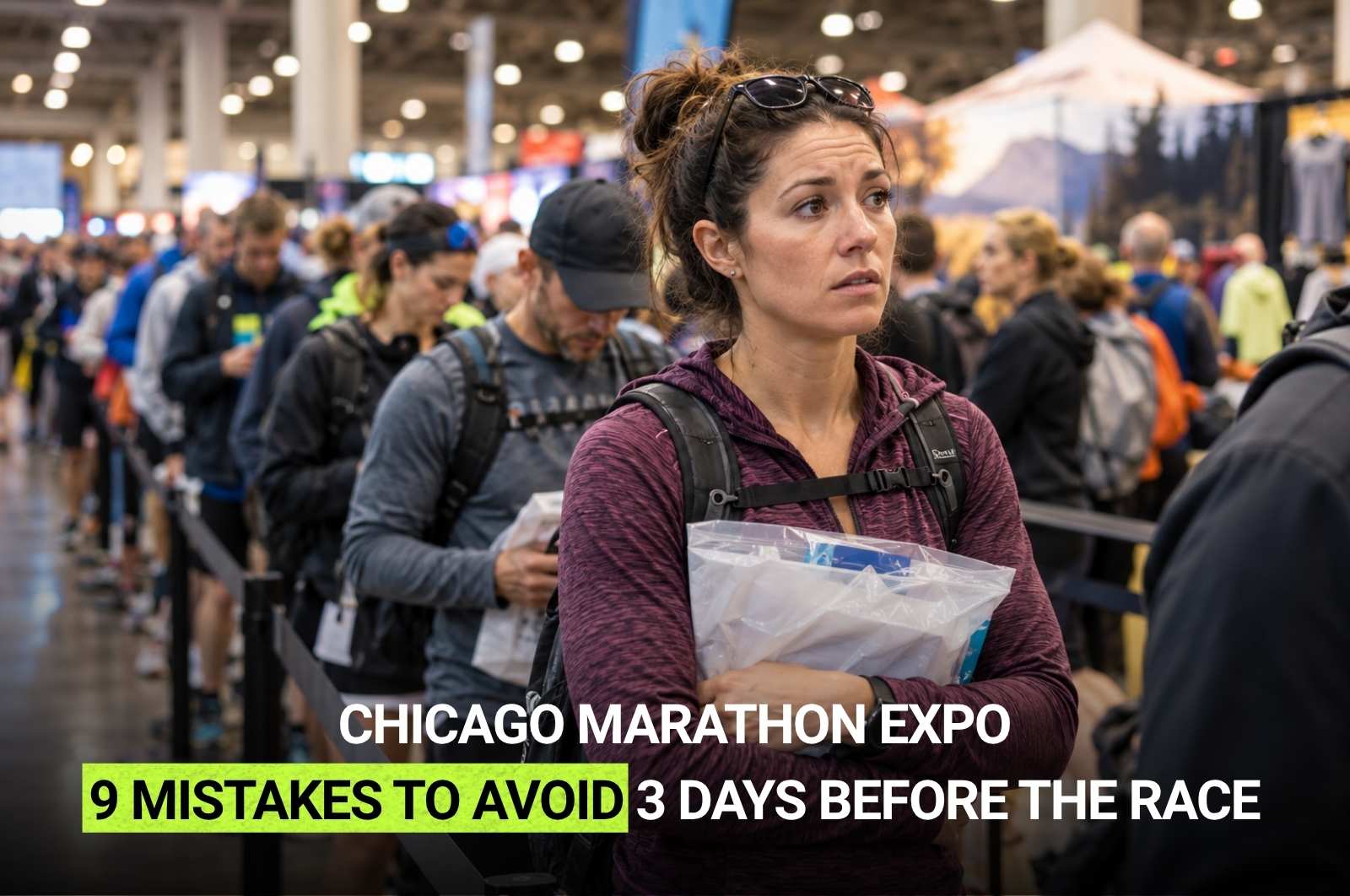
The Chicago Course Secret: Why Mile 18 Breaks More Runners Than the Final 10K
Chicago is flat, fast, and brutal in Pilsen. Here is why Mile 18 ends more PR attempts than the final 10K, and how to pace around it.

The real 2026 cost of running Chicago, NYC, London, or Berlin, broken down line by line. Entry is the smallest expense.

The Bank of America Chicago Marathon costs $250 for United States residents and $260 for international entrants to enter in 2026. That is the number on the registration page.
It is also almost nothing compared to what the race will actually cost you.
Running a World Marathon Major in 2026 is a four-figure commitment for most people.
For travellers flying in from Europe or Asia, it is closer to five figures once everything is counted. Here is the honest line-by-line breakdown.
The six Abbott World Marathon Majors in 2026 charge varying standard entry fees:
None of these figures includes the real cost of showing up on race day.

October marathon weekend is one of the busiest travel periods for Chicago. Hotels fill. Flights spike. A domestic US flight that normally costs $200 round trip often doubles.
International travellers from the UK or Europe can spend $800 to $1,400 easily. From Asia, more.
The partner hotels within walking distance of Grant Park charge premium rates during marathon weekend.
Expect $300 to $600 per night for three to four nights.
Budget options exist further out, but add commuting time on race morning.
Finding your hotel at 5 am when the trains are packed with other runners is its own stressor.
The training block alone eats through gels, chews, electrolytes, and sports drinks. A 16-week marathon build typically consumes $150 to $300 in training nutrition.
Add $20 to $40 of race-day gels and electrolytes, and the number keeps growing.
A dedicated pair of marathon racing shoes costs $200 to $300 in 2026. If you run in carbon-plated super shoes, more.
That is just the race pair. Training shoes rotate every 300 to 500 miles. A full 16-week block often chews through two to three pairs of training shoes, another $300 to $450.
Even casual first-timers often invest in a training plan subscription, a sports physio visit for a nagging ache, or a race-week massage.
Figure $100 to $500 depending on how much professional support you use.

Discover the authentic training methods of Kenyan runners and start improving your running faster than you ever thought possible.
Learn More About The Method →Limited-time reader discount available
Standard travel insurance rarely covers race-related injury or sudden withdrawal. Specialist policies that do run $40 to $120 for a long weekend.
Many runners skip this and regret it when a late injury forces a cancellation.
McCormick Place parking during the expo. Public transit day passes.
Ride-share surges on race morning. Easily $60 to $150 across the weekend.
Marathon finishers want a big meal, a photo print, a finisher jacket, maybe a round of drinks with family. Budget at least $100 to $200.
For a typical US-based runner flying into Chicago from another state, the full tab looks something like this:
Realistic total: $2,450 to $4,250. International travellers can add another $500 to $2,000 on top.
The Bank of America Chicago Marathon is a nonprofit event. Entry fees cover course support, timing, medals, aid stations, and runner services.
The $250 fee is comparable to industry standards for a major race.
The real inflation is in the ecosystem around the race: travel, hotels, gear, nutrition, and recovery services. These are not costs organisers can control.
They are market forces.
The partner hotel block opens 10 to 12 months out.
Prices rise fast once general release hits. Booking in January for an October race can save $300 to $600 on accommodation alone.
Local or regional fall marathons offer the same training outcome at a fraction of the price.
If the goal is a Boston qualifier or a PR attempt, flat regional races like Indianapolis, Mohawk Hudson, or Erie are often faster and dramatically cheaper. For more on this trade-off, see our guide to the best marathons for first-timers.
Rotate your race-day shoes into only one or two 10-mile dress rehearsals before the race. The rest of the training block, run in older trainers.
Shoes degrade with miles, not time.
Running clubs and training groups often coordinate shared accommodation for major races. Splitting a $500 hotel three ways is the single easiest cost cut available.
The headline $250 entry fee is misleading. A Chicago Marathon weekend will cost most US-based runners between $2,500 and $3,500 once everything is added.
That is not a reason to skip it.
World Marathon Majors are memorable, world-class events, and many runners say the experience is worth every dollar.
But going in with eyes open prevents the sticker shock that quietly ruins the weekend.
For more on race-week preparation, see our breakdown of how much it really costs to run a marathon.
Start your running journey today!
No spam. Cancel anytime.