Puma Put 40 Buddhist Monks in Running Shoes at a 600-Year-Old Monastery. Here Is Why.
Puma India's "Meditation in Motion" campaign puts 40 Buddhist monks in NITRO Deviate PURE running shoes at Thiksey Monastery ahead of the Ladakh Marathon 2026.

Thomas Panek, CEO of Lighthouse Guild, ran the 2026 NYC Half Marathon in AI-powered Meta glasses that let his coach Scott Jurek guide him in real time from Colorado.
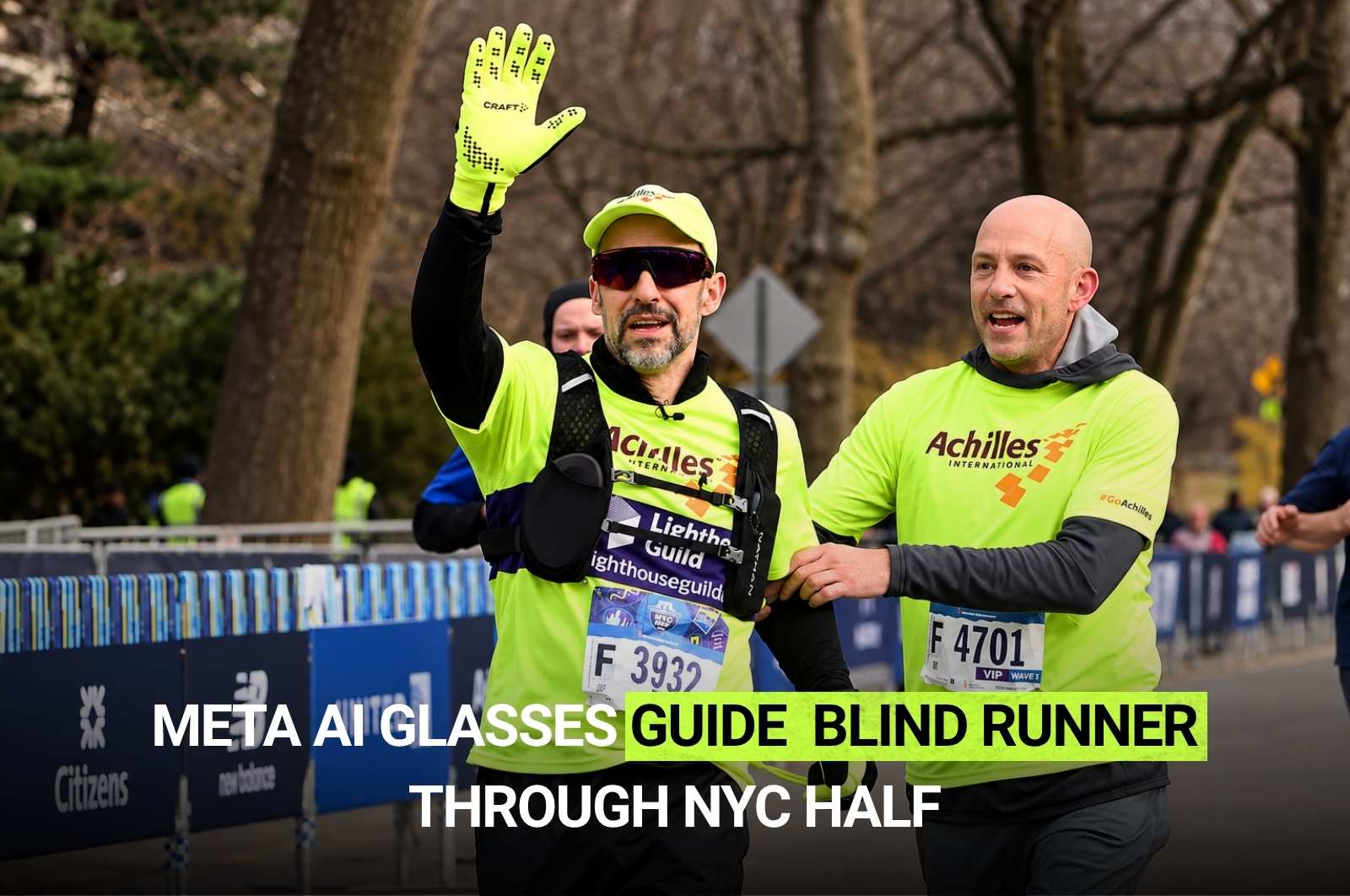
Media Credit NYRROn March 15, 2026, Thomas Panek crossed the finish line of the United Airlines New York City Half Marathon.
He is legally blind. He was wearing Meta AI-powered smart glasses that let his coach watch the race through his eyes.
The coach, ultra-marathoner Scott Jurek, called out real-time guidance from his home in Colorado, roughly 1,800 miles away.
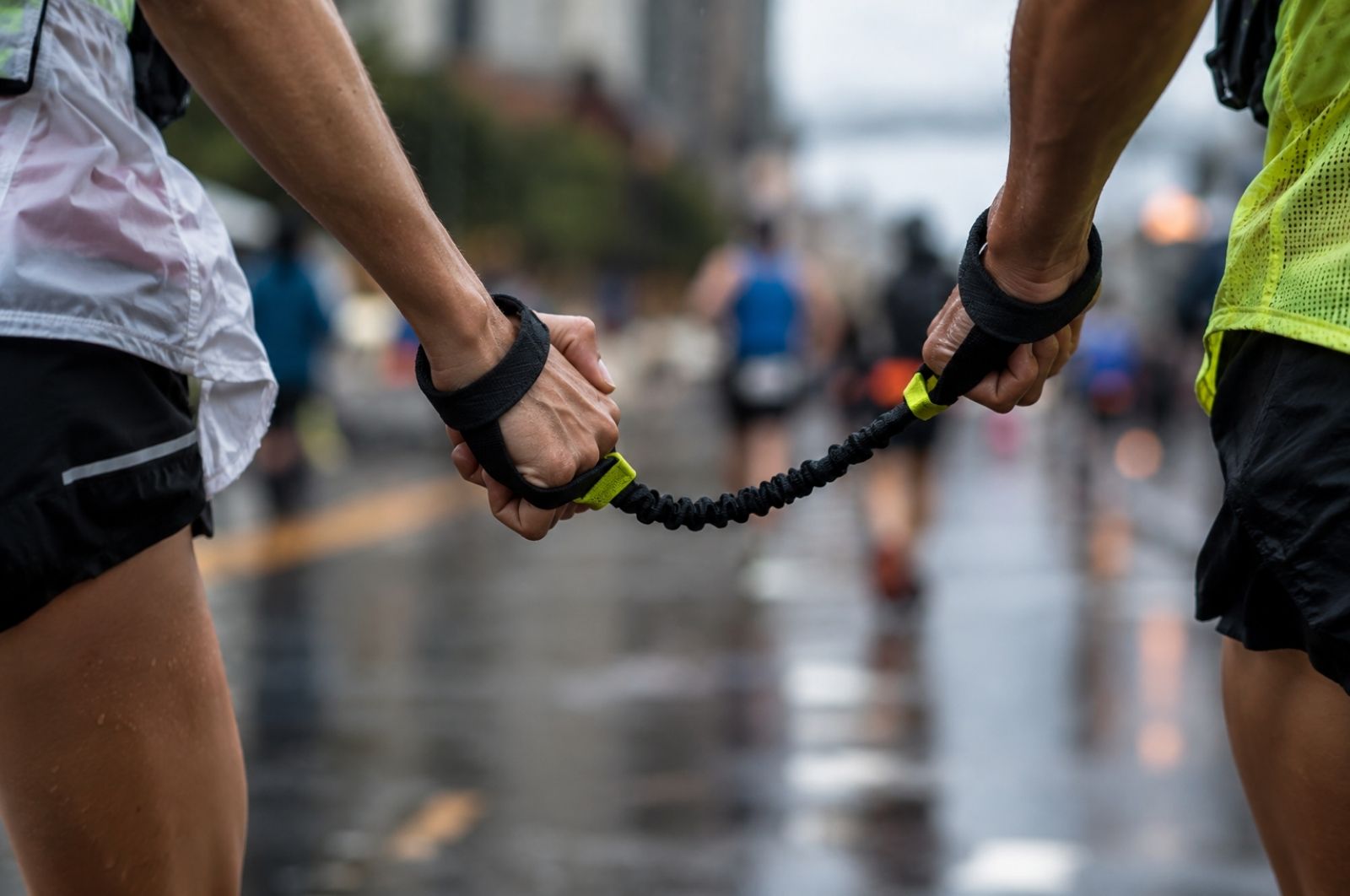
Panek finished the 13.1 miles with a human guide, Jed Laskowitz, running beside him. The AI glasses were the technological layer on top.
It was the first time anyone had completed a major road race using this setup.
The glasses were co-developed by Lighthouse Guild AI and Meta.
They stream what the runner sees to a remote coach or AI, who then feeds voice guidance directly into the runner's ear.
Panek is the President and CEO of Lighthouse Guild, one of the largest US nonprofits for people with visual impairments.
He has been building tools to give blind runners greater autonomy for years, including a program to train running-specific guide dogs.
In guided running, the calls a sighted guide has to make are constant.
"Curb in three steps." "Left." "Runner passing."
Miss one and the blind runner falls, collides, or veers off course.
The AI glasses give the coach a second pair of eyes. They also open the door to letting AI itself make some of those calls when a human is not available.
Every major marathon has waitlists for blind runners looking for guides.
Sighted guides need training, endurance to match the athlete, and availability on race day. Supply has never been able to keep up with demand.
AI glasses do not replace the human guide. Panek still ran with Laskowitz beside him.
But they add a remote layer that changes the math entirely.
Jurek watched the entire race from a screen in his living room.
A specialist coach in Tokyo could guide a runner in Boston. A pacing legend can help a first-time half-marathoner without either of them being in the same city.
This is the piece that could scale.
Sighted guides are geographically limited. AI-glasses guidance is not.
Panek noticed changes in his vision as a child.
He kept bumping into things and breaking bones. Adults called him clumsy.
By his early twenties, he was legally blind.
"It's really hard and difficult for people to go through that," he said in an interview with AMNY after the race.
At 26 he approached Lighthouse Guild for help. Two decades later, he runs it.
His running career has included multiple full marathons, in a lineage that stretches back to double-amputees rewriting the record books.
The glasses Panek wore in New York were prototypes.
Meta and Lighthouse Guild are working on refinements: better real-time obstacle detection, longer battery life, less audio latency.
Panek was clear about the limits. AI is a tool, not a replacement for human community.
"We just need to be thoughtful about how we use it," he said.
The blueprint is there. The technology works.
Major races have started building adaptive divisions with real prize money and elite-level operations.
The story of Alex Roca completing the Barcelona Marathon with cerebral palsy is one recent example.
Panek in Meta glasses is another.
The gap between what adaptive athletes can do and what mainstream race infrastructure supports is closing fast.
On a Saturday morning in Central Park, a blind CEO ran 13.1 miles with a coach in another state watching every step through his eyes.
Five years from now, this will be the ordinary way blind runners race.
Panek was just the first to prove it worked.
Discover the authentic training methods of Kenyan runners and start improving your running faster than you ever thought possible.
Learn More About The Method →Limited-time reader discount available
In the weeks after the race, running blogs, disability advocacy platforms, and mainstream tech media covered the story.
Most of that coverage focused on the tech.
The Meta glasses. The AI stack.
The runners who paid closest attention noticed something else.
Panek did not just complete the race. He ran with confidence through the crowded Manhattan streets in a way that would not have been possible with a human guide alone.
The AI added a second pair of eyes at a slight remove. Jurek could see traffic cones, water stations, and turns three seconds before Laskowitz needed to call them out.
Panek has said repeatedly that autonomy is the thing blind runners lose first.
A guide dog gives back some of it. A skilled human guide gives back more.
AI glasses, used correctly, give back the choice of who is guiding, when, and from where.
That is a different kind of freedom.
It is also why the story has landed so hard with adaptive-sport communities.
What happened in Central Park in March was small on paper.
One runner, one half marathon, one prototype device.
The direction of travel is what matters. And the direction is unmistakable.
Start your running journey today!
No spam. Cancel anytime.