
Built for the Burn: The Best Running Gear for Hot Weather
The best running gear for hot weather, from sun-blocking caps and breathable shirts to hydration vests, cooling sleeves, and electrolytes that keep summer miles safe and fast.

The DeerRun X20 packs a 15% auto incline, an 11.3 mph top speed and a 400 lb capacity into a treadmill that folds to 7.3 inches. Here is what it does well, where it falls short, and who should buy it.
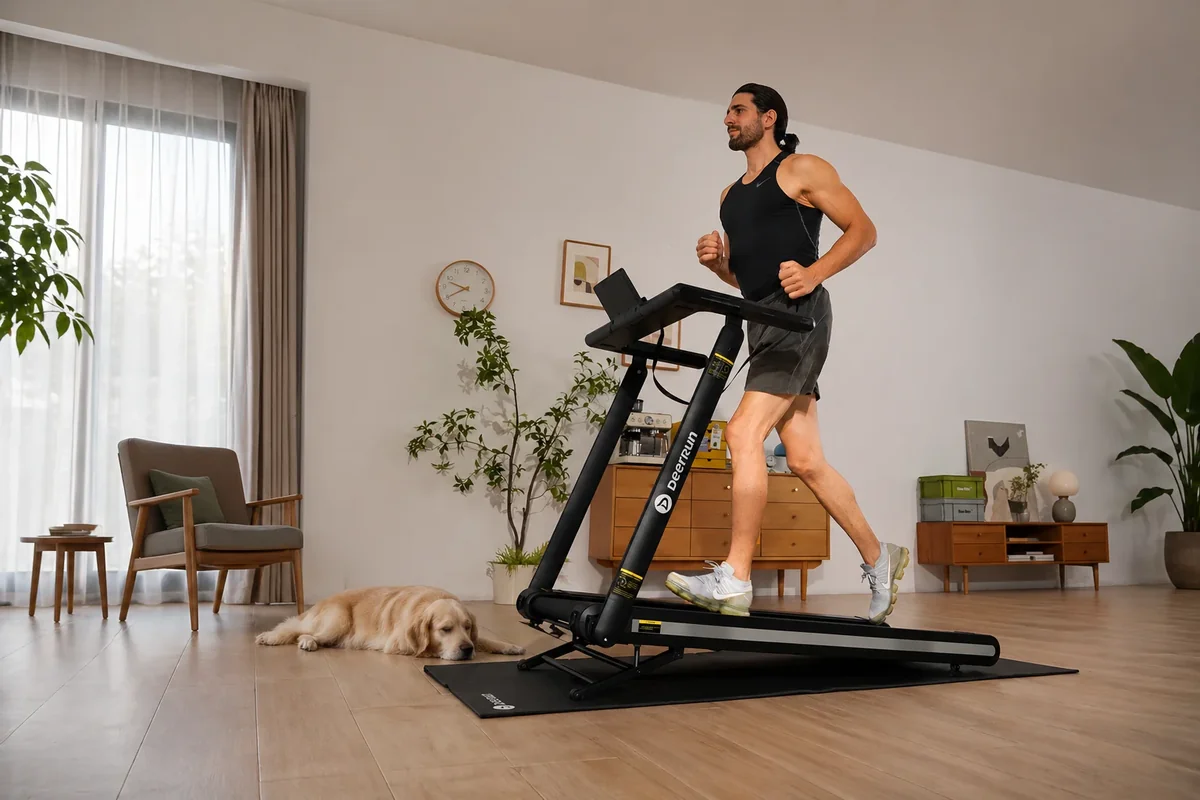
The DeerRun X20 tries to solve a problem most home runners know well: you want a treadmill with real incline and enough speed to actually run, but you do not have room for a machine that lives permanently in the middle of your living room.
On paper, the X20 checks a lot of boxes for the price.
It offers a 15% automatic incline, a top speed of 11.3 mph, a 400 lb weight capacity, and a deck that folds down to just 7.32 inches high.
Specs only tell half the story, though. Below we look at what the X20 does well, where it falls short, and who should (and should not) buy it.
Quick verdict: The X20 is one of the more capable folding treadmills in its price bracket, mainly thanks to the 15% auto incline and the 400 lb capacity.
It is a strong pick for walkers, incline hikers and easy to moderate runners who need to store their treadmill out of the way.
Taller runners and anyone doing fast interval work should look closely at the 17.7 inch belt width before buying.
Key strengths
Main limitations
Best for: apartment and small-home users, incline walkers, beginners and intermediate runners, people who want to fold the treadmill away after each session.
Not ideal for: tall runners doing fast intervals, runners who want a wide commercial-style deck, or anyone who wants a long warranty and a decades-long brand track record.
Prices move often, so check the current DeerRun X20 price on the official US store. At the time of writing it was on sale for around $609, down from a list price of $809.
This review combines DeerRun’s official specifications and product materials with the experiences of independent reviewers and verified owners who have used the X20 at home, including first-impression reviews from UK fitness publications and owner reviews on DeerRun’s US and UK stores.
Where a claim comes from the manufacturer rather than from independent use, we say so.
Alongside hands-on use, we checked every specification in this review against DeerRun's current product listing and compared the X20 with similarly priced folding treadmills from UREVO, WalkingPad and MERACH.
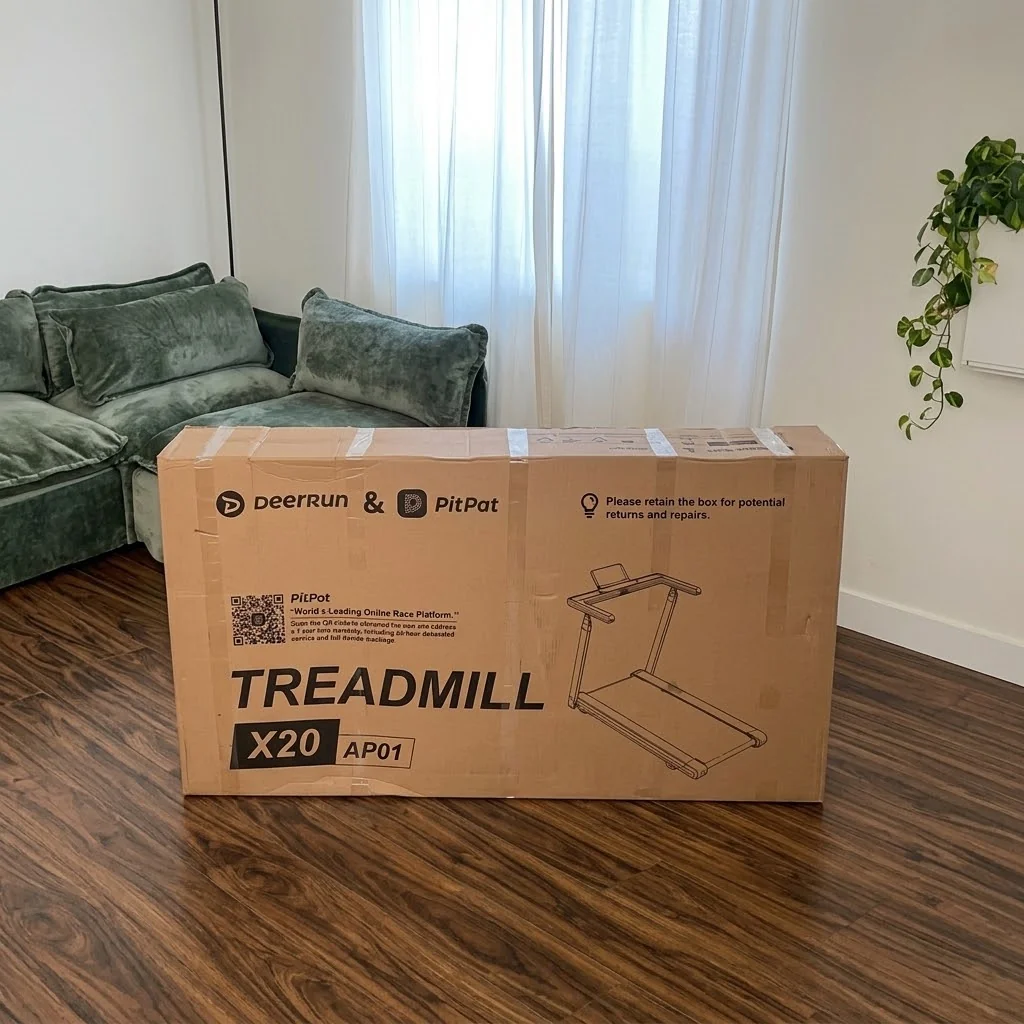
The X20 ships in one flat box measuring roughly 58.6 x 32.5 x 8 inches. It is a heavy package, so plan on two people to carry it inside, even though the assembly itself can be handled by one person.
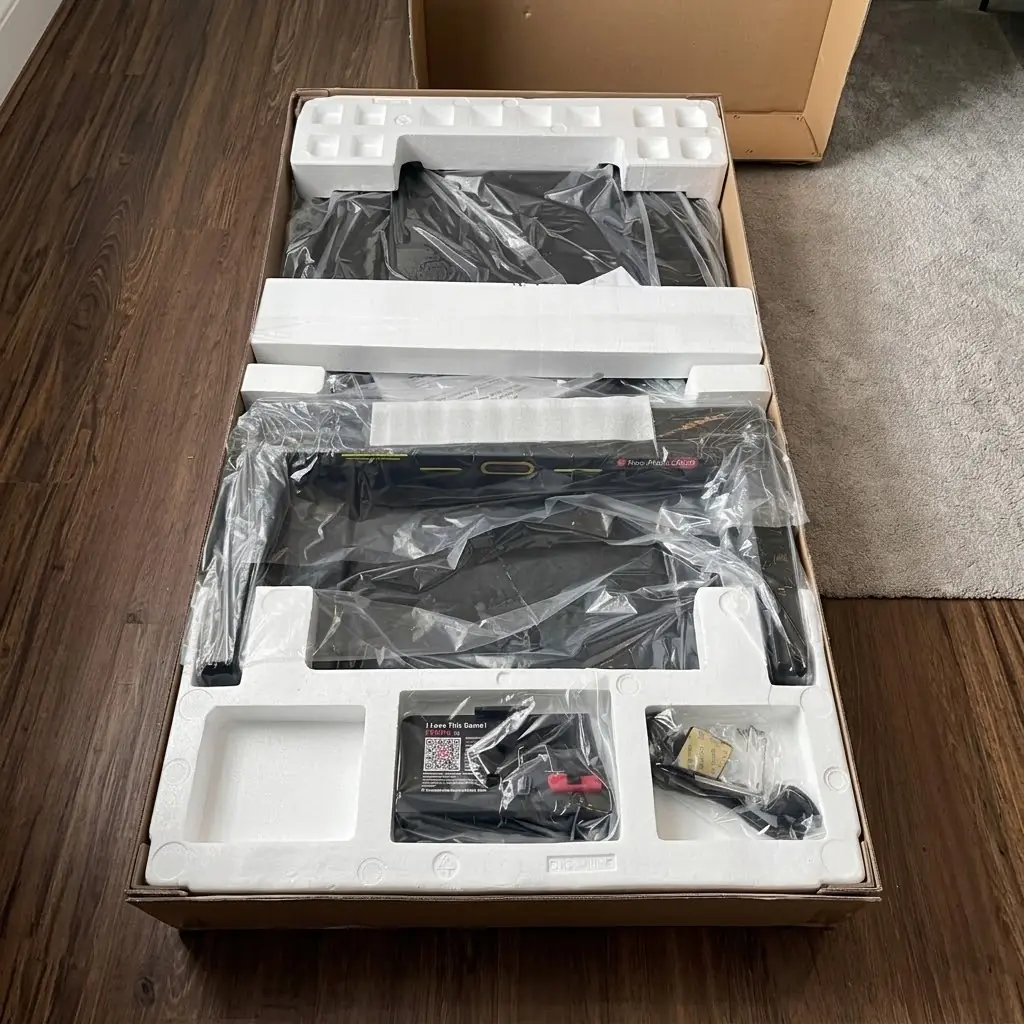
The packaging is well organized. The deck arrives almost fully assembled, protected by foam blocks, with the accessories in separate compartments. In the box you get the phone and tablet stand, the safety key, a 5.9 ft power cord, lubricating oil, a 6 mm L-shaped hex wrench, two bolts, the manual and a quick-start guide.
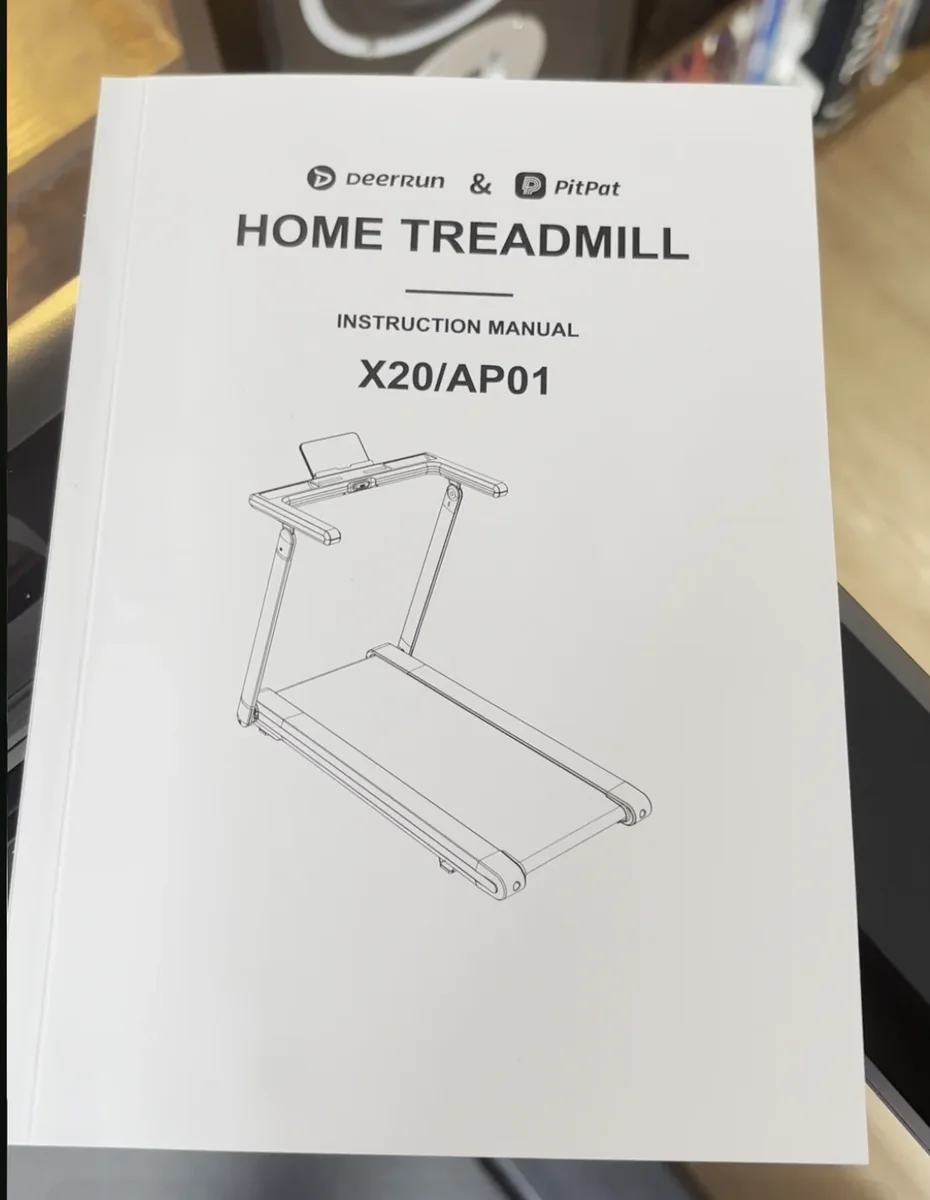
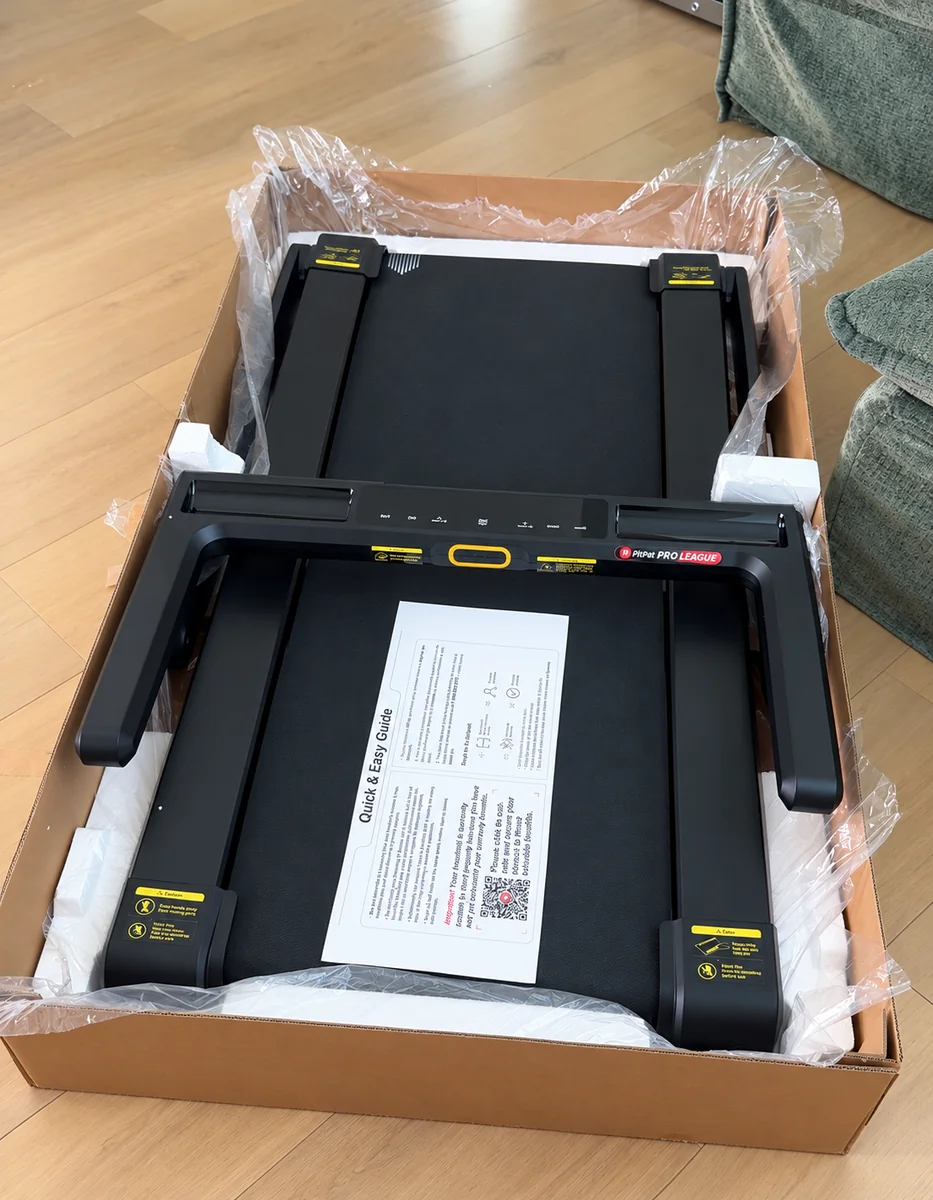
Assembly is short. You lift the aluminum upright column into position, tighten the mounting bolts on each side with the included hex key, then lower the armrest and console into place. The illustrated manual walks through it in five steps.
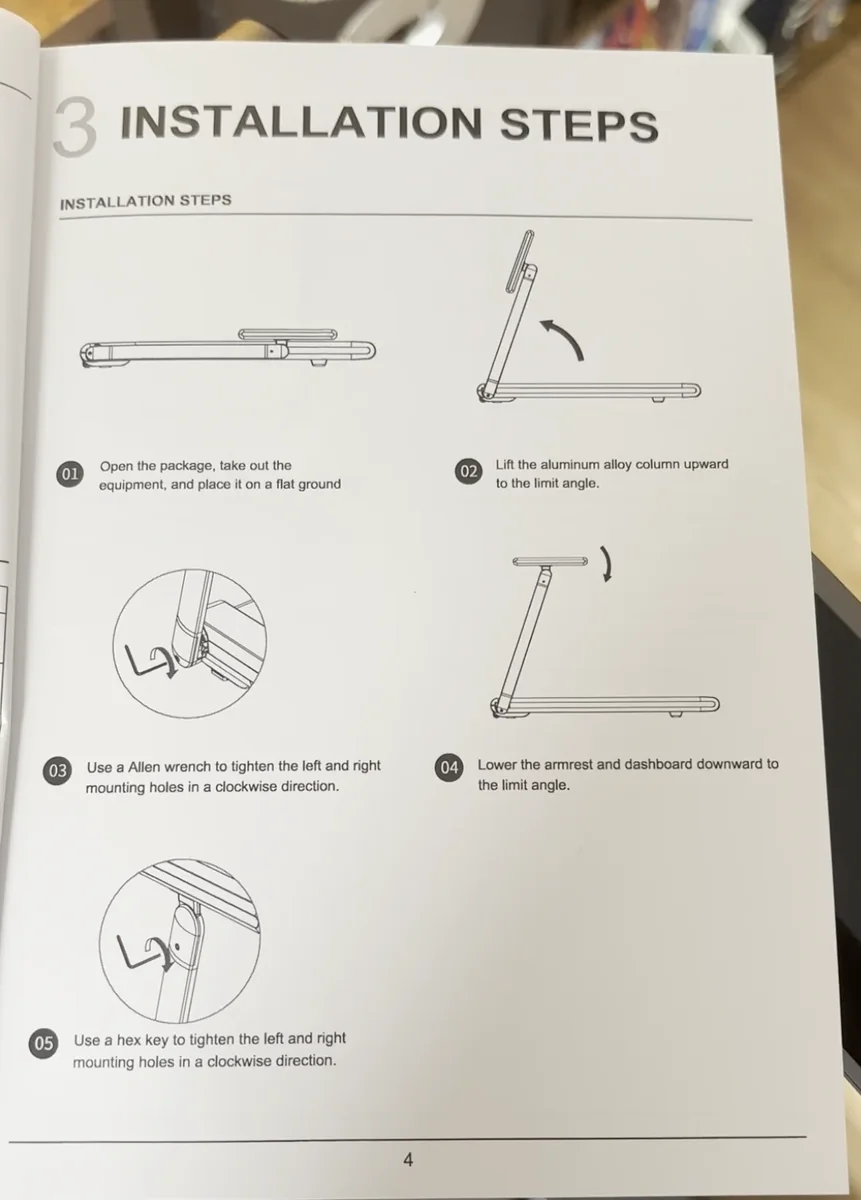
The assembly is quick and simple, with several calling it very easy to put together and one saying they were up and running in no time.
The process follows the five illustrated steps in the manual, and a “New Device Tips” sticker walks you through first-use calibration, with belt alignment points marked on the deck.
Across DeerRun’s range, reviewers typically report setup times of 10 to 20 minutes, and nothing in the X20 owner feedback suggests it takes longer.
One small annoyance: the uprights are secured with bolts rather than a quick-release lever, so you need the hex key if you ever want to adjust or remove them.
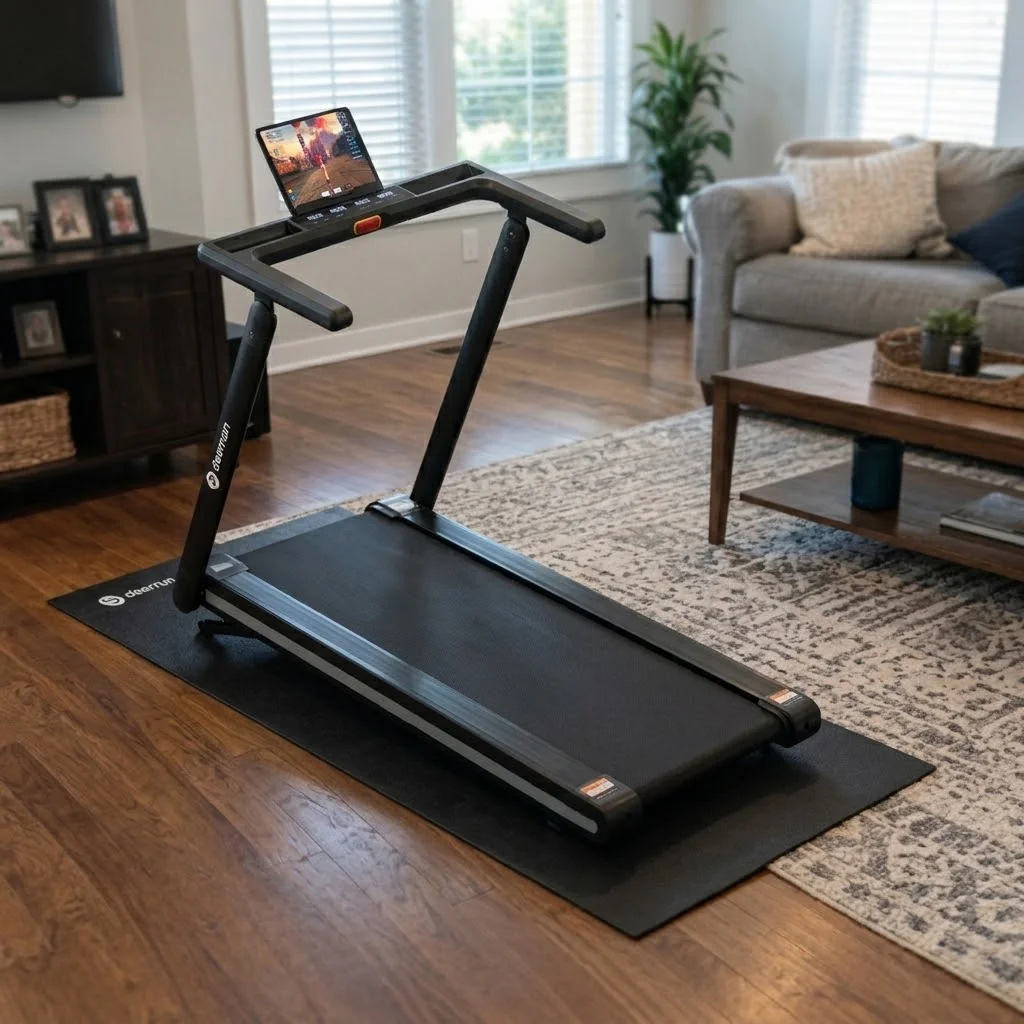
The X20 looks more like a compact full treadmill than a walking pad. It has a proper upright, a full-width handlebar and a console you can reach without stretching.
The black frame with small orange accents is understated enough to sit in a living room or home office without looking out of place.
The 400 lb weight rating is the standout number here. Most folding treadmills in this class top out between 265 and 300 lbs, so the X20 gives heavier users more margin, and it suggests a sturdier frame than typical walking pads.
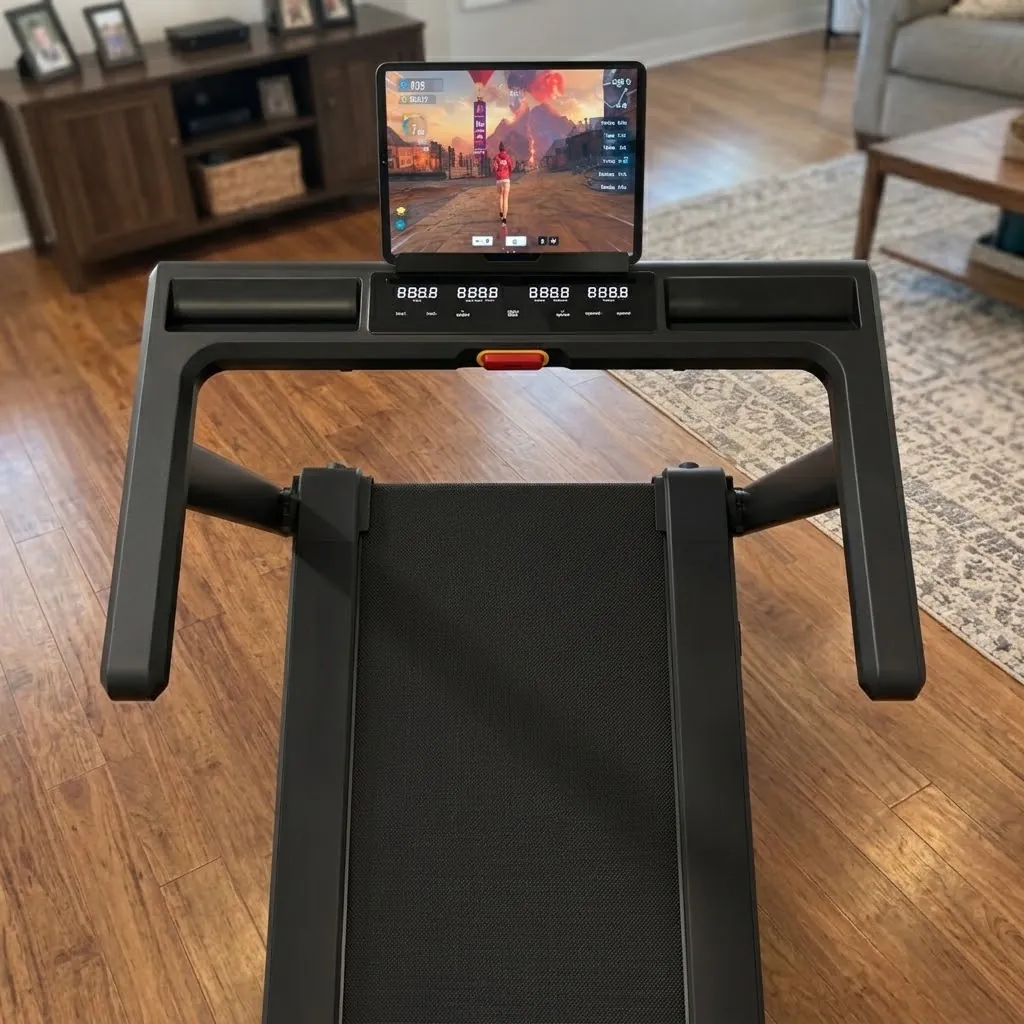
The running surface is the area to think about carefully. At about 51.2 inches long, the deck is fine for walking and easy running for most people.
At 17.7 inches wide, though, it is narrower than the 20 to 22 inch decks found on larger non-folding treadmills.
You notice this most at higher speeds, when your foot placement naturally drifts. Runners under roughly 5'10" running at easy to moderate paces should be comfortable; taller runners doing fast work may find it tight.
With a range of 0.6 to 11.3 mph, the X20 covers almost every use case for a home treadmill.
Very slow walking speeds suit recovery days or walking while working, while 6 to 8 mph is comfortable territory for steady running. The top end, around a 5:19 per mile pace, is enough for short intervals for most recreational runners.
Independent first impressions are positive on stability. We notice that the X20 held steady through tempo runs without the kind of vibration that makes you grab the handrails, and another found no wobble or loss of stability even at the full 15% incline, describing the deck as planted.
The frame is sturdy and robust.
Because DeerRun does not publish a continuous horsepower figure, it is hard to compare the motor directly with rivals. Some European retailers list it at 3.0 to 3.5 HP. In practice, the safest way to judge it is by how it handles your heaviest and fastest sessions, which is why the 60-day return window is worth keeping in mind.
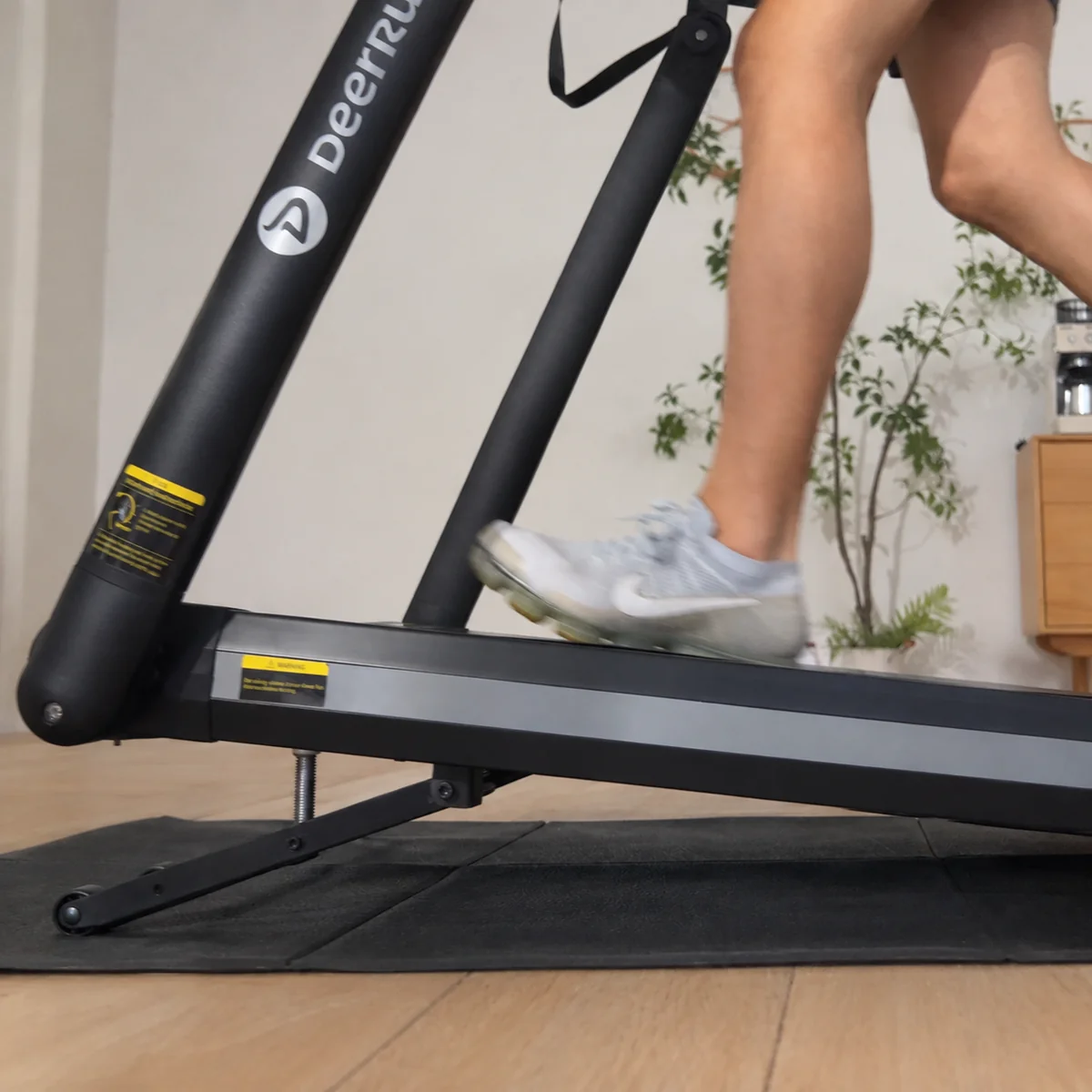
Incline is the X20's biggest selling point. Many compact treadmills either have no incline at all or offer a small manual setting.
The X20 gives you 15 automatic levels up to 15%, adjusted from the touchscreen or the app, so you can change the gradient mid-workout without stepping off.
That matters because incline is the easiest way to raise effort without raising speed.A
brisk walk at 10 to 15% is a genuinely hard workout, and it is easier on a narrow deck than sprinting, which plays to the X20's strengths.
If your main goals are incline walking, hiking prep or adding hill work to easy runs, this feature alone puts the X20 ahead of most walking pads.
The X20 also has a reverse walking mode for walking backwards on an incline, a niche option some people use as a change of stimulus.
It does not offer decline.
Is the DeerRun X20 quiet enough for an apartment? For walking and easy jogging, it should be.
DeerRun uses a brushless motor and describes the treadmill as very quiet, and one UK review quotes a figure of 45 dB or less. In real use, most of the noise from any treadmill comes from footfalls and belt slap rather than the motor, and that increases as you run faster.
DeerRun rates the X20 at 45 dB or less, a manufacturer figure that independent reviewers have not yet verified with their own measurements. Owner feedback supports the general claim, though: one buyer noted that their own footsteps were louder than the machine.
Independent measurements of another DeerRun model ranged from around 50 dB at walking pace to about 65 dB at running pace, roughly the level of a dishwasher.
Expect the X20 to be quiet at walking speeds and noticeably louder once you start running.
For upstairs apartments, put the X20 on a dense treadmill mat. It reduces vibration traveling into the floor and protects the floor itself. Walking while working on a call should be fine; fast running late at night will still be heard by downstairs neighbors, as it would on almost any treadmill.
DeerRun says the deck is cushioned to soften each footfall, but it does not detail the shock absorption system. Expect a firmer feel than a premium gym treadmill but softer than running on pavement. For long walks and easy runs, a good pair of running shoes will make more difference than the deck itself.
DeerRun describes a multi-layer cushioned deck but publishes no shock absorption rating, and independent reviewers have so far said more about grip than softness, describing the textured belt as grippy and sure-footed.
For now, the fair expectation is a moderately cushioned deck that suits walking and easy running, rather than a plush, gym-style ride.
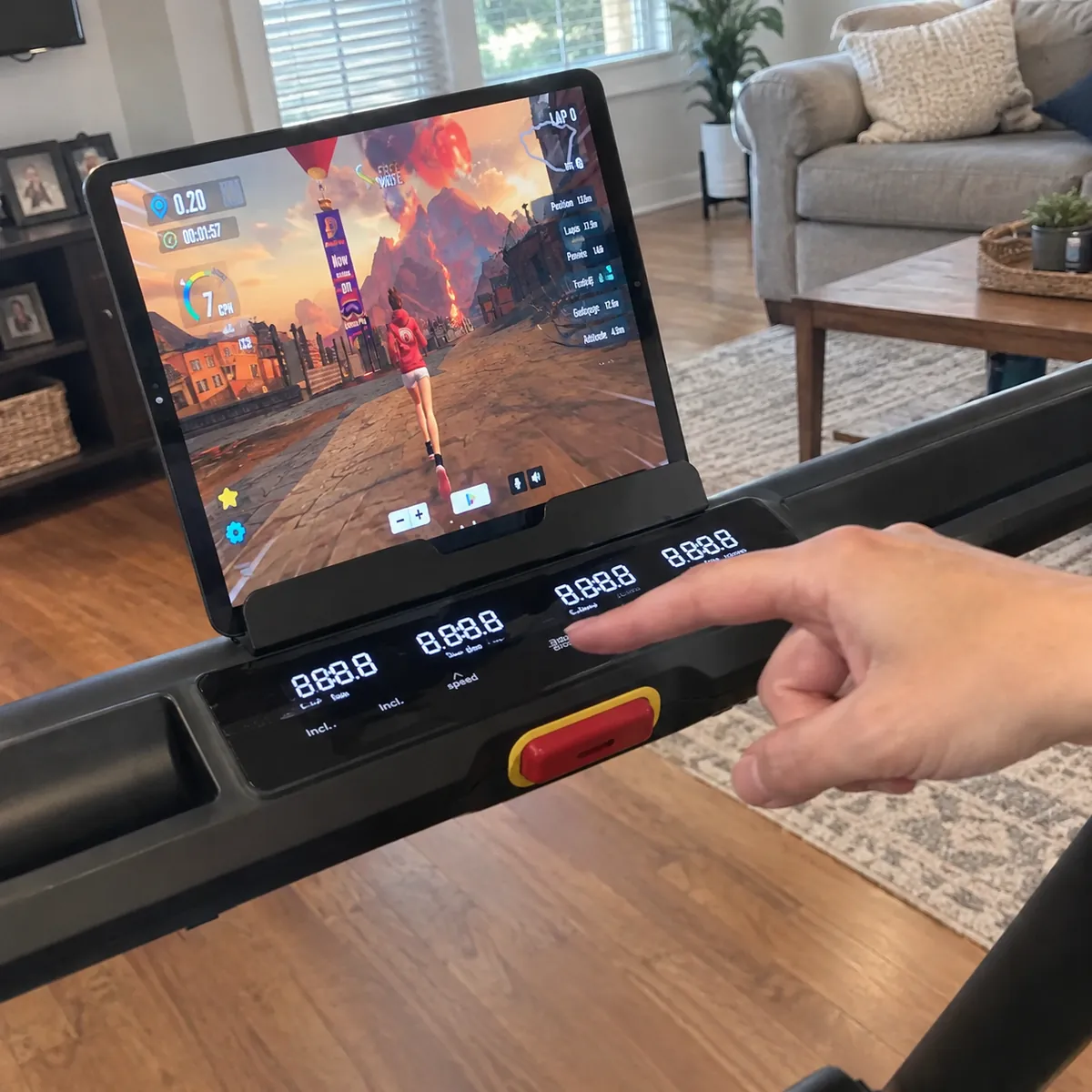
The touchscreen console shows your core data and lets you change speed and incline with a tap. Physical buttons would be easier to hit mid-sprint, but the layout is clear and responsive enough for most workouts.
The X20 connects over Bluetooth to PitPat, a free app with virtual races, 3D routes, structured training plans and syncing to services like Apple Health.
It is a decent way to break up the monotony of indoor running, and it costs nothing, which is a real advantage over subscription platforms. It is not as polished as Zwift or iFIT, though, and some owners report too many in-app messages. If you do not care about virtual racing, you can ignore the app entirely and run from the console.
PitPat is also the X20’s weakest point in user feedback.
The app’s store ratings sit well below the treadmill’s, with recurring complaints about Bluetooth dropouts, lost workout data and having to register an account before using connected features. X20 owners have also called it overly complicated and said it sends too many messages.
The good news is that the touchscreen console already shows all the key metrics, so you can treat PitPat as optional rather than essential.
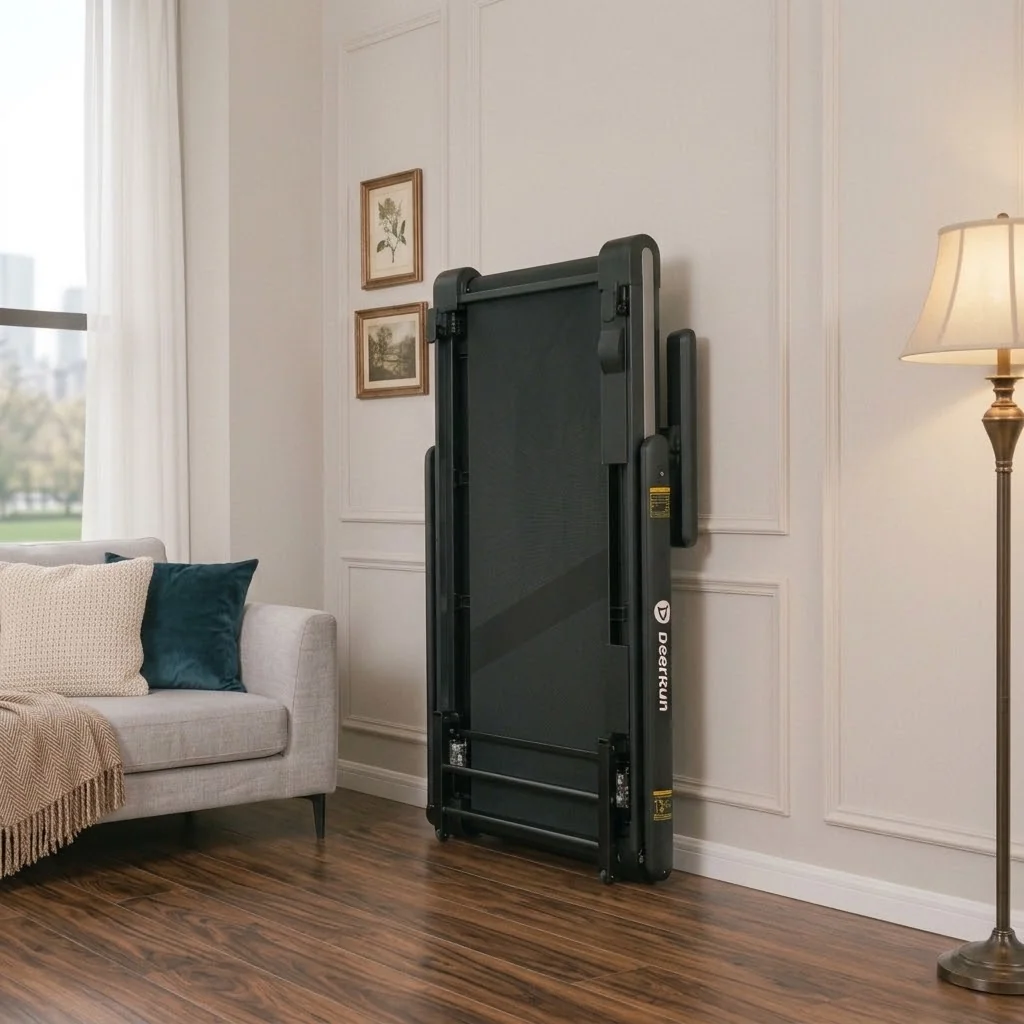
This is where the X20 earns its place in small homes. Folded, the deck drops to 7.32 inches high while keeping the same 54 x 30 inch footprint. That is low enough to slide under many beds, and the product photos also show it stood upright against a wall.
Check the manual for the storage positions DeerRun recommends for your unit.
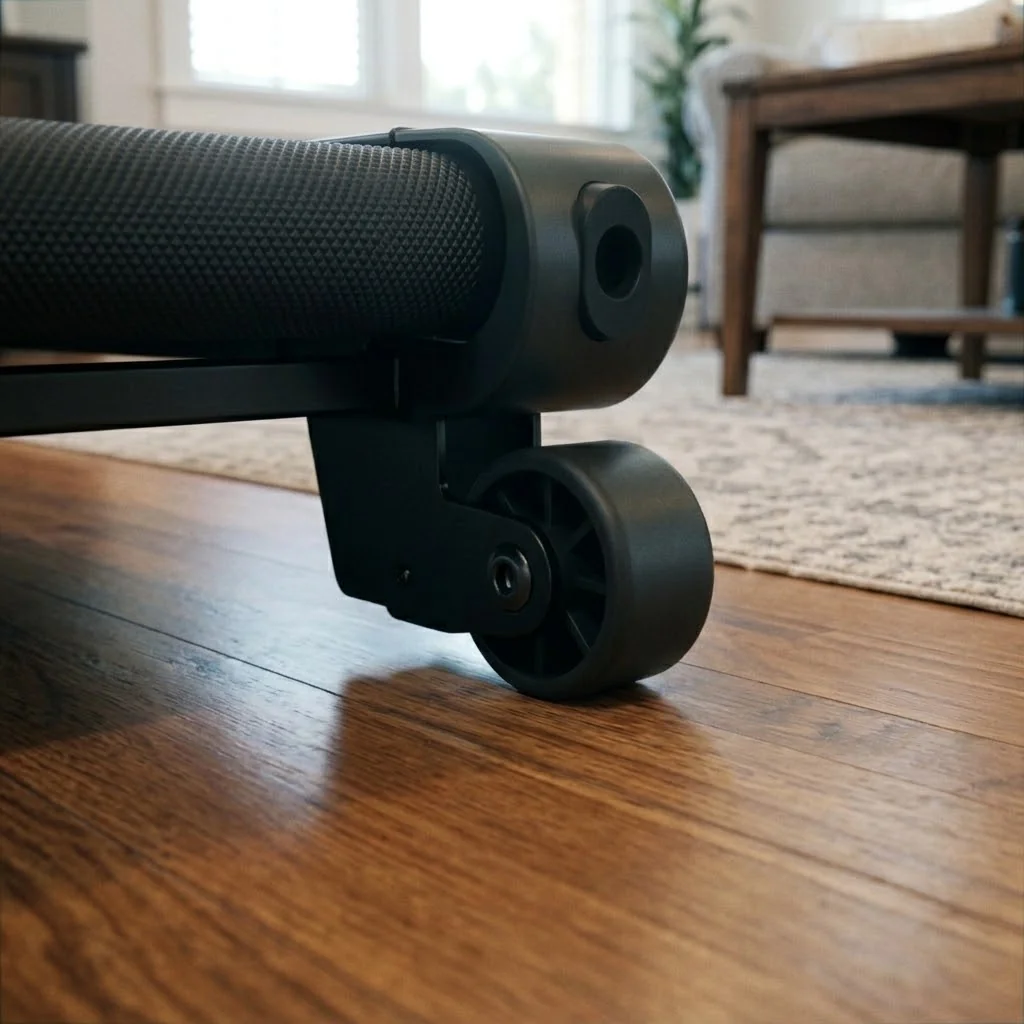
Front transport wheels help you roll it across hard floors, but at 87.8 lbs it is still a two-hand job, and carpets make it harder. You will also need to remove the tablet holder before folding it completely flat. If you plan to fold the treadmill after every single session, factor in a minute or two each time.
Unfolded, the X20 stands 42.8 inches high. Leave clearance behind the deck for safety, as with any treadmill.
Prices and models change quickly in this category, so treat this as a guide to trade-offs rather than a fixed ranking.
DeerRun X20 vs UREVO: UREVO's CyberMega is a step up in running performance, with a 12.5 mph top speed and a slightly wider 18.9 inch belt, but it costs around $1,000, maxes out at 12% incline and 300 lbs, and folds to 10.8 inches rather than 7.3. UREVO's walking pads, such as the Strol 2E Pro, are far cheaper and lighter, but top out at 6.2 mph.
The X20 sits between the two: more running ability than a walking pad, more incline and capacity than the CyberMega, at a lower price.
DeerRun X20 vs WalkingPad: WalkingPad's folding R-series treadmills are extremely compact and well finished, but they have no incline and top out around 7.5 mph. If you mainly walk and want the slimmest possible storage, WalkingPad is worth a look. If you want incline or real running speed, the X20 is the better fit.
DeerRun X20 vs MERACH: MERACH's incline walking pads, like the W50, match the X20's 400 lb capacity and offer up to 12% incline for much less money. They are built for walking, though, not running. Choose MERACH for budget incline walking under a desk; choose the X20 if you also want to run.
A strong option if you live in an apartment or small home, want incline walking as a core part of your training, run at easy to moderate paces, or need a higher weight capacity than most folding treadmills offer.
Less suitable if you are a tall runner who regularly runs fast intervals, you want a wide 20 inch plus deck, or you will never fold the treadmill away. In that last case, a non-folding treadmill at a similar price may give you a bigger deck.
Consider another model if you only ever walk while working (a cheaper walking pad will do the job) or a long warranty is a deal-breaker for you.
DeerRun is a younger brand focused on compact home treadmills and walking pads. Its products are competitively priced and generally well equipped, and it sells directly with a 60-day return window and free US shipping. Its long-term reliability record is still being built, and its one-year US warranty is shorter than what larger brands offer, so it pays to register your product and keep your receipt.
Yes. Walking, especially incline walking, is where the X20 is at its best. The low 0.6 mph starting speed and 15% auto incline make it suitable for everything from gentle walks to hard uphill hikes.
For easy and moderate running, yes. The 11.3 mph top speed is enough for most recreational runners. The 17.7 inch belt width is the main limit for tall runners or fast interval sessions.
It can be used for slow walking while you take calls or read, but it is designed as a running treadmill with handlebars and a console, not as an under-desk walking pad. If walking at a standing desk is your main goal, a dedicated walking pad is usually more practical.
Yes. At 7.32 inches folded, it is one of the slimmer running treadmills with auto incline, and the front wheels make it manageable to move into storage.
For the right buyer, yes. The DeerRun X20 combines a 15% automatic incline, an 11.3 mph top speed and a 400 lb capacity in a treadmill that folds to just over 7 inches, and few rivals at this price match that combination.
It is particularly strong for incline walkers and everyday runners living in small spaces.
It is not perfect.
The 17.7 inch belt will feel narrow for some runners, the motor rating is not published, the US warranty is only one year, and the PitPat app is functional rather than polished. If those trade-offs work for you, the X20 offers a lot of treadmill for the money.
Special discount: use code Runningweek12 for $12 off in the US, £12 off in the UK, €12 off in Germany or $12 off in Canada on DeerRun's official stores. The code excludes accessories and derivative products.
Check the DeerRun X20 price (US store)
Check the DeerRun X20 price (UK store)
This article has been sponsored by DeerRun.
Start your running journey today!
No spam. Cancel anytime.


