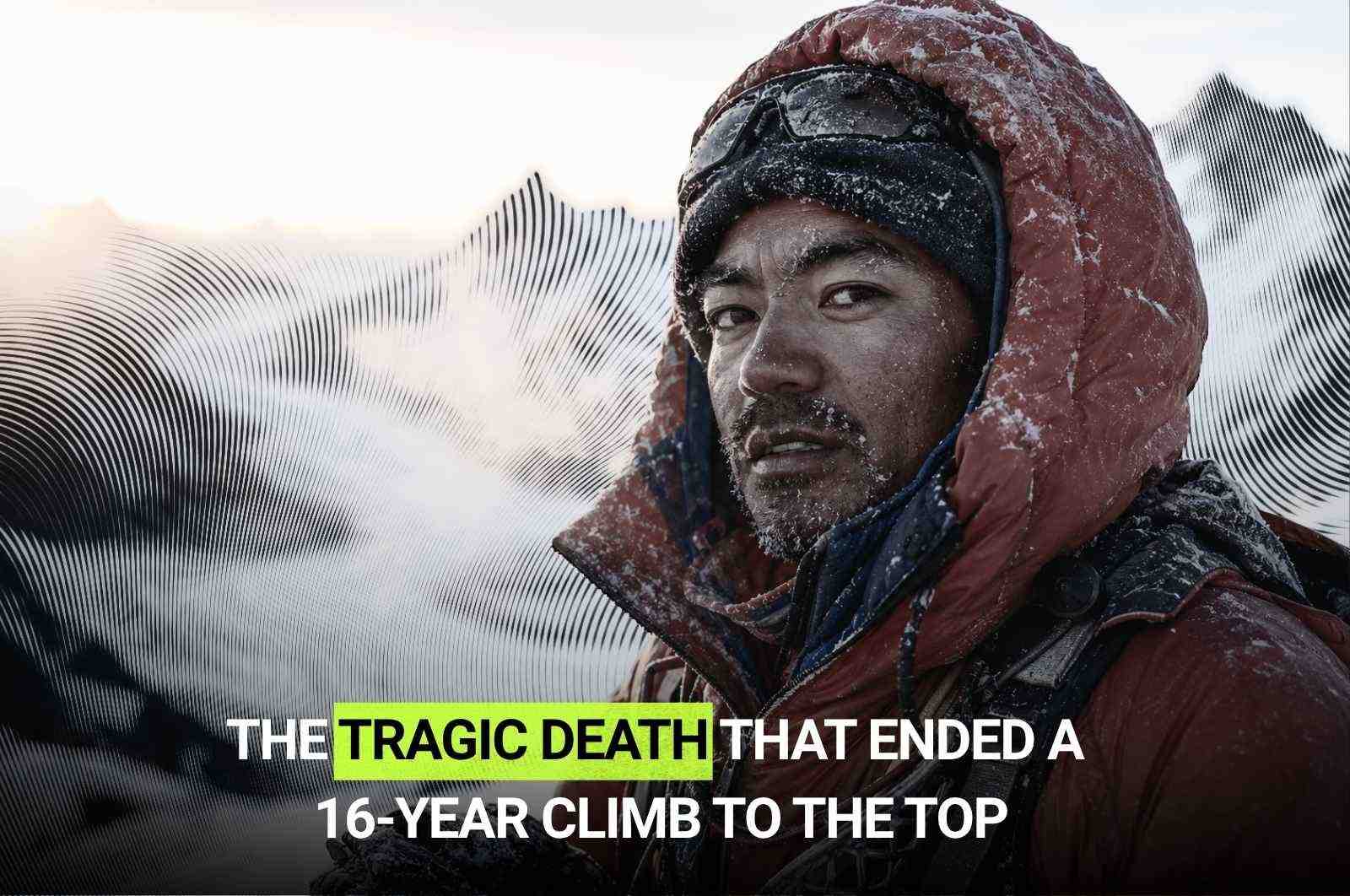
Pur Bahadur Gurung, known as Yukta, died in the Broad Peak avalanche at 37. He went from porter in 2009 to ten Everest summits and IFMGA certification.
Yukta died on Thursday when an avalanche struck an international team high on Pakistan's Broad Peak. He was 37 years old.
He had summited Everest ten times, more than anyone else from the Gurung community.
He earned his international mountain guide certification in December, roughly seven months before he died.
That second detail is the one worth sitting with. The certification was the top rung of a 16-year climb that started with him carrying other people's luggage.
What happened on Broad Peak
The avalanche struck around midday on July 30, on the 8,047-metre peak in Pakistan's Karakoram range.
The team had ten members, drawn from Nepal, Pakistan, Oman, China and the United States.
The Gilgit-Baltistan regional government confirmed on Friday evening that the bodies of Gurung, Omani climber Nadhira Al Harthy and American climber Mallory Geis had been secured in local facilities, according to Al Jazeera. Expedition leader Nirmal Purja remains among those unaccounted for.
Purja holds the record for the fastest ascent of all fourteen peaks above 8,000 metres.
This remains a developing story.
Search and recovery operations were still underway at the time of writing.
Sixteen years from porter to international mountain guide
Gurung was born in 1989 in Lapu, a village in Dharche Rural Municipality in northern Gorkha.
He grew up within sight of the Himalaya and once intended to join the British Army, a plan cut short by Nepal's armed conflict.
He left home young and took work at a hotel in Manang.
Trekking guides passed through, and he decided that was the job he wanted.
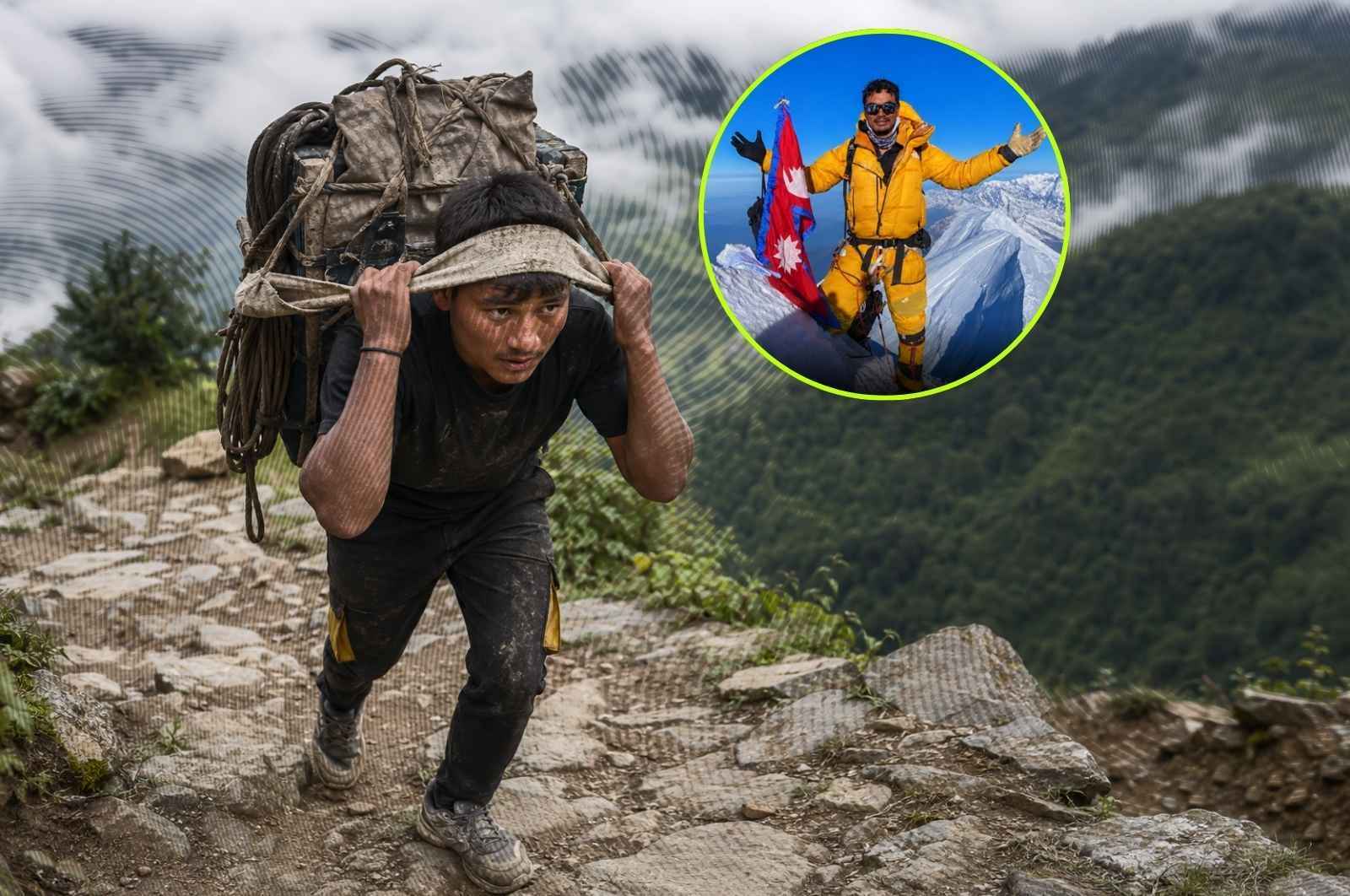
So he moved to Kathmandu and started carrying loads. “He started as a porter in 2009,” his colleague Tulsi Singh Gurung told OnlineKhabar. From porter he moved to kitchen helper on camping expeditions.
Then assistant guide, then trekking guide, then planning guide.
The certification he held for seven months
In December 2025, Gurung passed his International Mountain Guide certification through the Nepal National Mountain Guide Association.
That is the IFMGA qualification, and it is not a weekend course. It takes years of assessed rock, ice, ski and high-altitude work, which is why guides refer to it as the PhD of mountain guiding.
He held it for seven months.
For anyone who suspects a late or humble start closes doors permanently, the shape of that career is a useful answer. He was 20 years old when he first shouldered somebody else's pack.
Ten Everest summits and 12 of the 14 highest peaks
Gurung first stood on the summit of Everest in 2011, two years after starting as a porter. He went back nine more times.
Beyond Everest, he had climbed 12 of the world's 14 peaks above 8,000 metres. Only two were left.
The K2 ascent, the rescues, and the comeback nobody wrote about
He set a record by summiting Pakistan's K2 inside 24 hours.
He was also a working member of Jim Morrison's 2025 ski descent of the Hornbein Couloir on Everest's north side.
He was seriously injured in a fall on that expedition and spent months in hospital recovering.
He went back to the mountains afterwards and kept guiding.
He was also a regular presence on rescues, going up to bring back climbers who could not get down on their own.
Abiral Rai of the Nepal National Mountain Guide Association, who helped train him, told Outside that “it's hard to find people like Yukta.”
What 8,000 metres actually does to an endurance athlete
Here is the part most tribute coverage leaves out, and it is the part that translates to anyone who trains for a living or for love.
Aerobic capacity does not survive altitude intact. A review published in the Journal of Clinical Medicine reports that VO2 max falls by roughly 30% at 4,300 metres and by around 46% at 5,260 metres relative to sea level, with acclimatisation recovering only 5 to 13% of it. The summit of Broad Peak sits at 8,047 metres.
That is nearly three kilometres above the highest elevation in that data.
Everything above 8,000 metres is commonly called the death zone, and the name is literal rather than dramatic.
The body cannot acclimatise at that height, so it begins consuming itself from the moment of arrival.
Digestion slows, sleep fragments, and cognition degrades measurably.
Guides are doing the heaviest work in the group while that clock runs, and they are usually doing it more than once per season.
Read that again. Walking slowly becomes a maximal effort.
Why fitness is not the variable that decides
A high sea-level VO2 max helps. A long acclimatisation schedule helps a little more.
Neither of them stops a loaded slope from releasing.
Broad Peak is the twelfth highest mountain on earth, and it has a long record of avalanche fatalities on exactly this kind of ground.
That is the uncomfortable arithmetic of high-altitude work.
The athlete controls training, pacing, timing and route choice, and the mountain controls everything else.
If the number itself is unfamiliar, the full VO2 max explainer covers what it measures and, more usefully, what it does not. What runners can actually take from this
Almost nobody reading this will rope up on an 8,000-metre face. The transferable part was never the altitude.
It is the progression. Sixteen years, one rung at a time, from load-carrying to leading rope teams on the highest ground on earth.
Nothing about that path was fast. It was repetitive, unglamorous, load-bearing work, done in the same place, for years, long before anybody outside Nepal knew the name.
That is also, in miniature, what builds a runner.
And if mountains are what pull you outdoors in the first place, the entry point sits a very long way below Broad Peak. Start with the beginner's guide to trail running. The mountain does not grade on merit
Gurung had left Nepal roughly three weeks before the avalanche.
He had climbed almost every high peak on earth and had just been certified at the very top of his profession.
None of it counted for anything on Thursday.
That is not a moral so much as the plain risk arithmetic of the job he chose.
What he leaves behind is a guiding community that trained him and a long list of climbers he helped bring down alive. Ten Everest summits, 12 of the 14, and 16 years of work that began with a load on his back.