The Cadence Rule That Keeps Running Form Together on Long Slow Runs
Long slow runs quietly wreck your form. Here is the cadence rule and the four other cues that keep your stride together and cut your injury risk.

Alcohol cuts muscle protein synthesis by up to 37% and destroys recovery sleep. Here are nine practical tips for quitting or cutting back on drinking and building a running habit at the same time.
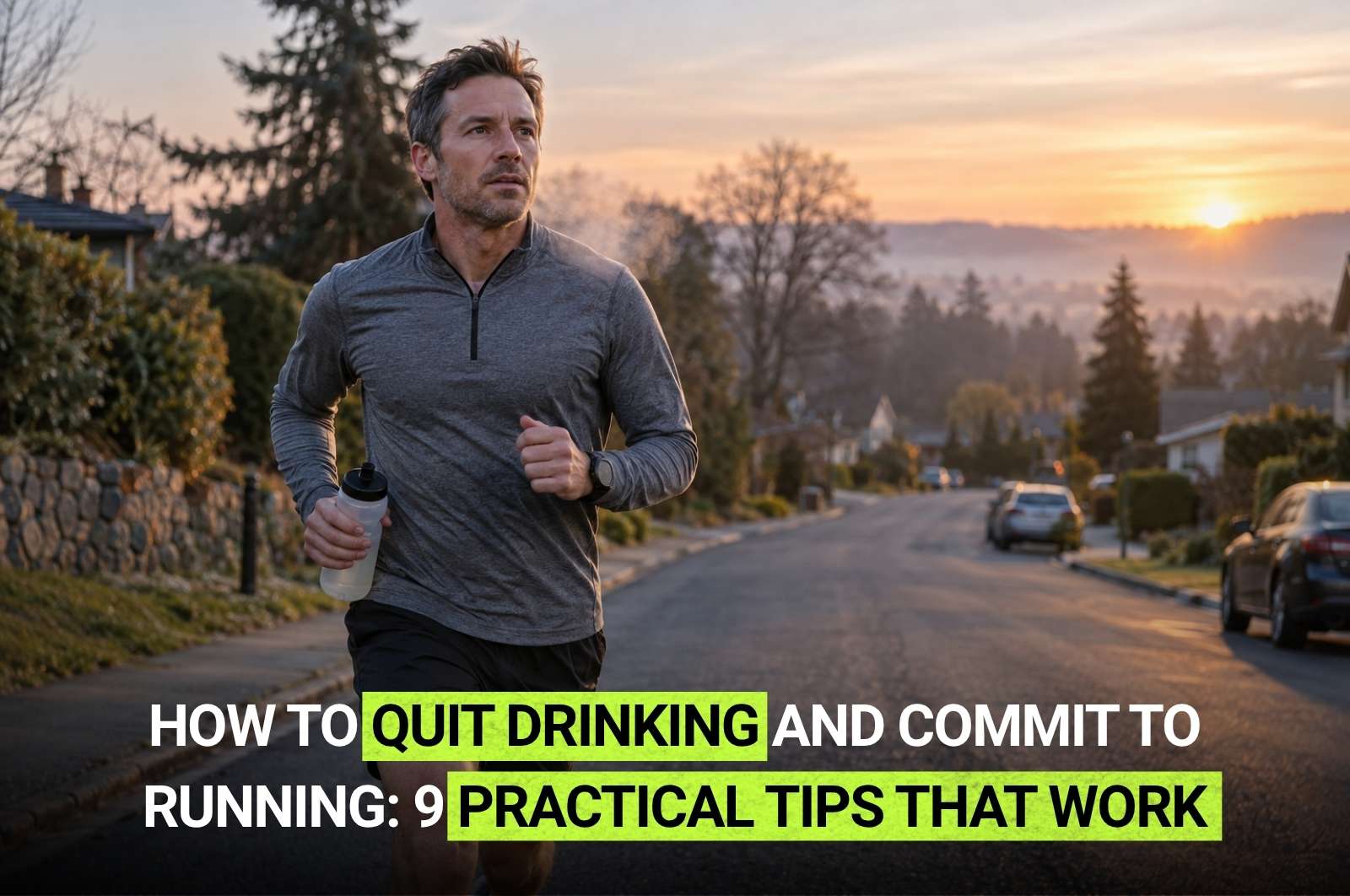
The link between alcohol and running performance is not subtle.
Drinking after a hard session reduces muscle protein synthesis by up to 37%, even when protein is consumed alongside the alcohol.
That figure comes from research summarized in the peer-reviewed review "Alcohol, Athletic Performance and Recovery" (PMC/Nutrients, 2010).
The practical result: your body cannot repair what it broke down in training.
You show up to the next run under-recovered. You plateau.
The good news is that cutting back, or quitting entirely, tends to show up in the data within a month.
Sleep gets deeper. Resting heart rate drops.
Long runs start to feel noticeably more manageable at the same pace.
Here is how to actually make it happen.
Not every runner needs to go dry to see gains.
Cutting from ten drinks a week to two often produces almost the same recovery improvement as cutting to zero.
Be honest about where you are, then set the target from there.
For one week, track every drink in a note on your phone.
Not to judge it. Just to see the number.
Most people underestimate their weekly total by 30 to 40 percent. The written number is where change starts.
Vague goals fail.
"Drink less and get fitter" is not a plan.
"Finish my first half marathon in 12 weeks" is a plan.
The race entry becomes the deadline that keeps you honest.
For beginners, building a running habit that fits a busy schedule is the first place to start.
A race, a route, or a weekly mileage target gives the sacrifice a concrete return.
Most people do not miss the alcohol itself.
They miss the wind-down ritual, the social handshake, the mental transition out of work mode.
Take away the drink and leave the gap, and the habit reasserts itself within a week.
A short easy run after work is the closest one-to-one replacement for the after-work drink.
It hits the same dopamine reward. It handles the same wind-down function.
Non-alcoholic beer, sparkling water with citrus, or a proper zero-alcohol cocktail fills the social-hand slot at dinner without derailing recovery.
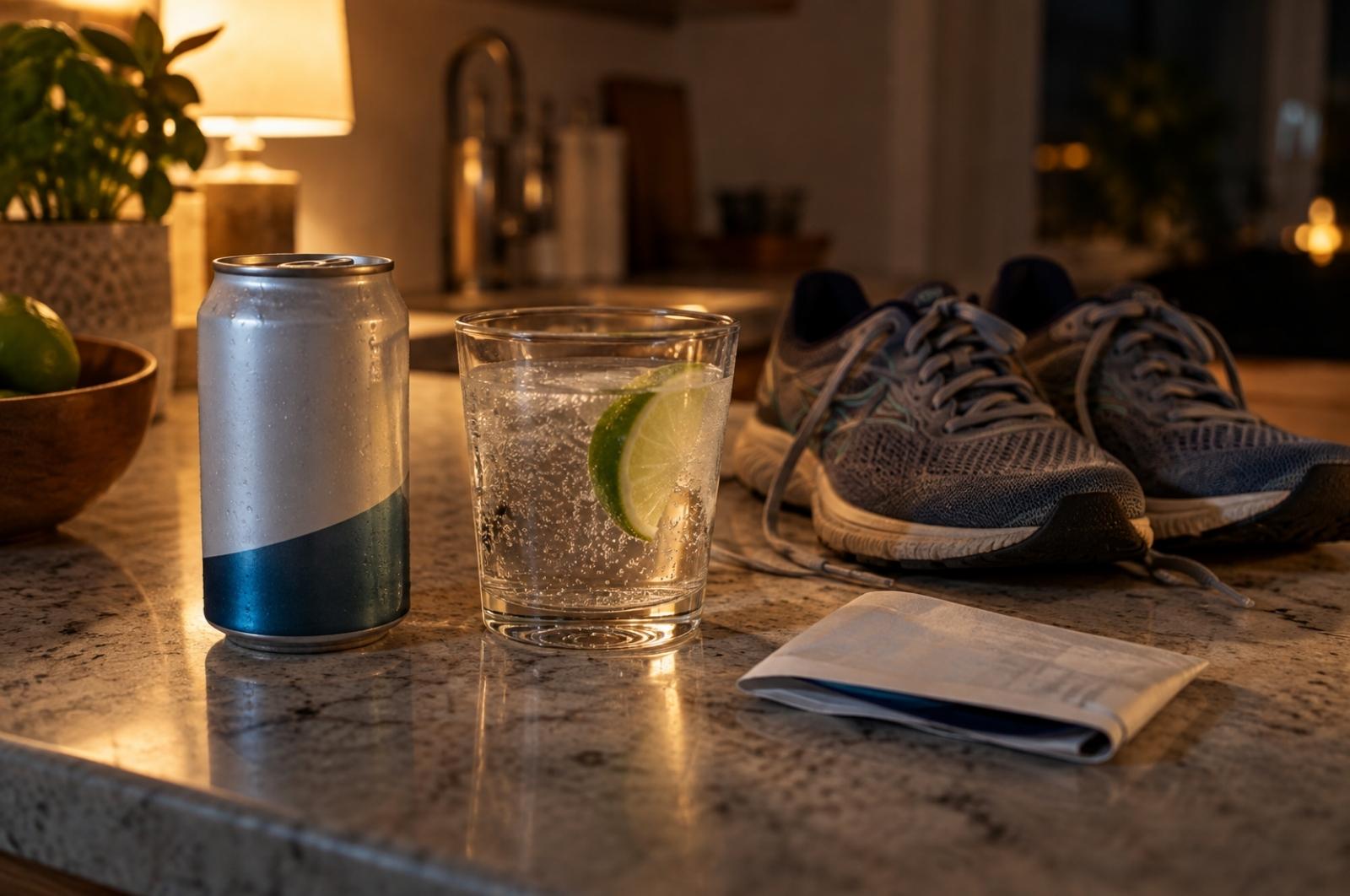
Even one or two drinks before bed reduces deep sleep and shortens REM cycles.
Athletes tend to notice this fastest. Track any wearable metric long enough and the correlation is unambiguous.
Since sleep deprivation directly degrades running performance, drinks-before-bed is where the biggest performance leak usually sits.
Move drinks earlier in the evening if quitting entirely feels premature.
A three-hour gap between last drink and bedtime gets a big chunk of sleep quality back.
Motivation for cutting back is highest when you have a clear reason to want the recovery.
Start the first four alcohol-free weeks at the beginning of a marathon or half-marathon training cycle.
The volume and intensity give you tangible feedback.
Long runs land better. Your Tuesday session recovers by Thursday instead of Friday.
That felt-sense feedback is more motivating than any abstract health argument.
The single biggest failure point is the social one.
Draft two lines you can say without hesitation:
Line one: "I'm training for a race, so I'm off it for a few weeks."
Line two: "I'll take a sparkling water with lime, thanks."
Repeat as needed. Do not explain.
Do not apologize.
Most people care far less about your drink order than you think.
A great deal of drinking is a coping mechanism for stress, anxiety, or low mood.
Cutting alcohol without replacing the coping mechanism sets up relapse.
Running is a proven decompressor with real mental health benefits documented across dozens of studies.
Even 20 minutes of easy running produces measurable reductions in cortisol and increases in circulating endorphins.
The pharmacology is not identical to alcohol, but the felt effect on evening mood is remarkably close.
Discover the authentic training methods of Kenyan runners and start improving your running faster than you ever thought possible.
Learn More About The Method →Limited-time reader discount available
Days 1 to 3 are usually easy.
Days 4 to 10 are the hardest.
Sleep temporarily worsens as the body recalibrates, cravings peak around the usual drinking times, and the ritual gap feels loudest.
From day 11 onwards, most people report the opposite: clearer mornings, deeper sleep, easier runs.
By day 30, the change tends to be undeniable.
A common report is a 5 to 10 percent improvement in easy-pace heart rate.
Streak thinking is the fastest route back to old patterns.
If you drink at a wedding, you have not undone four weeks of work.
The next morning, do an easy 5K, drink water, and go back to the plan.
For many runners, the sport becomes something like a substitute community and a new source of identity.
That is not weakness or dependency transfer.
It is the same reason group training works. Belonging to something helps you stay with it.
Track the number. Set a running goal that scares you a little.
Replace the ritual, not just the drink.
Time the first four weeks around real training. Have two lines ready for the social ask.
The changes show up faster than most people expect. Almost always by week four.
What you feel by week eight is usually the reason nobody who stuck with it went back.
Start your running journey today!
No spam. Cancel anytime.