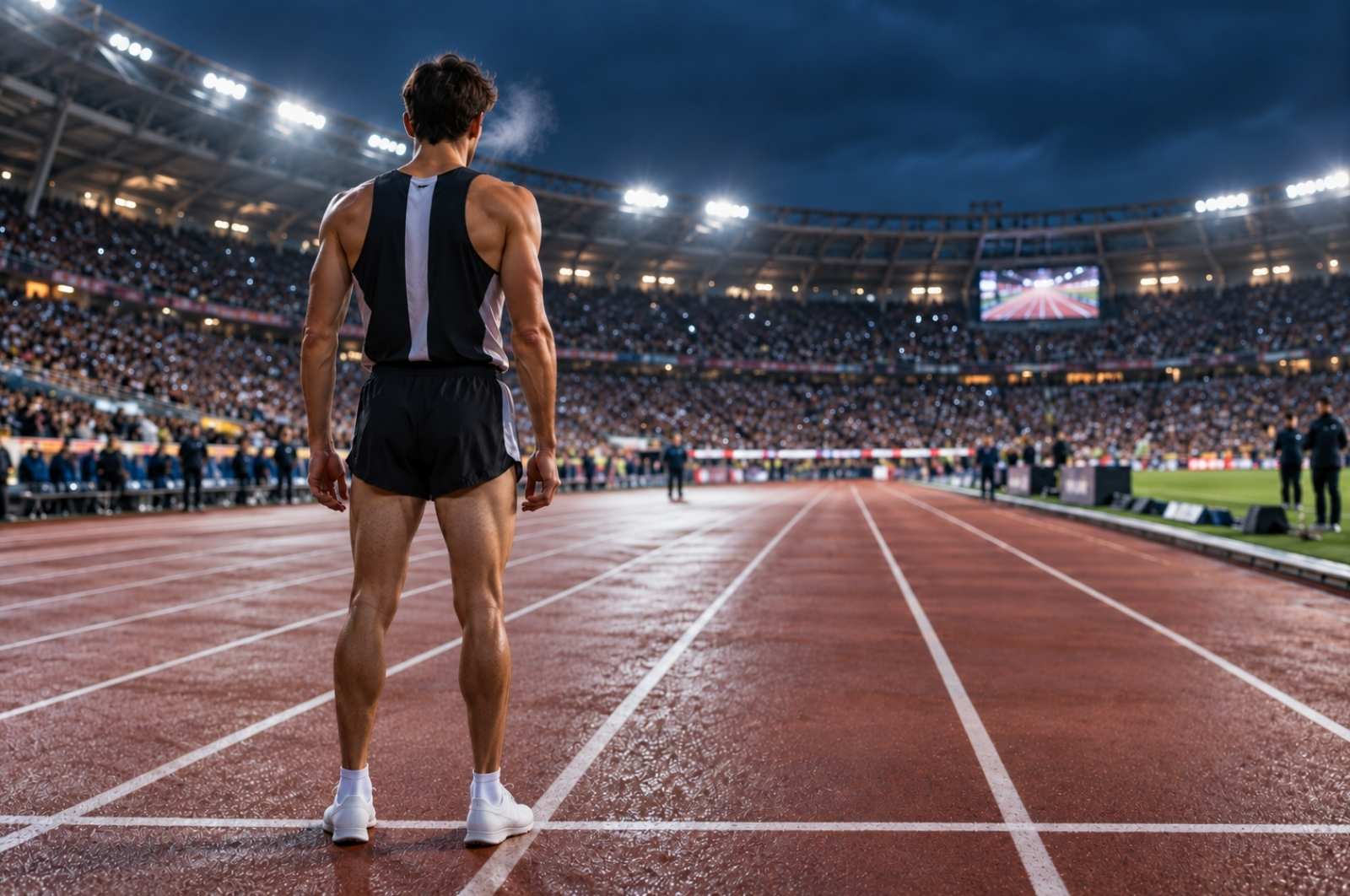
Jakob Ingebrigtsen and Josh Kerr face off in the 1500m at the World Athletics Ultimate Championship in Budapest. Here is what the sport has been waiting for.
Pictures from Getty Images Sports
Two runners have spent two years telling anyone who would listen that they are the best 1500m athlete in the world.
On Sunday in Budapest, they finally get to settle it in the same race.
Jakob Ingebrigtsen and Josh Kerr line up together in the men's 1500m final at the inaugural World Athletics Ultimate Championship on 13 September 2026.
Both are there by exceptional invitation. Neither has an easy exit if he loses.
The Race the Sport Has Been Waiting For
Ingebrigtsen and Kerr have circled each other in press rooms, podcasts, and post-race interviews since the 2023 World Championships. Words have flown freely.
Head-to-head races at full sharpness have been much rarer.
That changes at the National Athletics Centre in Budapest.
According to Athletics Weekly, both athletes received exceptional invitations from World Athletics to fill the men's 1500m field. Kerr enters as the reigning 2023 world 1500m champion. Ingebrigtsen enters as the 2021 Olympic 1500m champion who had already qualified for the 5000m.
He will now double up in Budapest. The 1500m is a straight final at this meet.
No heats, no semifinals. Everyone lines up on Sunday evening, and someone walks away with 150,000 US dollars.
Two Very Different Runs of Form
Kerr comes into Budapest off a mile world record. In London this July, he ran 3:42.66, breaking a mark that had stood since Hicham El Guerrouj set it back in 1999.
It made Kerr, not Ingebrigtsen, the man to beat over the mile distance.
His decision to double up in the 5000m at the Ultimate Championship suggests a runner who wants to prove range, not just recover a title.
Who Else Is in the Field
This is not a two-man race, even if the headlines make it sound like one. Olympic 1500m champion Cole Hocker is in the field.
So is the reigning world 1500m champion, Isaac Nader of Portugal.
Per the World Athletics final entry lists, the middle-distance programme is one of the strongest of the entire meet. On paper, four different men have a realistic case for the win. That is unusual. Championship 1500m finals in recent years have often turned into two-athlete contests by the last 200 metres.
Budapest could break that pattern.
What Ingebrigtsen Doubling Up Actually Means
The men's 5000m runs earlier in the meet than the 1500m. That is not a small detail.
Recovering from a hard 5000m final and lining up two days later to fight for a 1500m title is a genuine physical ask. Kerr, by contrast, will arrive at the 1500m final fresh.
That is a tactical gift. Kerr's coaching team will look to exploit it in the last lap.
Why This Race Matters More Than a Normal 1500m Final
The Ultimate Championship is built to reward finalists, not qualifiers. There are eight entrants per field event, sixteen in most track events, and straight finals in the 1500m and 5000m.
No easing in. No safety-first tactics in a heat, because there are no heats.
The prize structure sharpens the incentive further. 150,000 US dollars for gold in a single race, out of a 10 million dollar overall pot, is the largest prize on offer in track and field.
Kerr and Ingebrigtsen do not need the money to run hard. The format itself encourages athletes to take the race by the throat from the gun.
That style of racing usually helps front-runners. It usually helps Ingebrigtsen.
Kerr will be aware of that.
The Tactical Question Everyone Is Asking
Ingebrigtsen almost always leads. Kerr almost always kicks.
The pattern has been the same in every major race between them. The interesting question in Budapest is whether Ingebrigtsen has the confidence to run the field into the ground from 800 metres out.
If he does, he denies Kerr the sit-and-kick race Kerr prefers. If he does not, Kerr wins.
That is the whole race in one sentence.
The Bigger Story for Middle-Distance Running
A generation of 1500m fans learned the event through El Guerrouj and Bekele. A newer generation learned it through Kipchoge's move to the marathon and Ingebrigtsen's arrival.
What is happening now is different. There are four or five athletes at genuine world-record range, arguing about who is best, and racing each other with the frequency of a Formula 1 season.
That is healthy for the event. Faith Kipyegon has been doing something similar on the women's side.
Her recent Monaco 10k road debut suggested she is also looking to expand. The 1500m is no longer a specialist event that only a handful of runners contest. It is a stage.
How to Watch and What to Watch For
The men's 1500m final is scheduled for the final session in Budapest, on Sunday 13 September 2026. Broadcast reaches around 200 countries.
There are three things worth watching for. First, the pace through 800 metres.
If it is slow, Kerr is favoured. If it is honest, Ingebrigtsen is favoured.
Second, Ingebrigtsen's body language in the 5000m final earlier in the meet. A visibly fatigued Ingebrigtsen on Friday is a red flag for his Sunday.
Third, whether Hocker or Nader is willing to take the pace on themselves in the middle laps.
The rivalry has been talked about for two years. Sunday, it stops being talk.