Do You Need Sunscreen for Running Outside? A Runner’s Guide
Runners get higher cumulative UV exposure than the general population. Here is when sunscreen matters, what SPF actually works when you sweat, and what to do about it.

Can running actually slow down aging? According to science, it can. A study found that regular runners may have a biological age nearly 9 years younger than inactive adults. Here's how.
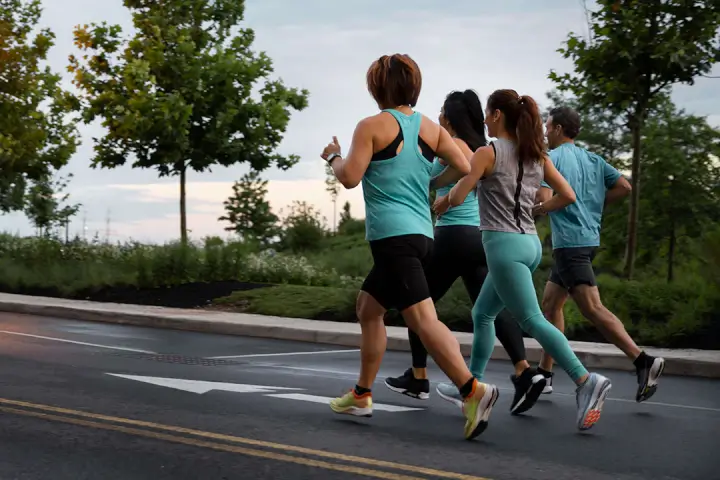
Running doesn’t just boost physical fitness it may also slow down the aging process. Among all forms of physical activity, new research highlights running as one of the most powerful tools for promoting longevity at the cellular level.
Staying active is known to support both mental and physical well-being.
Whether it's swimming, cycling, Pilates, CrossFit, or simply walking, any form of movement is beneficial.
But running stands out for its exceptional ability to support long-term health.
Beyond well-known advantages like reducing cardiovascular risk, helping regulate blood sugar, managing body weight, and strengthening the immune system, running may also have a unique anti-aging effect on our cells.
The connection between exercise and longevity is well established, but researchers at Brigham Young University’s Department of Exercise Science in the United States wanted to explore how physical activity influences aging at the cellular level.
Their study, published in Preventive Medicine, focused on telomeres the protective caps at the ends of chromosomes that play a key role in preserving genetic information.
Over time, telomeres shorten naturally as we age.
When they become too short, cells lose their ability to function properly and eventually enter a state of cellular aging, or senescence.
In their study, the researchers discovered that adults who engage in high levels of physical activity specifically the equivalent of running for 30 to 40 minutes per day, five days per week had significantly longer telomeres than less active individuals.
Perhaps most strikingly, the study quantified this benefit: people who maintained a high level of physical activity had a biological advantage of approximately 9 years compared to those who were sedentary.
In simpler terms, active adults especially runners showed cellular markers of youthfulness nearly a decade younger than their inactive peers.
These findings suggest that committing to regular running doesn’t just improve how you feel it may also help preserve your cells and delay the aging process.
If you needed one more reason to lace up your shoes and go for a jog, this might be it.
Start your running journey today!
No spam. Cancel anytime.