9 Rookie Mistakes That Ruin First Marathons (And How to Avoid Them)
Nine first-marathon mistakes coaches see every single year, from training and nutrition to race-day pacing. Learn each one before your start line.

A no-gym, no-nonsense strength routine built for runners. Two 30-minute sessions a week improve pace, protect joints, and reshape running form.
The single most under-used tool in a runner's week is not a fancy watch or a new shoe.
It is a pair of 30-minute strength sessions, done at home, twice a week.
Runners who add that consistently see three things happen.
Injury frequency drops, uphill and finish-line pace lifts, and running form quietly improves without anyone drilling it.
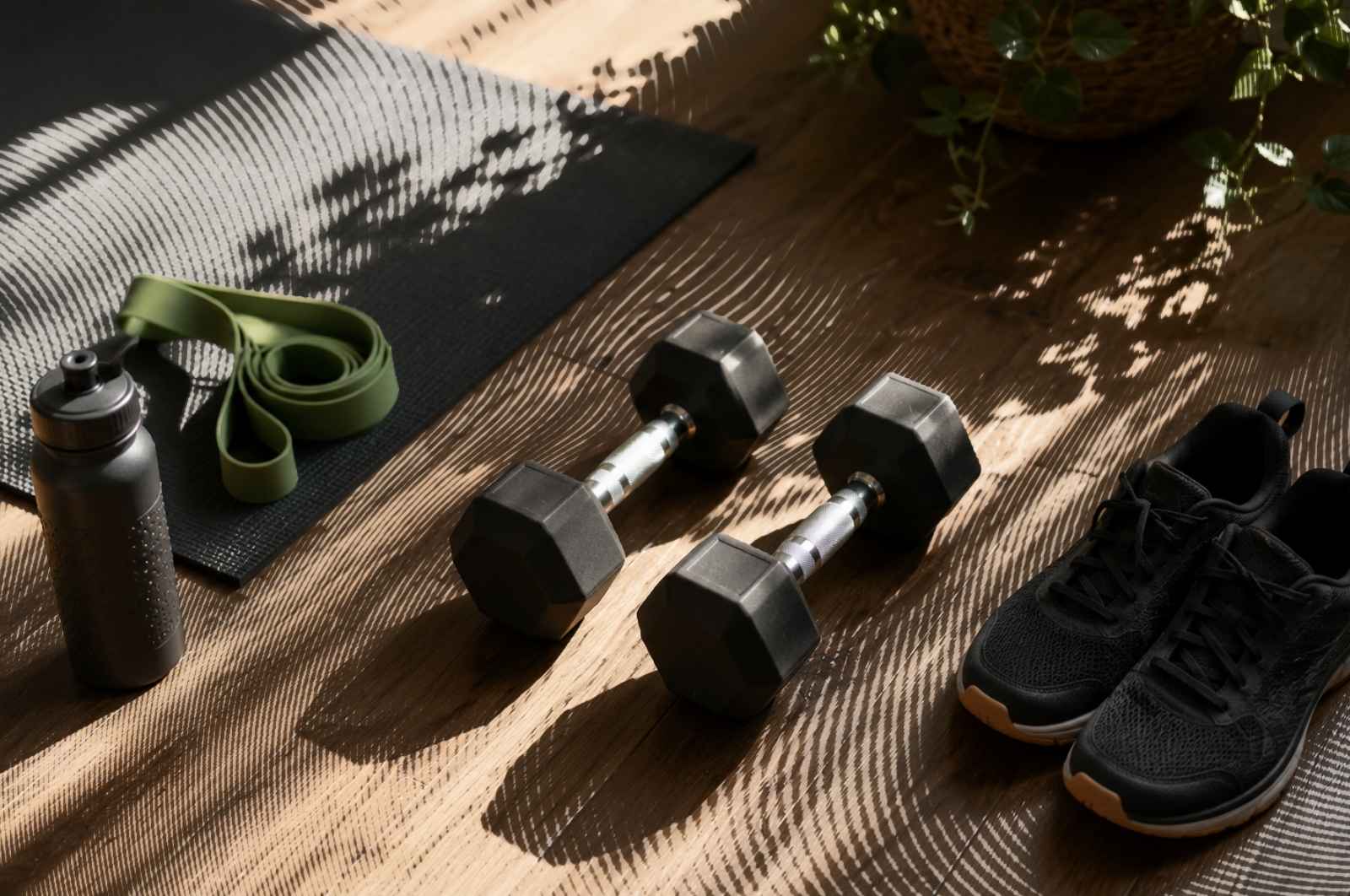
The workout below needs a set of dumbbells, a chair or bench, and about six square feet of floor.
That is it: no barbells, no gym membership, no special shoes.
Most runners treat strength work as optional homework. It usually goes first when the week gets busy.
The cost of skipping it shows up quietly. Overuse injuries at the knee, hip, and shin start to accumulate.
Form drifts asymmetric, and late-race fade that no aerobic training seems to fix begins to feel permanent.
Runners tend to develop small structural inefficiencies from repeating the same stride pattern thousands of times per week. Strength training is one of the few interventions that can push back on those.
A systematic review published in the National Library of Medicine found that structured strength training improves running economy and time-trial performance without adding fatigue when volume is controlled.
A few principles keep this routine effective and stop it turning into a hobby that eats your legs.
One session a week is maintenance. Three or four is bodybuilder territory and starts to steal from your running.
Two sessions of 20 to 30 minutes each is the range that produces the biggest performance return per hour invested.
Strength work before a run leaves the legs flat for the aerobic session. Strength work after uses the already-warm muscles and preserves running quality.
The rare exception is a dedicated strength-only day, ideally after an easy or rest day so you can push a little harder.
Every movement below can be done bodyweight for the first two or three weeks. Add dumbbells only when the movement feels smooth.
This is not a strength competition. It is injury insurance.
The workout is organised into three blocks. Do them in order.
Rest 60 to 90 seconds between sets, and the whole thing takes 25 to 35 minutes end to end.
Goblet squats: 3 sets of 12 reps. Hold a dumbbell vertically against your chest, feet shoulder-width, toes slightly out.
Squat until thighs are parallel, then drive up through the heels.
Romanian deadlifts: 3 sets of 12 reps. Hold two dumbbells at your sides, then hinge at the hips with a slight knee bend.
Lower until you feel a stretch in the hamstrings, then squeeze the glutes to stand.
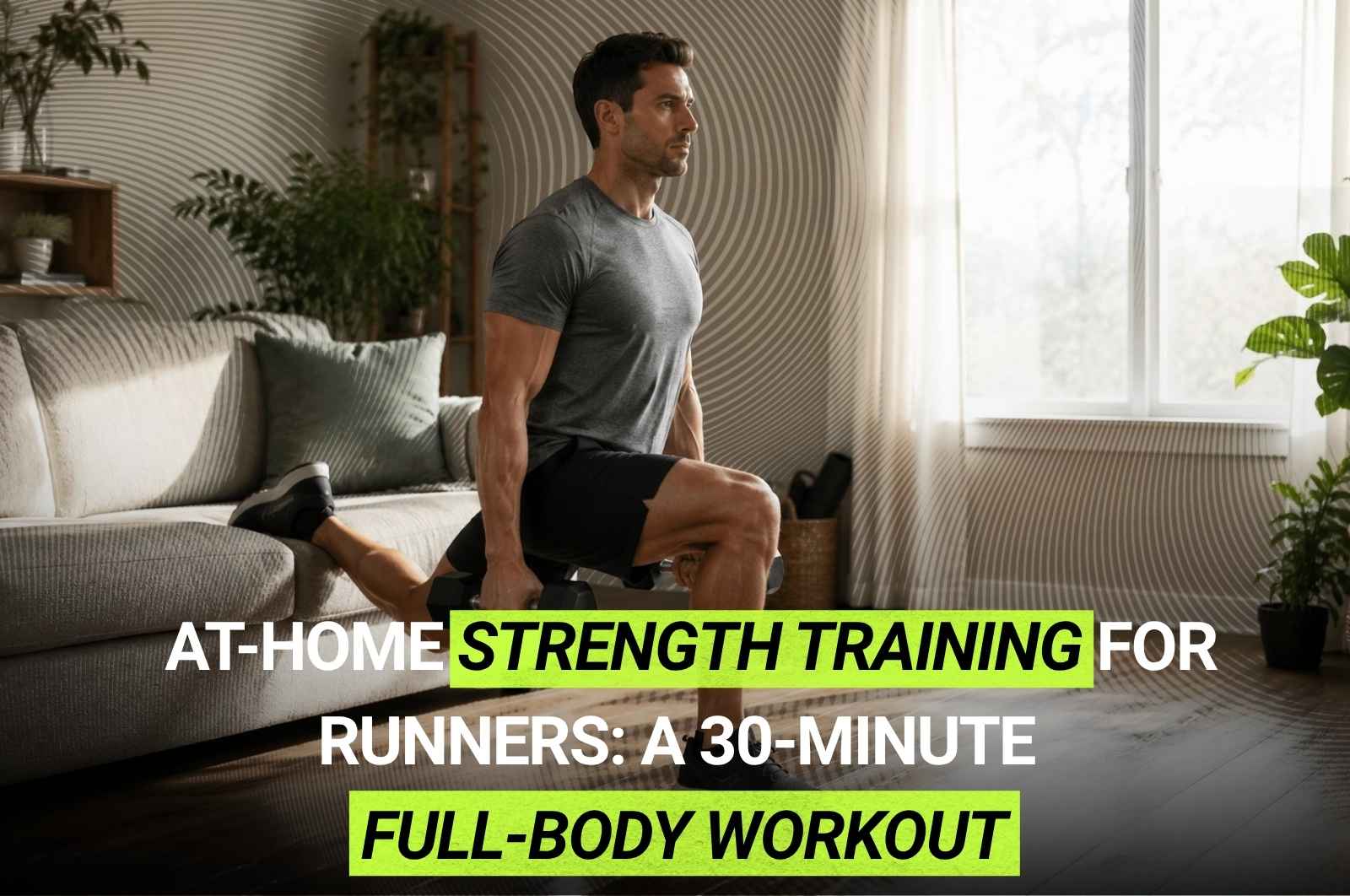
Bulgarian split squats: 3 sets of 10 per leg. Rear foot on a chair or low bench.
Drop straight down until the front thigh is parallel to the floor, then push through the front heel to stand.
Forward lunges with dumbbells: 3 sets of 10 per leg. Step forward, drop the back knee to just above the floor, then drive up and alternate legs.
Single-leg touchdowns: 3 sets of 8 per leg. Stand on one leg on a low step.
Reach the other heel toward the floor by hinging at the hip and bending the standing knee slightly, then return with control.
Calf raises: 3 sets of 15, on the edge of a step.
Rise onto the toes, hold for one second, then lower with control. Do them slow.
Plank with alternating knee drives: 3 sets of 30 seconds, held in a high plank position. Drive one knee toward the chest, return, alternate.
Side plank with hip drop: 3 sets of 10 reps per side. From a forearm side plank, lower the hip toward the floor and drive it back up.
Seated arm running: 3 sets of 30 seconds. Sit tall, arms bent at 90 degrees, swing them as if you are running.
Fast and controlled. This wakes up the shoulders and upper back for stride mechanics.
The routine gets stale in a hurry if you do the same weights and reps for months. Progress it in one of two simple ways.
Week to week, add a small increment: one more rep per set, or slightly heavier dumbbells. That is it.
Every four to six weeks, swap one exercise per block for a variation.
Goblet squats can become sumo squats, Romanian deadlifts can become single-leg deadlifts, and forward lunges can become reverse lunges.
This keeps the neuromuscular system challenged without abandoning what already works.
Discover the authentic training methods of Kenyan runners and start improving your running faster than you ever thought possible.
Learn More About The Method →Limited-time reader discount available
The rest of your week keeps its shape.
Long run on the weekend, one quality session on Tuesday or Wednesday, easy running on the other days.
Insert the two strength sessions on days that already have running load, ideally after the easy portion. That leaves your rest day genuinely restful.
A workable template for a 5-day-a-week runner:
For a deeper look at pairing the two systems without overcooking either, see our guide on how to combine running and strength training without burning out.
If you want a shorter, no-equipment core-only session on the days between, our list of five core strengthening exercises for runners with no equipment covers the essentials in ten minutes.
You will not feel dramatic on day one. The gains from this kind of routine show up over weeks and months.
The first sign is usually the small stuff. Uphill sections feel steadier, late-mile form holds up, and nagging knee or shin niggles fade.
A few months in, race performance starts to reflect it.
The engine is the same, but the frame carrying it is stronger.
Consistent physical activity guidelines from the American Heart Association also recommend two strength sessions per week for general health, which happens to line up almost exactly with what runners need.
Two sessions, thirty minutes each, on the living-room floor.
That is the whole plan.
Start your running journey today!
No spam. Cancel anytime.