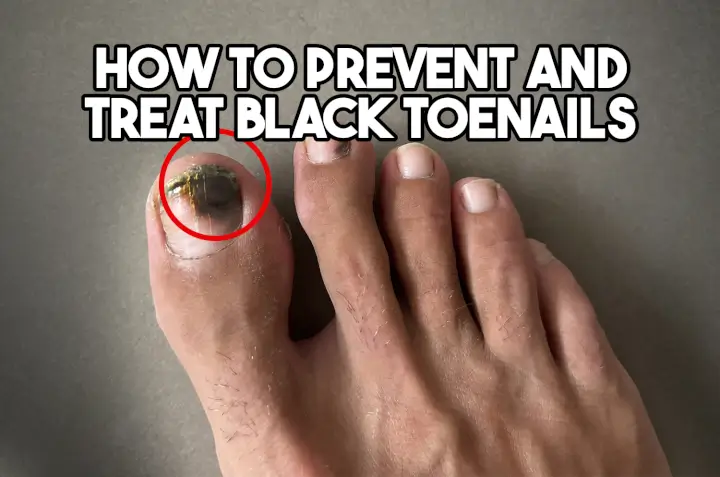
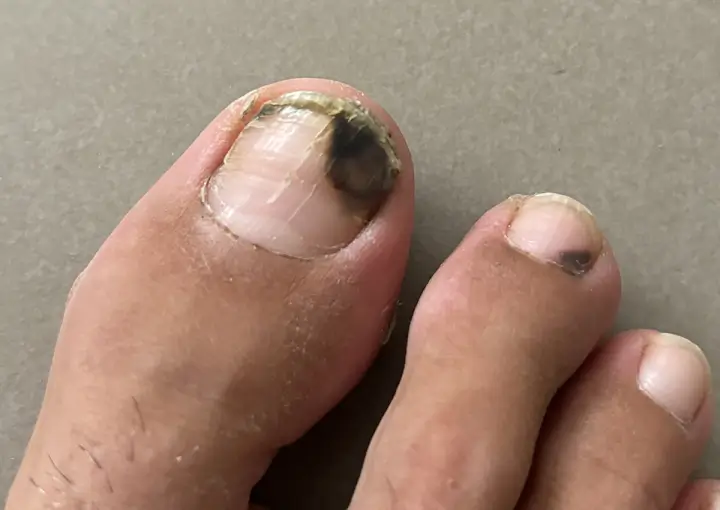
You know, that black toenail we try to laugh off as a "badge of honor." If you haven't had one, some might even say you're not really a runner.
Ah, the infamous black toenail we like to joke about as a 'badge of honor.' If you haven't experienced it, some might argue you're not a true runner!
But don't worry, I'm not here to exclude anyone! Instead, I’ll break down why these happen and how we can deal with them!
What Causes Runner’s Toe
There are a few reasons why we get these black toenails.
First, it could be your toes constantly hitting the front of your running shoes.
This often happens when your shoes are either too big or too small.
Yes, it’s not just about having shoes that are too tight—loose shoes can cause your feet to slide around, and that friction is bad news for your toenails.
Secondly, sometimes it’s not even the shoes.
It could be that your toes are rubbing against the stitching of your socks, or maybe your form deteriorates late in the race when you're exhausted.
Your form might get sloppy, causing more impact on your toes.
The key takeaway? It’s usually a combination of these factors.
Finding the Right Fit
This is where the importance of proper gear comes in.
Whether it’s your shoes, socks, or even the way you lace up, long runs are the perfect time for trial and error.
Don’t be afraid to experiment with different gear. Sometimes, even trying thicker or thinner socks can make a huge difference in comfort and performance.
If you’re convinced your shoes are the right size but still experience problems, here’s an effective solution—cutting a small hole in your shoe’s toe box.
Yes, it might sound extreme, but it can relieve pressure on your toes.
Just be careful not to cut into the shoe's structure, or you’ll risk ruining it.
Having a good shoe rotation and regularly changing your shoes can help prevent black toenails
How to Treating Runner’s Toe
Okay, so you’ve done your long run and still ended up with a black toenail.
Now what?
The good news, is that it’s generally not something that will turn into a serious issue.
Sure, it could be painful, but it usually doesn’t lead to more significant problems.
That being said, if you’re ever unsure or concerned—especially if there’s a blood blister involved—it’s always better to consult a medical professional.
You might have heard about people drilling holes in their nails to relieve pressure, but trust me, that’s a job for a doctor, not your home toolkit.
The only thing you can do is wait.
Typically, a new toenail grows underneath the black one, and when the time comes, the old black toenail will fall off, leaving you with a fresh new nail. It takes months.
Can You Keep Running?
One of the most common questions people ask when they get runner’s toe is whether they can continue training.
The short answer is yes—you can run with it.
It’s going to hurt, but unless there’s something more serious going on, it won’t stop you.
Just make sure to address whatever caused it in the first place, whether that’s your shoes, socks, or running form.
Prevention Tips to Prevent Black Toenails
Here’s a quick summary of some key steps to help avoid black toenails in the future:
Ensure Proper Shoe Fit: Make sure your running shoes have enough room in the toe box. Your toes shouldn’t be cramped, but they also shouldn’t be sliding around.
Mind Your Socks: Try different types of socks, whether they’re thicker or thinner, to see what works best for you.
Check Your Form: Pay attention to your running form, especially towards the end of your run when you’re tired.
Try a “Sunroof” for Your Shoes: If nothing else works, consider cutting a small hole in the toe box of your shoes to relieve pressure.
Conclusion
Runner’s toe might seem like a minor problem, but it can be pretty painful and frustrating.
Fortunately, it’s not usually a sign of anything more serious. If you experience it, take a little time to figure out the root cause—whether it’s your shoes, socks, or running form—and adjust accordingly.
And if you’re ever in doubt, consult a professional.
It’s better to be safe than sorry, especially when dealing with issues related to your feet, which are your most important running asset!
Remember, a black toenail might just be that quirky runner’s “badge of honor.” But with a little effort, it’s something you can definitely avoid.