
Do You Need Sunscreen for Running Outside? A Runner’s Guide
Runners get higher cumulative UV exposure than the general population. Here is when sunscreen matters, what SPF actually works when you sweat, and what to do about it.

A complete guide to plantar fasciitis for runners. Understand the real causes, evidence-based treatments, and a structured return-to-run plan that prevents reinjury.

That sharp, stabbing pain in your heel during the first few steps each morning is one of the most familiar warning signs in running.
It almost always points to one culprit: plantar fasciitis.
It is also one of the most misunderstood injuries. Runners often push through it for weeks, hoping it will just go away, and end up sidelined far longer than they had to be.
The plantar fascia is a thick, fibrous band of tissue that runs along the bottom of your foot. It connects your heel bone to your toes and supports the arch.
When that band is repeatedly overloaded, tiny irritations build up where it attaches to the heel.
The result is a sharp, localised pain that often peaks first thing in the morning.
Despite the name, it is more accurately a tendinopathy than a classic inflammation. That distinction matters because it changes how you treat it.
Plantar fasciitis rarely appears out of nowhere. It is almost always the result of multiple small factors stacking up over weeks or months.
The single most common trigger is a too-fast jump in volume or intensity.
A new training block, a sudden marathon push, or a string of hilly long runs can all overwhelm the fascia.
The classic mistake is increasing mileage by more than 10 percent week over week. Your soft tissues need time to adapt.
Tight, weak calves transmit force directly to the plantar fascia. So do weak intrinsic foot muscles, which are the small stabilisers in the arch.
If your posterior chain is undertrained, the fascia ends up doing work that other muscles should be handling. That is also why hip strength matters here.
The Running Week guide on hip exercises for runners explains how weak hips often show up downstream as plantar fasciitis.
A worn-out pair of shoes, a sudden switch to a very low-drop or barefoot-style shoe, or long miles on concrete can all push the fascia past its limit. Your shoes lose meaningful cushion around the 400 to 500 mile mark.
If you have just changed brands or models and the pain started shortly after, that is rarely a coincidence.
The classic symptom is sharp heel pain in the first few steps after waking up or sitting for a long time.
The pain often eases as you warm up, only to return after the run.
Mild cases feel like a dull bruise under the heel.
Severe cases feel like stepping on a tack every time you push off.
For a broader look at heel pain and its many causes, the Running Week piece on heel pain in runners covers when other conditions might be at play.
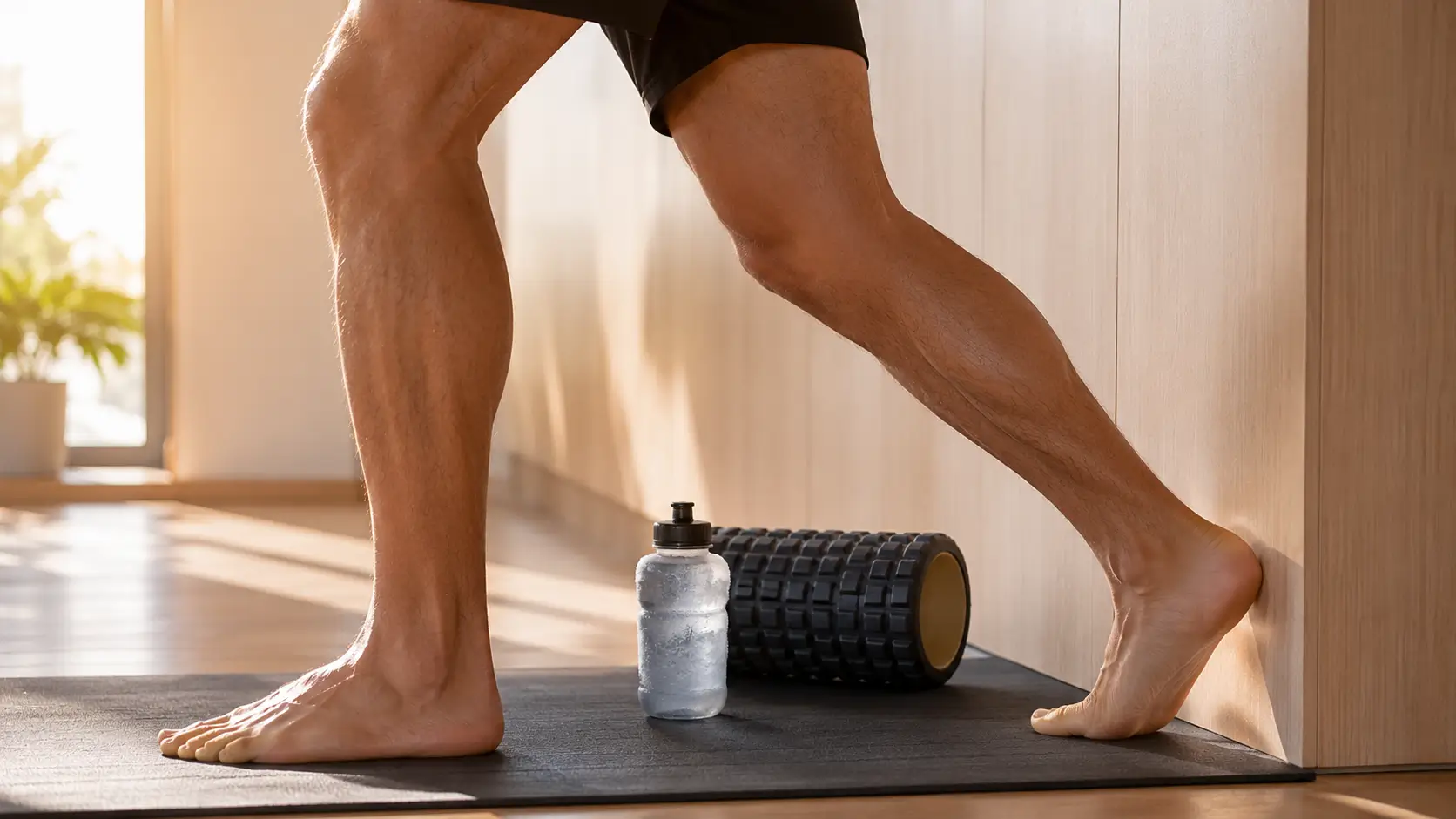
Recovery is rarely about a single hack. It is about combining the right ingredients consistently for several weeks.
The first step is not total rest, no running. Complete rest tends to weaken the tissue further.
Instead, reduce volume by 40 to 60 percent, drop intensity to easy only, and replace some sessions with cycling, swimming, or pool running.
The Cleveland Clinic plantar fasciitis guide is a clear medical reference for the underlying condition and the role of activity modification.
Recent research strongly supports heavy, slow calf and foot strengthening as the most effective long-term treatment. The protocol is simple.
Perform heel raises on a stair with the ball of your foot at the edge. Add a backpack with weight as it gets easier.
Three sets of 8 to 12 slow repetitions, every other day, for at least eight to twelve weeks. Patience here pays off.
Tight calves are part of the chain that loads the fascia.
Daily calf stretches, both straight-leg and bent-knee versions, restore the slack the fascia needs.
A frozen water bottle rolled under the foot for five minutes after long runs can also calm symptoms. So can a tennis ball or lacrosse ball used gently on the arch.

Plantar Fasciitis Relief Set For Runners
✓primeImproves circulation, relieves tension, and supports mobility. Includes an ergonomic foot roller for aching feet and heels!
$19.95 from AmazonAs an Amazon Associate, we earn from qualifying purchases.
Returning too fast is the most common cause of reinjury. A structured progression saves months of frustration.
Before you run, you should be able to walk briskly for 30 minutes with zero heel pain during or after. If walking still flares the heel, stay in this phase another week.
This is also a great time to refine your shoes, your strengthening, and your sleep. In our return-to-run framework lays out the broader principles.
Start with 1 minute easy jog, 2 minutes walk, repeated 8 to 10 times. Do this three times in the first week with full rest days between.
Each week, extend the run portion by 30 seconds and shorten the walk slightly. Stop instantly if pain rises above a mild 2 out of 10.
Once you can run for 20 to 25 minutes continuously without symptoms, you can rebuild volume slowly. Cap weekly mileage growth at the 10 percent rule.
Keep all runs easy for at least the first three to four weeks. Speed work and hills come last, not first.
Once you are running pain-free, the work is not over. Strength, mobility, and smart load progression stay in the routine for good.
Keep doing weighted calf raises twice a week. Rotate your shoes so no single pair takes all the impact.
Listen for the quiet whispers of the fascia before they turn into shouts.
The runners who hear them early are the ones who never let plantar fasciitis sideline them twice.
Start your running journey today!
No spam. Cancel anytime.